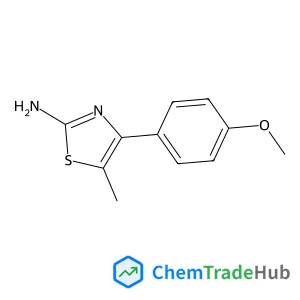
4-(4-Methoxyphenyl)-5-methyl-1,3-thiazol-2-amine
CAS Number:
105512-88-7
Molecular Formula:
C11H12N2OS
Verena Küpers, Martin Kolek, Peter Bieker, Gunther Brunklaus
A major challenge of lithium metal electrodes, in theory a suitable choice for rechargeable high energy density batteries, comprises non-homogeneous lithium deposition and the growth of reactive high surface area lithium, which eventually yields active material losses and safety risks. While it is hard to fully avoid inhomogeneous deposits, the achievable morphology of the occurring lithium deposits critically determines the long-term cycling behaviour of the cells. In this work, we focus on a combined scanning electron microscopy (SEM) and 7Li nuclear magnetic resonance spectroscopy (7Li-NMR) study to unravel the impact of the choice of conducting salts (LiPF6 and LiTFSI), solvents (EC : DEC, 3 : 7, DME : DOL, 1 : 1), as well as their respective concentrations (1 M, 3 M) on the electrodeposition process, demonstrating that lithium deposition morphologies may be controlled to a large extent by proper choice of cycling conditions and electrolyte constituents. In addition, the applicability of 7Li-NMR spectroscopy to assess the resulting morphology is discussed. It was found, that lithium deposition analysis based on the 7Li chemical shift and intensity should be used carefully, as various morphologies can lead to similar results. Still, our case study reveals that the combination of SEM and NMR data is rather advantageous and offers complementary insights that may provide pathways for the future design of tailored electrolytes.
Masatomo Yashima, Takafumi Komatsu
DOI: 10.1039/B817280C
Aggelos Philippidis, Thomas Bakas, Pantelis N. Trikalitis
DOI: 10.1039/B821859E
Daeseob Shim, Seung-Ho Jung, Eun-Ha Kim, Dong-Myung Yoon, Kun-Hong Lee, Soo-Hwan Jeong
DOI: 10.1039/B816534C
Juan Peng, Alejandra Garcia Marcos, Seong-Jun Jeong, Holger Frey, Dong Ha Kim
DOI: 10.1039/B816398G
Cong Yu, Vivian Wing-Wah Yam
DOI: 10.1039/B820397K
Yong Yan, Xiang Lin, Sihai Yang, Alexander J. Blake, Anne Dailly, Neil R. Champness, Peter Hubberstey, Martin Schröder
DOI: 10.1039/B900013E
Mamoru Fujitsuka, Sachiko Tojo, Teruo Shinmyozu, Tetsuro Majima
DOI: 10.1039/B810122A
Muhieddine S. Safa, Michael C. Jennings, Richard J. Puddephatt
DOI: 10.1039/B822683K
Dragoslav Vidovic, Glesni A. Pierce, Simon Aldridge
DOI: 10.1039/B816042B
(5-Sulfamoyl-3-pyridinyl)boronic acid is primarily used in chemical synthesis, p...
Benzyl 2-methyl-2-(methylsulfonyl)-4-pentenoate is typically synthesized via est...
When handling 8-Fluoroquinolin-6-ol (CAS: 209353-22-0), it is important to use p...
1,3-Dibromo-5-(2-methyl-2-propanyl)benzene (CAS: 129316-09-2) is a crystalline c...
Ethyl 7-chloro-4-oxo-1-(1,3-thiazol-2-yl)-1,4-dihydro-1,8-naphthyridine-3-carbox...
When handling Delta-7-Avenasterol (CAS: 23290-26-8), it is important to wear app...
Proper handling involves the use of personal protective equipment such as gloves...
When handling 2-Methyl-2-proanyl 4-[(2-aminophenyl)amino]-1-piperidinecarboxylat...
N-Methyl-4-chlorobenzylamine hydrochloride (CAS: 65542-24-7) is a organic compou...
[2-(Dodecyloxy)ethoxy]acetic acid (CAS: 27306-90-7) is generally considered safe...

Physical Chemistry Chemical Physics (PCCP) is an international journal co-owned by 19 physical chemistry and physics societies from around the world. This journal publishes original, cutting-edge research in physical chemistry, chemical physics and biophysical chemistry. To be suitable for publication in PCCP, articles must include significant innovation and/or insight into physical chemistry; this is the most important criterion that reviewers and Editors will judge against when evaluating submissions. The journal has a broad scope and welcomes contributions spanning experiment, theory, computation and data science. Topical coverage includes spectroscopy, dynamics, kinetics, statistical mechanics, thermodynamics, electrochemistry, catalysis, surface science, quantum mechanics, quantum computing and machine learning. Interdisciplinary research areas such as polymers and soft matter, materials, nanoscience, energy, surfaces/interfaces, and biophysical chemistry are welcomed if they demonstrate significant innovation and/or insight into physical chemistry. Joined experimental/theoretical studies are particularly appreciated when complementary and based on up-to-date approaches.