












![5-Acetyl-2,3-dihydrobenzo[b]furan structure](https://static.chemtradehub.com/structs/908/90843-31-5-eea4.webp "5-Acetyl-2,3-dihydrobenzo[b]furan structure")
Hierarchical self-assembly of a PS-b-P4VP/PS-b-PNIPAM mixture into multicompartment micelles and their response to two-dimensional confinement
Literature Information
Publication Date
2019-11-26
DOI
10.1039/C9CP05180E
Impact Factor
3.676
Authors
Nan Yan
View Original
Abstract
Hierarchical self-assembly offers an elegant and energy-efficient bottom-up strategy for the fabrication of complex materials with precisely controllable morphologies and internal structures. Herein, pupa-like multicompartment micelles (MCMs) were readily fabricated via the hierarchical self-assembly of a polystyrene-block-poly(4-vinylpyridine) (PS-b-P4VP) and polystyrene-block-poly(N-isopropylacrylamide) (PS-b-PNIPAM) block copolymer mixture in a THF/water mixture solvent, which were unable to be obtained by any of the individual block copolymers (BCPs). This means that the hierarchical self-assembly is a result of the synergistic cooperation between the two BCPs. Moreover, a kinetic study revealed that the MCMs were formed by hierarchical self-assembly of small spherical micelles (SSMs), which were co-assembled from the PS-b-P4VP/PS-b-PNIPAM mixture. Subsequently, we investigated the self-assembly of a PS-b-P4VP/PS-b-PNIPAM mixed solution confined in the nanopores of an anodic aluminum oxide (AAO) template. In such two-dimensional confinement, long multicompartment micelles (LMCMs) with a period multilayer structure were obtained. Notably, the confinement effect of nanopores on the hierarchical self-assembly could be distinguished into two different situations according to the activity of secondary assembly of the preformed SSMs from different BCP compositions, i.e., dynamic and static confinement. The dynamic confinement can affect the Brownian movement of SSMs and thus promotes their fusion to form spherical micelles with larger size compared with the SSMs formed under an unconfined condition. For the situation where AAO nanopores were partially filled with the preformed SSMs, the static confinement could decrease the stretching of BCP chains along the short axis of LMCMs and thus induce the formation of long range ordered multilayer nanostructures. These results illustrated that the synergistic effect played an important role in the hierarchical assembly of BCPs; meanwhile, such hierarchical self-assembly could be further manipulated by cylindrical confinement to rationally tune the nanostructures and dimensions of the BCP assemblies.
Related Literature
WO3/W:BiVO4/BiVO4 graded photoabsorber electrode for enhanced photoelectrocatalytic solar light driven water oxidation
Junghyun Choi, Pitchaimuthu Sudhagar, Joo Hyun Kim, Jiseok Kwon, Jeonghyun Kim, Chiaki Terashima, Akira Fujishima, Taeseup Song, Ungyu Paik
2017-01-09
Paper
DOI: 10.1039/C6CP08199A
Collective proton transfer in ordinary ice: local environments, temperature dependence and deuteration effects
Christof Drechsel-Grau, Dominik Marx
2016-11-07
Perspective
DOI: 10.1039/C6CP05679B
Structural and magneto-electronic properties and electric field-mediated effects for transition metal-terminated zigzag h-BN nanoribbons
J. Liu, Z. H. Zhang, P. F. Yuan, Z. Q. Fan
2017-01-04
Paper
DOI: 10.1039/C6CP06909F
Influence of Zn on the photoluminescence of colloidal (AgIn)xZn2(1−x)S2 nanocrystals
Dharmendar Kumar Sharma, Shuzo Hirata, Lukasz Bujak, Vasudevanpillai Biju, Tatsuya Kameyama, Marino Kishi, Tsukasa Torimoto, Martin Vacha
2017-01-05
Paper
DOI: 10.1039/C6CP07550A
Effective pair potential between charged nanoparticles at high volume fractions
Guillaume Bareigts, Christophe Labbez
2017-01-20
Paper
DOI: 10.1039/C6CP08056A
Mechanistic insights into CO2 reduction on Cu/Mo-loaded two-dimensional g-C3N4(001)
Penghui Li, Fang Wang, Shiqian Wei, Xinyu Li
2017-01-09
Paper
DOI: 10.1039/C6CP08409E
Prediction of a novel 10-fold gold coordinated structure in AuIn2 above 10 GPa
P. Modak, Ashok K. Verma
2017-01-06
Paper
DOI: 10.1039/C6CP07805B
Triplet exciton dissociation and electron extraction in graphene-templated pentacene observed with ultrafast spectroscopy
Thomas J. McDonough, Lushuai Zhang, Susmit Singha Roy, Nicholas M. Kearns, Michael S. Arnold, Martin T. Zanni
2017-01-23
Paper
DOI: 10.1039/C6CP06454J
Mechanism of activated chemiluminescence of cyclic peroxides: 1,2-dioxetanes and 1,2-dioxetanones
Ignacio Fdez. Galván, Daniel Roca-Sanjuán, Erick L. Bastos, Wilhelm J. Baader, Roland Lindh
2017-01-03
Paper
DOI: 10.1039/C6CP08154A
You might also like
Compound Q&A
What precautions should be taken when handling 4-(2-Furylmethyl)thiomorpholine 1,1-dioxide (CAS: 79206-94-3)?
When handling 4-(2-Furylmethyl)thiomorpholine 1,1-dioxide (CAS: 79206-94-3), it ...
79206-94-34-(2-Furylmethyl)thi...
Compound Q&A
What precautions should be taken when handling 4-Chloro-N-[2-(4-morpholinyl)ethyl]benzamide (CAS: 71320-77-9)?
When handling 4-Chloro-N-[2-(4-morpholinyl)ethyl]benzamide (CAS: 71320-77-9), it...
71320-77-94-Chloro-N-[2-(4-mor...
Compound Q&A
How should waste containing 2-[2-(2-Methoxyethoxy)ethoxy]ethyl 4-methylbenzenesulfonate (CAS: 62921-74-8) be handled?
Waste containing this compound (CAS: 62921-74-8) should be handled according to ...
62921-74-82-[2-(2-Methoxyethox...
Compound Q&A
How should waste containing (S)-Methyl 2-amino-3-cyclohexylpropanoate be handled?
Waste containing (S)-Methyl 2-amino-3-cyclohexylpropanoate should be collected i...
40056-18-6(S)-Methyl 2-amino-3...
Compound Q&A
How is 5-({4-[(2S,4R)-4-Hydroxy-2-methyltetrahydro-2H-pyran-4-yl]-2-thienyl}sulfanyl)-1-methyl-1,3-dihydro-2H-indol-2-one (CAS: 166882-70-8) typically synthesized?
This compound can be synthesized using a multi-step process involving the conjug...
166882-70-85-({4-[(2S,4R)-4-Hyd...
Compound Q&A
Are there alternatives to (2E)-3-(3,4-Dichlorophenyl)acrylic acid (CAS: 7312-27-8) in synthesis?
There are several alternatives to (2E)-3-(3,4-Dichlorophenyl)acrylic acid in syn...
7312-27-8(2E)-3-(3,4-Dichloro...
Compound Q&A
How should Ethyl 6-(2-nitrophenyl)imidazo[2,1-b][1,3]thiazole-3-carboxylate (CAS: 925437-84-9) be stored?
Ethyl 6-(2-nitrophenyl)imidazo[2,1-b][1,3]thiazole-3-carboxylate (CAS: 925437-84...
925437-84-9Ethyl 6-(2-nitrophen...
Compound Q&A
How should waste containing 2-(1,3-Thiazol-2-yl)ethanamine (CAS: 18453-07-1) be handled?
Waste containing 2-(1,3-Thiazol-2-yl)ethanamine (CAS: 18453-07-1) should be coll...
18453-07-12-(1,3-Thiazol-2-yl)...
Compound Q&A
How is Methyl 5-iodo-2-methylbenzoate (CAS: 103440-54-6) typically synthesized?
Methyl 5-iodo-2-methylbenzoate can be synthesized through the iodination of meth...
103440-54-6Methyl 5-iodo-2-meth...
Compound Q&A
How is 5-Chloro[1,2,4]triazolo[1,5-a]pyridine (CAS: 1427399-34-5) typically synthesized?
5-Chloro[1,2,4]triazolo[1,5-a]pyridine is commonly synthesized via the condensat...
1427399-34-55-Chloro[1,2,4]triaz...
Source Journal
Physical Chemistry Chemical Physics

CiteScore:
5.5
Self-citation Rate:
10.3%
Articles per Year:
3036
Physical Chemistry Chemical Physics (PCCP) is an international journal co-owned by 19 physical chemistry and physics societies from around the world. This journal publishes original, cutting-edge research in physical chemistry, chemical physics and biophysical chemistry. To be suitable for publication in PCCP, articles must include significant innovation and/or insight into physical chemistry; this is the most important criterion that reviewers and Editors will judge against when evaluating submissions. The journal has a broad scope and welcomes contributions spanning experiment, theory, computation and data science. Topical coverage includes spectroscopy, dynamics, kinetics, statistical mechanics, thermodynamics, electrochemistry, catalysis, surface science, quantum mechanics, quantum computing and machine learning. Interdisciplinary research areas such as polymers and soft matter, materials, nanoscience, energy, surfaces/interfaces, and biophysical chemistry are welcomed if they demonstrate significant innovation and/or insight into physical chemistry. Joined experimental/theoretical studies are particularly appreciated when complementary and based on up-to-date approaches.
Recommended Compounds
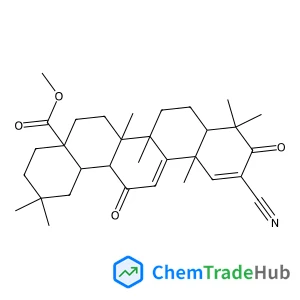
Methyl 2-cyano-3,12-dioxooleana-1,9(11)-dien-28-oate
CAS Number:
218600-53-4
Molecular Formula:
C32H43NO4
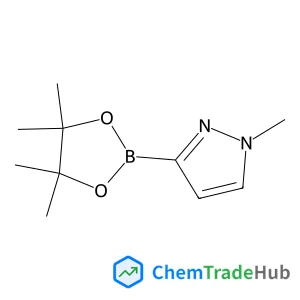
1-Methyl-3-(4,4,5,5-tetramethyl-1,3,2-dioxaborolan-2-yl)-1H-pyrazole
CAS Number:
1020174-04-2
Molecular Formula:
C10H17BN2O2
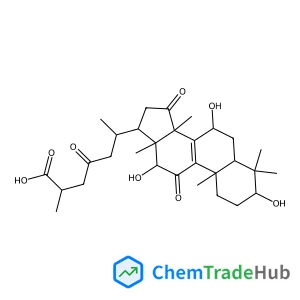
(3beta,7beta,12beta)-3,7,12-Trihydroxy-11,15,23-trioxolanost-8-en-26-oic acid
CAS Number:
98665-22-6
Molecular Formula:
C30H44O8

Recommended Suppliers


Disclaimer
This page provides academic journal information for reference and research purposes only. We are not affiliated with any journal publishers and do not handle publication submissions. For publication-related inquiries, please contact the respective journal publishers directly.
If you notice any inaccuracies in the information displayed, please contact us at support@chemtradehub.com. We will promptly review and address your concerns.