












Molecular dynamics simulations of shock loading of nearly fully dense granular Ni–Al composites
Literature Information
Publication Date
2019-08-19
DOI
10.1039/C9CP02920F
Impact Factor
3.676
Authors
Yongnan Xiong, Xiaofan Li, Shifang Xiao, Huiqiu Deng, Bowen Huang, Wenjun Zhu, Wangyu Hu
View Original
Abstract
We used molecular dynamics simulations to study the shock propagation, inhomogeneous deformation, and initiation of the chemical reaction characteristics of nearly fully dense reactive Ni–Al composites. For shocks with piston velocities Up ≤ 2.0 km s−1, particle velocity dispersion was observed at the shock front, which increased on increasing the shock strength. Plastic deformation mainly occurred at the grain boundaries or grain junction during the shock rise and was accompanied by the generation of a potential hot spot in the region where severe plasticity happens. The composite exhibited higher strength and lower reactivity than the mixtures with certain porosity. In addition, the shock-induced premature melting of Al led to the expansion of particle velocity dispersion from the wavefront to the shocked zone and the formation of a heterogeneous velocity field for stronger shocks beyond critical Up (2.5 km s−1). The velocity heterogeneity in the shocked region led to localized shear, strong erosion of Ni, and occurrence of ultrafast chemical reactions. Therefore, the shock-induced premature melting of Al led to the mechanochemical effect and played a role in the shock-induced chemical reaction in the reactive metal system.
Related Literature
Revealing the contribution of singlet oxygen in the photoelectrochemical oxidation of benzyl alcohol
Ramón Arcas, Eduardo Peris, Elena Mas-Marzá, Francisco Fabregat-Santiago
2020-12-29
Paper
DOI: 10.1039/D0SE01322F
Ultra-low amount Pt-doped Co2P/Ni2P on nickel foam as an efficient electrocatalyst for the hydrogen evolution reaction in an alkaline electrolyte
Xin Xiao, Dongping Sun, Xiaoheng Liu, Bo Qiu
2020-12-28
Paper
DOI: 10.1039/D0SE01679A
Augmentation in photocurrent through organic ionic plastic crystals as an efficient redox mediator for solid-state mesoscopic photovoltaic devices
Keval K. Sonigara, Jayraj V. Vaghasiya, Jyoti Prasad, Hiren K. Machhi, Mohammad Shaad Ansari, Mohammad Qureshi
2021-01-29
Paper
DOI: 10.1039/D0SE01527J
Temperature-independent, nonoxidative methane conversion in nanosecond repetitively pulsed DBD plasma
Shi Li, Cheng Zhang, Jie Pan, Anthony B. Murphy
2020-12-22
Paper
DOI: 10.1039/D0SE01593H
Ferrocene-based porous organic polymer derived N-doped porous carbon/Fe3C nanocrystal hybrids towards high-efficiency ORR for Zn–air batteries
Xia Liu, Xiaoming Liang, Han Lou, Huiru Wang, Hui Li, Shujuan Zhang, Shourong Zhu, Weina Han
2020-12-31
Paper
DOI: 10.1039/D0SE01692F
Ultrasonic induced mechanoacoustic effect on delignification of rice straw for cost effective biopretreatment and biomethane recovery
Yukesh Kannah R., Kavitha S., Sivashanmugam P., Gopalakrishnan Kumar, Rajesh Banu J.
2021-02-11
Paper
DOI: 10.1039/D0SE01814G
A solution processed Sb2S3-based photocathode with enhanced photocatalytic performance via constructing an ultrathin TiO2 overlayer and noble metal modification
Yanwen Wang, Rong Liang, Chao Qin, Lei Ren, Zhizhen Ye, Liping Zhu
2020-12-15
Paper
DOI: 10.1039/D0SE01220C
Effect of cellulase on the UCST behavior of sulfobetaine zwitterionic surfactants and the cellulase recovery mechanism
Feiyun Li, Feiyang Qin, Cheng Cai, Yuxia Pang, Weifeng Liu, Qiong Li, Xueqing Qiu
2020-11-16
Paper
DOI: 10.1039/D0SE01158D
Analysis of manufacturing cost and market niches for Cu2ZnSnS4 (CZTS) solar cells
Ao Wang, Nathan L. Chang, Kaiwen Sun, Chaowei Xue, Renate J. Egan, Jianjun Li, Chang Yan, Jialiang Huang, Hui Rong, Charles Ramsden, Xiaojing Hao
2021-01-14
Paper
DOI: 10.1039/D0SE01734E
You might also like
Compound Q&A
What precautions should be taken when handling 2-Methyl-2-propanyl 5-amino-2-thiophenecarboxylate (CAS: 1498311-57-1)?
When handling 2-Methyl-2-propanyl 5-amino-2-thiophenecarboxylate (CAS: 1498311-5...
1498311-57-12-Methyl-2-propanyl ...
Compound Q&A
What are the physical and chemical properties of 5-Bromo-1,2-dichloro-3-fluorobenzene (CAS: 1000572-93-9)?
5-Bromo-1,2-dichloro-3-fluorobenzene (CAS: 1000572-93-9) is a crystalline solid ...
1000572-93-95-Bromo-1,2-dichloro...
Compound Q&A
How should (2R)-2-Amino-2-(4-bromophenyl)ethanol (CAS: 354153-64-3) be stored?
(2R)-2-Amino-2-(4-bromophenyl)ethanol (CAS: 354153-64-3) should be stored in a c...
354153-64-3(2R)-2-Amino-2-(4-br...
Compound Q&A
What regulatory guidelines apply to Methyl 4-(aminomethyl)tetrahydro-2H-pyran-4-carboxylate hydrochloride (CAS: 362707-24-2)?
Methyl 4-(aminomethyl)tetrahydro-2H-pyran-4-carboxylate hydrochloride (CAS: 3627...
362707-24-2Methyl 4-(aminomethy...
Compound Q&A
What are the main uses of 1,4-dimethyl-1H-pyrazole-5-sulfonyl chloride (CAS: 1174834-52-6)?
1,4-Dimethyl-1H-pyrazole-5-sulfonyl chloride is primarily used as an intermediat...
1174834-52-61,4-dimethyl-1H-pyra...
Compound Q&A
Is Dinaphtho[1,2-b:2',1'-d]furan (CAS: 239-69-0) safe?
Dinaphtho[1,2-b:2',1'-d]furan is generally safe when handled with appropriate pe...
239-69-0Dinaphtho[1,2-b:2',1...
Compound Q&A
What is the market or research trend for 7-Methyl-7,9-dihydro-1H-purine-2,6,8(3H)-trione (CAS: 612-37-3)?
The market for 7-Methyl-7,9-dihydro-1H-purine-2,6,8(3H)-trione (CAS: 612-37-3) i...
612-37-37-Methyl-7,9-dihydro...
Compound Q&A
What are the physical and chemical properties of 2-(4-Chlorophenyl)malonaldehyde (CAS: 205676-17-1)?
2-(4-Chlorophenyl)malonaldehyde (CAS: 205676-17-1) is a colorless or light yello...
205676-17-12-(4-Chlorophenyl)ma...
Compound Q&A
How is 2-Methylchrysene (CAS: 3351-32-4) typically synthesized?
2-Methylchrysene (CAS: 3351-32-4) is typically synthesized via the reaction of c...
3351-32-42-Methylchrysene
Compound Q&A
Is N-(6-aminopyrimidin-4-yl)acetamide (CAS: 89533-23-3) safe?
N-(6-aminopyrimidin-4-yl)acetamide (CAS: 89533-23-3) is generally considered saf...
89533-23-3N-(6-aminopyrimidin-...
Source Journal
Physical Chemistry Chemical Physics

CiteScore:
5.5
Self-citation Rate:
10.3%
Articles per Year:
3036
Physical Chemistry Chemical Physics (PCCP) is an international journal co-owned by 19 physical chemistry and physics societies from around the world. This journal publishes original, cutting-edge research in physical chemistry, chemical physics and biophysical chemistry. To be suitable for publication in PCCP, articles must include significant innovation and/or insight into physical chemistry; this is the most important criterion that reviewers and Editors will judge against when evaluating submissions. The journal has a broad scope and welcomes contributions spanning experiment, theory, computation and data science. Topical coverage includes spectroscopy, dynamics, kinetics, statistical mechanics, thermodynamics, electrochemistry, catalysis, surface science, quantum mechanics, quantum computing and machine learning. Interdisciplinary research areas such as polymers and soft matter, materials, nanoscience, energy, surfaces/interfaces, and biophysical chemistry are welcomed if they demonstrate significant innovation and/or insight into physical chemistry. Joined experimental/theoretical studies are particularly appreciated when complementary and based on up-to-date approaches.
Recommended Compounds
![1-{[5-(4,4,5,5-Tetramethyl-1,3,2-dioxaborolan-2-yl)-2-thienyl]methyl}piperidine structure](https://static.chemtradehub.com/structs/121/1218790-44-3-baef.webp "1-{[5-(4,4,5,5-Tetramethyl-1,3,2-dioxaborolan-2-yl)-2-thienyl]methyl}piperidine structure")
1-{[5-(4,4,5,5-Tetramethyl-1,3,2-dioxaborolan-2-yl)-2-thienyl]methyl}piperidine
CAS Number:
1218790-44-3
Molecular Formula:
C16H26BNO2S
![methyl 6-amino-1H-pyrrolo[2,3-b]pyridine-4-carboxylate structure](https://static.chemtradehub.com/structs/119/1190315-60-6-9d9a.webp "methyl 6-amino-1H-pyrrolo[2,3-b]pyridine-4-carboxylate structure")
methyl 6-amino-1H-pyrrolo[2,3-b]pyridine-4-carboxylate
CAS Number:
1190315-60-6
Molecular Formula:
C9H9N3O2
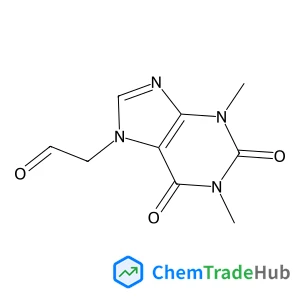
(1,3-Dimethyl-2,6-dioxo-1,2,3,6-tetrahydro-7H-purin-7-yl)acetaldehyde
CAS Number:
5614-53-9
Molecular Formula:
C9H10N4O3
![1-Oxa-8-azaspiro[4.5]decan-3-ol structure](https://static.chemtradehub.com/structs/757/757239-76-2-a0ec.webp "1-Oxa-8-azaspiro[4.5]decan-3-ol structure")
Recommended Suppliers






Disclaimer
This page provides academic journal information for reference and research purposes only. We are not affiliated with any journal publishers and do not handle publication submissions. For publication-related inquiries, please contact the respective journal publishers directly.
If you notice any inaccuracies in the information displayed, please contact us at support@chemtradehub.com. We will promptly review and address your concerns.