













Insight into conformationally-dependent binding of 1-n-alkyl-3-methylimidazolium cations to porphyrin molecules using quantum mechanical calculations
Literature Information
Publication Date
2019-04-22
DOI
10.1039/C9CP01538H
Impact Factor
3.676
Authors
Atiya Banerjee, Jindal K. Shah
View Original
Abstract
The first step in the biodegradation of imidazolium-based ionic liquids involves the insertion of the –OH group into the alkyl side chain, and it is believed to be triggered by cytochrome P450. However, at present, there is a lack of fundamental understanding of why the hydroxylation process is observed only for longer alkyl chain analogues. As the initial step of the hydroxylation reaction involves the ionic liquid binding to Fe-porphyrin (FeP) – the catalytic center of cytochrome P450, the orientation of ionic liquids presented to FeP is expected to play a crucial role in eventual hydroxylation of the alkyl side chain. In order to elucidate the chain-length dependent binding preferences exhibited by the homologous series of 1-n-alkyl-3-methylimidazolium (n = 2, 4, 6, 8, and 10) [Cnmim]+ cations, a quantum mechanical treatment of the cations in the presence of free base porphyrin (FBP) and FeP is carried out at the B3LYP-D2 and M06 levels. The binding energy of different complexes with FBP and FeP is investigated by considering three vastly different starting relative orientations of the cations with respect to FBP and FeP: tail down, tail up, and interplanar. Our calculations of binding energies reveal that the cation orientations initiated from the tail down conformations (alkyl chain facing the porphyrin molecules) are progressively destabilized as the alkyl chain length increases. The decomposition of the binding energies into various energetic contributions shows that the interaction energy between the cations and porphyrin molecules varies with the cation geometries presented to porphyrin molecules and is the primary determinant of the magnitude of the binding energies. We further demonstrate that the propensity of the cation–FeP complexes to acquire an electron, the next step in the hydroxylation reaction cycle upon substrate binding, is favored independent of the cations and conformations, suggesting that this step is not the reason for the low biodegradability of short alkyl chain bearing cations. Furthermore, the weaker binding of the ionic liquid to FeP is anticipated to facilitate dioxygen binding to FeP, the step following the electron transfer reaction. Overall, the results of the present calculations indicate that the destabilization of the tail down conformations relative to the other two conformations correlates with the experimental results of the chain length-dependent biodegradation of imidazolium-based ionic liquids.
Related Literature
Ionogel-based sodium ion micro-batteries with a 3D Na-ion diffusion mechanism enable ultrahigh rate capability
Huijuan Huang, Yanfeng Dong, Feng Zhou, Chenglin Sun, Zhong-Shuai Wu
2020-01-21
Communication
DOI: 10.1039/C9EE03219C
A comparison of electron density from Hirshfeld-atom refinement, X-ray wavefunction refinement and multipole refinement on three urea derivatives
Lilianna Chęcińska, Wolfgang Morgenroth, Carsten Paulmann, Dylan Jayatilaka, Birger Dittrich
2012-12-21
Paper
DOI: 10.1039/C2CE26964C
Ultrasensitive detection of vitamin E by signal conversion combined with core-satellite structure-based plasmon coupling effect
Keying Xu, Jing Li, Qingyi Han, Dingding Zhang, Libing Zhang, Zhen Zhang, Xiaoquan Lu
2022-01-04
Paper
DOI: 10.1039/D1AN02289J
A ratiometric fluorescence strategy based on polyethyleneimine surface-modified carbon dots and Eosin Y for the ultrasensitive determination of protamine and trypsin
Wenying Sun, Feng Zhang, Mengke Wang, Nan Wang, Guannan Wang, Xingguang Su
2021-12-31
Paper
DOI: 10.1039/D1AN02138A
Facile growth of silver crystals with greatly varied morphologies by PEO-PPO-PEO tri-block copolymers
Jing-Cyuan Yang, Chun-Hua Chen, Ren-Jye Wu
2012-02-13
Paper
DOI: 10.1039/C2CE06385A
Hybrid gold nanocube@silica@graphene-quantum-dot superstructures: synthesis and specific cell surface protein imaging applications
Liu Deng, Ling Liu, Chengzhou Zhu, Dan Li, Shaojun Dong
2013-02-07
Communication
DOI: 10.1039/C3CC38776C
Synthesis, structure, and electrochemical properties of O′3-type monoclinic NaNi0.8Co0.15Al0.05O2 cathode materials for sodium-ion batteries
Pengfei Zhou, Xiaolan Liu, Junying Weng, Li Wang, Xiaozhong Wu, Zhichao Miao, Jinping Zhao, Jin Zhou, Shuping Zhuo
2018-11-29
Paper
DOI: 10.1039/C8TA07842D
Atomically ultrathin RhCo alloy nanosheet aggregates for efficient water electrolysis in broad pH range
Yue Zhao, Juan Bai, Xin-Ru Wu, Pei Chen, Pu-Jun Jin, Hong-Chang Yao, Yu Chen
2019-06-10
Paper
DOI: 10.1039/C9TA05334D
Syntheses of Au–Cu-rich AuAg(AgCl)Cu alloy and Ag–Cu-rich AuAgCu@Cu core–shell and AuAgCu alloy nanoparticles using a polyol method
Mika Matsunaga, Toshitaka Ishizaki, Takamasa Nonaka
2012-03-15
Paper
DOI: 10.1039/C2CE06119H
You might also like
Compound Q&A
How is Ethyl 4-chlorothieno[2,3-b]pyridine-5-carboxylate (CAS: 59713-58-5) typically synthesized?
Ethyl 4-chlorothieno[2,3-b]pyridine-5-carboxylate (CAS: 59713-58-5) can be synth...
59713-58-5Ethyl 4-chlorothieno...
Compound Q&A
What regulatory guidelines apply to 5-Methyl-1H-indole-3-carbaldehyde (CAS: 52562-50-2)?
5-Methyl-1H-indole-3-carbaldehyde (CAS: 52562-50-2) is subject to various regula...
52562-50-25-Methyl-1H-indole-3...
Compound Q&A
What are the physical and chemical properties of (1,3-Dimethyl-2,4-dioxo-1,2,3,4-tetrahydro-5-pyrimidinyl)boronic acid (CAS: 223418-73-3)?
(1,3-Dimethyl-2,4-dioxo-1,2,3,4-tetrahydro-5-pyrimidinyl)boronic acid is a white...
223418-73-3(1,3-Dimethyl-2,4-di...
Compound Q&A
How should waste containing Sulfocostunolide A (CAS: 1016983-51-9) be handled?
Waste containing Sulfocostunolide A (CAS: 1016983-51-9) should be handled with c...
1016983-51-9Sulfocostunolide A
Compound Q&A
What precautions should be taken when handling Murraxocin (CAS: 88478-44-8)?
When handling Murraxocin (CAS: 88478-44-8), ensure proper personal protective eq...
88478-44-8Murraxocin
Compound Q&A
What are the physical and chemical properties of Formvar (CAS: 63148-64-1)?
Formvar (CAS: 63148-64-1) is an alkyd resin characterized by a high molecular we...
63148-64-1Formvar(R)
Compound Q&A
Is (S)-4-benzyl-2-((benzyloxy)methyl)morpholine (CAS: 205242-66-6) safe?
(S)-4-benzyl-2-((benzyloxy)methyl)morpholine is generally safe when handled with...
205242-66-6(S)-4-benzyl-2-((ben...
Compound Q&A
What industries use Methyl 1-(5-bromo-2-pyrimidinyl)cyclopropanecarboxylate (CAS: 1447607-69-3)?
Methyl 1-(5-bromo-2-pyrimidinyl)cyclopropanecarboxylate (CAS: 1447607-69-3) is p...
1447607-69-3Methyl 1-(5-bromo-2-...
Compound Q&A
Is 2-Methyl-1-phenyl-1-propanamine hydrochloride (CAS: 24290-47-9) safe?
2-Methyl-1-phenyl-1-propanamine hydrochloride (CAS: 24290-47-9) is generally con...
24290-47-92-Methyl-1-phenyl-1-...
Compound Q&A
How is 3-(4-Bromophenyl)-2-methylpropanoic acid (CAS: 66735-01-1) typically synthesized?
3-(4-Bromophenyl)-2-methylpropanoic acid is synthesized through a multi-step pro...
66735-01-13-(4-Bromophenyl)-2-...
Source Journal
Physical Chemistry Chemical Physics

CiteScore:
5.5
Self-citation Rate:
10.3%
Articles per Year:
3036
Physical Chemistry Chemical Physics (PCCP) is an international journal co-owned by 19 physical chemistry and physics societies from around the world. This journal publishes original, cutting-edge research in physical chemistry, chemical physics and biophysical chemistry. To be suitable for publication in PCCP, articles must include significant innovation and/or insight into physical chemistry; this is the most important criterion that reviewers and Editors will judge against when evaluating submissions. The journal has a broad scope and welcomes contributions spanning experiment, theory, computation and data science. Topical coverage includes spectroscopy, dynamics, kinetics, statistical mechanics, thermodynamics, electrochemistry, catalysis, surface science, quantum mechanics, quantum computing and machine learning. Interdisciplinary research areas such as polymers and soft matter, materials, nanoscience, energy, surfaces/interfaces, and biophysical chemistry are welcomed if they demonstrate significant innovation and/or insight into physical chemistry. Joined experimental/theoretical studies are particularly appreciated when complementary and based on up-to-date approaches.
Recommended Compounds
![Imidazo[1,5-a]pyrazine structure](https://static.chemtradehub.com/structs/274/274-49-7-d749.webp "Imidazo[1,5-a]pyrazine structure")
![9,9'-Spirobi[fluoren]-2-amine structure](https://static.chemtradehub.com/structs/118/118951-68-1-0d14.webp "9,9'-Spirobi[fluoren]-2-amine structure")
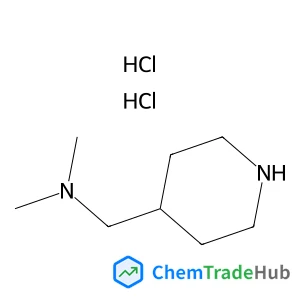
N,N-dimethyl(piperidin-4-yl)methanamine hydrochloride
CAS Number:
172281-72-0
Molecular Formula:
C8H20Cl2N2

Recommended Suppliers






Disclaimer
This page provides academic journal information for reference and research purposes only. We are not affiliated with any journal publishers and do not handle publication submissions. For publication-related inquiries, please contact the respective journal publishers directly.
If you notice any inaccuracies in the information displayed, please contact us at support@chemtradehub.com. We will promptly review and address your concerns.