












![Methyl 4-({[(2-methyl-2-propanyl)oxy]carbonyl}amino)bicyclo[2.2.2]octane-1-carboxylate structure](https://static.chemtradehub.com/structs/943/943845-74-7-b7e5.webp "Methyl 4-({[(2-methyl-2-propanyl)oxy]carbonyl}amino)bicyclo[2.2.2]octane-1-carboxylate structure")
Methyl 4-({[(2-methyl-2-propanyl)oxy]carbonyl}amino)bicyclo[2.2.2]octane-1-carboxylate
CAS Number:
943845-74-7
Molecular Formula:
C15H25NO4
Sara Hariri, Sahar Barzegari B., Kamyar Keshavarz F., Nastaran Nikounezhad, Behnoosh Safaei, Golrokh Farnam
Fourier transform infrared (FTIR) spectroscopy is a well-known method of analysis, with various applications, including promising potential for analyzing biological samples. In the bio-spectroscopy of cells, Mie scattering may increase, which then causes spectral distortion, due to the similarity of cell size with the IR medium-wavelength. These changes make the spectrum unreliable. In previous scattering elimination studies, questionable estimations were considered. For instance, all cells were considered as spherical objects or cell size was estimated randomly. In an attempt to provide the best equation based on the natural existence of cells for the FTIR Mie scattering correction, we examined the actual biological data of cells – as opposed to those yielded from mathematical manipulations. So five biological factors: cell size, shape, granularity, circularity, and edge irregularities, for each cell line were considered as factors which cause scattering. For measuring cell size, roundness and edge irregularity, microscopy images were obtained and processed. For evaluating cell line granularity, flow cytometry was used. Finally, by including these factors, an algorithm was designed. To assess the accuracy of the proposed algorithm, the trypsinized cell spectrum was considered as the high scattering spectrum. Cells were also cultured on a MirrIR slide, and their ATR-FTIR spectrum was considered as the minimum scattering spectrum. The algorithm using the abovementioned five characteristics was used for 13 different cell lines, and in some cases the corrected spectrum demonstrated more than 97% resemblance with the ATR spectra of the same cells. A comparison between the results of this algorithm with the Bassan et al. (2017) algorithm for scattering correction that is freely available on the Internet was then conducted on two different cell lines, clearly showing the advantages of our algorithm, in terms of accuracy and precision. Therefore, this method can be viewed as a more suitable solution for scattering correction in cell investigations.
Sebastián Murcia-López, Andreas Klein, Roel van de Krol, Teresa Andreu, Joan Ramón Morante, Thierry Toupance, Wolfram Jaegermann
DOI: 10.1039/C8CP07483F
Michael Barclay, Ragnar Bjornsson, Maicol Cipriani, Andreas Terfort, D. Howard Fairbrother, Oddur Ingólfsson
DOI: 10.1039/C8CP07785A
Yu Zhang, Tao Li, Dongshuai Hou, Jinglin Zhang, Jinyang Jiang
DOI: 10.1039/C8CP02469C
Qing Lu, Yi-Ming Wen, Zhao-Yi Zeng, Xiang-Rong Chen, Qi-Feng Chen
DOI: 10.1039/C8CP07246A
Miao Yu, Yixin Chen, Zi-Le Wang
DOI: 10.1039/C8CP07859A
Fehmi Khadri, Kamel Hammami
DOI: 10.1039/C8CP07409G
Mohammed Abdel-Rahman, Xu Feng, Mark Muir, Kushal Ghale, Ye Xu, Michael Trenary
DOI: 10.1039/C8CP07548D
Maria Chiara di Gregorio, Emilia Severoni, Leana Travaglini, Marta Gubitosi, Simona Sennato, Francesco Mura, Carlos Redondo-Gómez, Aida Jover, Nicolae Viorel Pavel, Luciano Galantini
DOI: 10.1039/C8CP02745E
DOI: 10.1039/C8CP07276K
When handling 4-(2-Furylmethyl)thiomorpholine 1,1-dioxide (CAS: 79206-94-3), it ...
When handling 4-Chloro-N-[2-(4-morpholinyl)ethyl]benzamide (CAS: 71320-77-9), it...
Waste containing this compound (CAS: 62921-74-8) should be handled according to ...
Waste containing (S)-Methyl 2-amino-3-cyclohexylpropanoate should be collected i...
This compound can be synthesized using a multi-step process involving the conjug...
There are several alternatives to (2E)-3-(3,4-Dichlorophenyl)acrylic acid in syn...
Ethyl 6-(2-nitrophenyl)imidazo[2,1-b][1,3]thiazole-3-carboxylate (CAS: 925437-84...
Waste containing 2-(1,3-Thiazol-2-yl)ethanamine (CAS: 18453-07-1) should be coll...
Methyl 5-iodo-2-methylbenzoate can be synthesized through the iodination of meth...
5-Chloro[1,2,4]triazolo[1,5-a]pyridine is commonly synthesized via the condensat...

Analyst publishes analytical and bioanalytical research that reports premier fundamental discoveries and inventions, and the applications of those discoveries, unconfined by traditional discipline barriers.
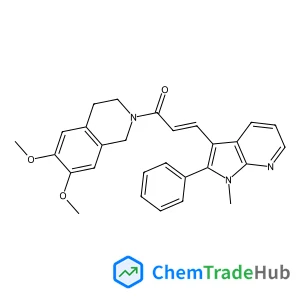
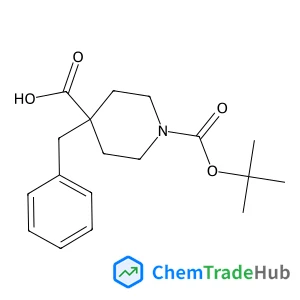
![tert-Butyl N-[(2-chloropyridin-4-yl)methyl]carbamate structure](https://static.chemtradehub.com/structs/916/916210-27-0-9f95.webp "tert-Butyl N-[(2-chloropyridin-4-yl)methyl]carbamate structure")
![Pyrazolo[1,5-a]pyridine-3-carbothioamide structure](https://static.chemtradehub.com/structs/885/885275-44-5-aae0.webp "Pyrazolo[1,5-a]pyridine-3-carbothioamide structure")





