












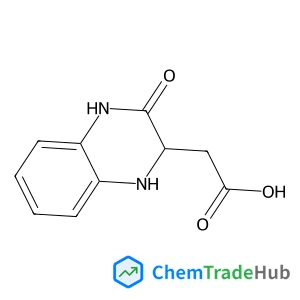
(3-Oxo-1,2,3,4-tetrahydro-2-quinoxalinyl)acetic acid
CAS Number:
136584-14-0
Molecular Formula:
C10H10N2O3
Sebastián Murcia-López, Andreas Klein, Roel van de Krol, Teresa Andreu, Joan Ramón Morante, Thierry Toupance, Wolfram Jaegermann
The formation of heterostructures has proven to be a viable way to achieve high photoelectrochemical water splitting efficiencies with BiVO4 based photoanodes. Especially, cobalt and nickel based oxides are suitable low cost contact materials. However, the exact role of these contact materials is not yet completely understood because of the difficulty to individually quantify the effects of surface passivation, charge carrier separation and catalysis on the efficiency of a heterostructure. In this study, we used photoelectron spectroscopy in combination with in situ thin film deposition to obtain direct information on the interface structure between polycrystalline BiVO4 and NiO, CoOx and Sn-doped In2O3 (ITO). Strong upwards band bending was observed for the BiVO4/NiO and BiVO4/CoOx interfaces without observing chemical changes in BiVO4, while limited band bending and reduction of Bi and V was observed while forming the BiVO4/ITO interface. Thus, the tunability of the Fermi level position within BiVO4 seems to be limited to a certain range. The feasibility of high upwards band bending through junctions with high work function (WF) compounds demonstrate that nickel oxide and cobalt oxide are able to enhance the charge carrier separation in BiVO4. Similar studies could help to identify whether new photoelectrode materials and their heterostructures would be suitable for photoelectrochemical water splitting.
Yara van Ingen, Tribani Boruah, Adam McLauchlan, Thomas Wirth, Rebecca L. Melen
DOI: 10.1039/D3SC03907B
Jonathan E. Tsang, David A. Nathanson
DOI: 10.1039/D3SC04424F
Xianzhu Luo, Cuiling Zhang, Chenyang Yue, Yuelin Jiang, Fei Yang, Yuezhong Xian
DOI: 10.1039/D3SC04937J
Fangliang Li, Yuemiao Lai, Yi Zeng, Xiao Chen, Tao Wang, Qing Guo
DOI: 10.1039/D3SC05623F
Shen Xu, Jinghang Wu, Xiang Wang
DOI: 10.1039/D3SC04571D
Bingqian Lin, Feng Xiao, Jinting Jiang, Zhengjia Zhao, Xiang Zhou
DOI: 10.1039/D3SC03989G
Yoshihisa Hashimoto, Yuri Katagiri, Yuya Tanaka, Michito Yoshizawa
DOI: 10.1039/D3SC04613C
Liting Zheng, Qingqing Li, Ying Wu, Lichao Su, Wei Du, Jibin Song, Lanlan Chen, Huanghao Yang
DOI: 10.1039/D3SC04371A
Leo W. T. Parsons, James C. Fettinger, Louise A. Berben
DOI: 10.1039/D3SC03806H
When handling 4-(2-Furylmethyl)thiomorpholine 1,1-dioxide (CAS: 79206-94-3), it ...
When handling 4-Chloro-N-[2-(4-morpholinyl)ethyl]benzamide (CAS: 71320-77-9), it...
Waste containing this compound (CAS: 62921-74-8) should be handled according to ...
Waste containing (S)-Methyl 2-amino-3-cyclohexylpropanoate should be collected i...
This compound can be synthesized using a multi-step process involving the conjug...
There are several alternatives to (2E)-3-(3,4-Dichlorophenyl)acrylic acid in syn...
Ethyl 6-(2-nitrophenyl)imidazo[2,1-b][1,3]thiazole-3-carboxylate (CAS: 925437-84...
Waste containing 2-(1,3-Thiazol-2-yl)ethanamine (CAS: 18453-07-1) should be coll...
Methyl 5-iodo-2-methylbenzoate can be synthesized through the iodination of meth...
5-Chloro[1,2,4]triazolo[1,5-a]pyridine is commonly synthesized via the condensat...

Physical Chemistry Chemical Physics (PCCP) is an international journal co-owned by 19 physical chemistry and physics societies from around the world. This journal publishes original, cutting-edge research in physical chemistry, chemical physics and biophysical chemistry. To be suitable for publication in PCCP, articles must include significant innovation and/or insight into physical chemistry; this is the most important criterion that reviewers and Editors will judge against when evaluating submissions. The journal has a broad scope and welcomes contributions spanning experiment, theory, computation and data science. Topical coverage includes spectroscopy, dynamics, kinetics, statistical mechanics, thermodynamics, electrochemistry, catalysis, surface science, quantum mechanics, quantum computing and machine learning. Interdisciplinary research areas such as polymers and soft matter, materials, nanoscience, energy, surfaces/interfaces, and biophysical chemistry are welcomed if they demonstrate significant innovation and/or insight into physical chemistry. Joined experimental/theoretical studies are particularly appreciated when complementary and based on up-to-date approaches.
![1-[3-(4-Morpholinylsulfonyl)phenyl]methanamine structure](https://static.chemtradehub.com/structs/933/933989-32-3-51af.webp "1-[3-(4-Morpholinylsulfonyl)phenyl]methanamine structure")
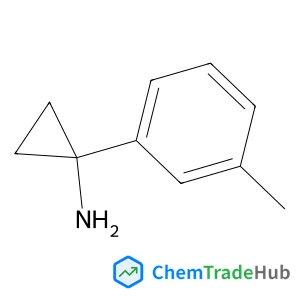
![2,6-Bis({(2R)-2-[hydroxy(diphenyl)methyl]-1-pyrrolidinyl}methyl)-4-methylphenol structure](https://static.chemtradehub.com/structs/877/877395-58-9-70bf.webp "2,6-Bis({(2R)-2-[hydroxy(diphenyl)methyl]-1-pyrrolidinyl}methyl)-4-methylphenol structure")
![2,6-Di(thiophen-2-yl)dithieno[3,2-b:2',3'-d]thiophene structure](https://static.chemtradehub.com/structs/910/910788-24-8-5b70.webp "2,6-Di(thiophen-2-yl)dithieno[3,2-b:2',3'-d]thiophene structure")




