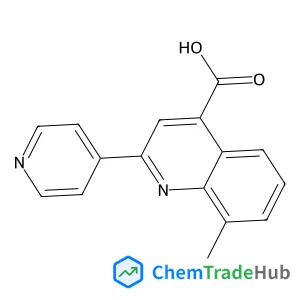
8-Methyl-2-pyridin-4-ylquinoline-4-carboxylic acid
CAS Number:
107027-42-9
Molecular Formula:
C16H12N2O2
Zhonghao Wang, Xun Hu, Guojun Zou, Zhiwei Huang, Zhicheng Tang, Qing Liu, Guangzhi Hu, Dongsheng Geng
Polymeric carbon nitride (PCN) has attracted much attention because of its unusual properties and prospective applications in many fields, including heterogeneous catalysis, photocatalysis, supercapacitors, and electrocatalysis. Therefore, it is imperative to design nanostructured and nanoporous PCN-based materials with tunable electronic properties for specific applications. This feature review summarizes the progresses made in the construction of PCN-based materials with controllable structures and morphologies, ranging from mesoporous PCN and quantum dots to three-dimensional structures. In addition, the functional processing of PCN via doping with nonmetal and metal atoms at the atomic level is presented in this review, where tunable energy levels were achieved. In particular, benefiting from the large amount of “nitrogen pots” in PCN, single atoms anchored on the surface of PCN were successfully constructed for boosting its catalytic performance in specific reactions. Moreover, various heterogeneous catalysis applications, such as the catalytic oxidation of petroleum-based feedstocks, water splitting, and photoreduction of CO2, have also been discussed on the basis of nanostructured PCN materials. Finally, this comprehensive review gives some opinions on the crucial issues and future study directions in exciting fields. We anticipate that this review can inspire researchers to extend the applications of PCN and develop more PCN-based materials possessing novel nanostructures and electronic properties.

Cellulose

Topics in Catalysis

Bioorganic & Medicinal Chemistry

Bioorganic & Medicinal Chemistry Letters

Critical Reviews in Solid State and Materials Sciences

Journal of the Indian Institute of Science

Medicinal Chemistry Research

Journal of Chemical Sciences

Journal of Asian Natural Products Research

Colloid Journal
Martin Gouverneur, Jakob Kopp, Leo van Wüllen, Monika Schönhoff
DOI: 10.1039/C5CP05753A
Kai Trepte, Sebastian Schwalbe, Gotthard Seifert
DOI: 10.1039/C5CP90227D
David Strubbe, Umberto De Giovannini, Ask Hjorth Larsen, Micael J. T. Oliveira, Alejandro Varas, Iris Theophilou, Nicole Helbig, Matthieu J. Verstraete, Lorenzo Stella, Fernando Nogueira, Alán Aspuru-Guzik, Miguel A. L. Marques
DOI: 10.1039/C5CP00351B
Cui Wen, Lu Geng, Lina Han, Jiancheng Wang, Liping Chang, Dejin Kong, Jianwen Liu
DOI: 10.1039/C5CP04788A
Vincent Tognetti, Laurent Joubert, Henry Chermette, Dominique Luneau, Christophe Morell
DOI: 10.1039/C5CP04982B
Shihao Ding, Chao Jin, Ziwei Fan, Peng Li, Haili Bai
DOI: 10.1039/C5CP05070G
C. Müller, K. Németh, S. Vesztergom, T. Pajkossy
DOI: 10.1039/C5CP05406K
Yi Hu, Kai Miao, Bao Zha, Li Xu, Xinrui Miao, Wenli Deng
DOI: 10.1039/C5CP05795G
Santhanamoorthi Nachimuthu, Wei-Chieh Chen, Jyh-Chiang Jiang
DOI: 10.1039/C5CP04877J
Ruvini Dharmadasa, I. M. Dharmadasa, Thad Druffel
DOI: 10.1039/C5CP01652E
Waste containing 6-Chloro-5-(2'-hydroxy-3'-methoxy-4-biphenylyl)-3-(3-methoxyphe...
(3alpha,5alpha)-3-Hydroxypregnane-11,20-dione is primarily used in the pharmaceu...
The market for 4-Amino-6-chloro-2-pyridinecarboxylic acid (CAS: 546141-56-4) is ...
Alternatives to (2-Benzoylethyl)trimethylammonium chloride (CAS: 24472-88-6) in ...
N-[4-Nitro-3-(trifluoromethyl)phenyl]acetamide (CAS: 393-12-4) is generally safe...
Alternative reagents such as other phosphates or similar functional groups can b...
There are alternatives to N,N'-Bis(3-aminopropyl)-1,3-propanediamine (CAS: 4605-...
When handling Aluminium trihexadecanoate, it is important to use appropriate per...
(1,1-Dioxido-3-oxo-1,2-benzothiazol-2(3H)-yl)acetic acid is a chemical compound ...
Several alternatives to 5,5-dimethyloxolan-2-one (CAS: 3123-97-5) can be used in...