













Correction: Investigating student and staff perceptions of students' experiences in teaching laboratories through the lens of meaningful learning
Literature Information
Publication Date
2018-11-23
DOI
10.1039/C8RP90012D
Impact Factor
0
Authors
Stephen R. George-Williams, Dimitri Karis, Angela L. Ziebell, Russell R. A. Kitson, Paolo Coppo, Siegbert Schmid, Christopher D. Thompson, Tina L. Overton
View Original
Abstract
Correction for ‘Investigating student and staff perceptions of students' experiences in teaching laboratories through the lens of meaningful learning’ by Stephen R. George-Williams et al., Chem. Educ. Res. Pract., 2019, DOI: 10.1039/c8rp00188j.
Related Literature
A combined crossed molecular beam and theorerical study of the O(3P,1D) + acrylonitrile (CH2CHCN) reactions and implications for combustion and extraterrestrial environments
Giacomo Pannacci, Luca Mancini, Gianmarco Vanuzzo, Pengxiao Liang, Demian Marchione, Marzio Rosi, Piergiorgio Casavecchia, Nadia Balucani
2023-06-05
Paper
DOI: 10.1039/D3CP01558K
Modified ion exchange separation for tungsten isotopic measurements from kimberlite samples using multi-collector inductively coupled plasma mass spectrometry
Yu Vin Sahoo, Shun'ichi Nakai, Arshad Ali
2005-12-01
Paper
DOI: 10.1039/B511557D
Determining 234Th and 238U in rocks, soils, and sediments via the doublet gamma at 92.5 keV
James M. Kaste, Benjamin C. Bostick, Arjun M. Heimsath
2006-05-15
Paper
DOI: 10.1039/B600202A
Developments with anion exchange stationary phases for HPLC-ICP-MS analysis of antimony species
Martin J. Nash, John E. Maskall, Steve J. Hill
2006-05-08
Paper
DOI: 10.1039/B600155F
Raman line mapping as a fast method for analyzing pharmaceutical bead formulations
Donald A. Clark, John C. Mitchell, Martin J. Snowden
2005-09-23
Paper
DOI: 10.1039/B506523B
Capacitance immunosensors based on an array biotape
Chang Ming Li, Li Kun Pan, John H. T. Luong
2006-05-31
Communication
DOI: 10.1039/B605651M
Quantitative determination of lead in mixtures of lead(ii) halides using solid-state 207Pb NMR spectroscopy
Alicia Glatfelter, Nicole Stephenson, Shi Bai, Cecil Dybowski, Dale L. Perry
2006-09-05
Communication
DOI: 10.1039/B609870C
You might also like
Compound Q&A
What are the main uses of 1H-Indazole-6-carbonitrile (CAS: 141290-59-7)?
1H-Indazole-6-carbonitrile finds applications in pharmaceuticals, where it serve...
141290-59-71H-Indazole-6-carbon...
Compound Q&A
How should waste containing Dioctyl (2E)-2-butenedioate (CAS: 2997-85-5) be handled?
Waste containing Dioctyl (2E)-2-butenedioate (CAS: 2997-85-5) should be collecte...
2997-85-5Dioctyl (2E)-2-buten...
Compound Q&A
What industries use Sodium [(1,2-benzoxazol-3-ylmethyl)sulfonyl]azanide (CAS: 68291-98-5)?
Sodium [(1,2-benzoxazol-3-ylmethyl)sulfonyl]azanide is primarily used in pharmac...
68291-98-5Sodium [(1,2-benzoxa...
Compound Q&A
Are there alternatives to Dimethyl 4-(4,4,5,5-tetramethyl-1,3,2-dioxaborolan-2-yl)-2,6-pyridinedicarboxylate (CAS: 741709-66-0) in synthesis?
Dimethyl 4-(4,4,5,5-tetramethyl-1,3,2-dioxaborolan-2-yl)-2,6-pyridinedicarboxyla...
741709-66-0Dimethyl 4-(4,4,5,5-...
Compound Q&A
How should waste containing 2-Fluoro-6-hydrazinopyridine (CAS: 80714-39-2) be handled?
Waste containing 2-Fluoro-6-hydrazinopyridine (CAS: 80714-39-2) should be manage...
80714-39-22-Fluoro-6-hydrazino...
Compound Q&A
What is 6-Formyl-2-pyridinecarboxylic acid (CAS: 499214-11-8)?
6-Formyl-2-pyridinecarboxylic acid is an organic compound with the molecular for...
499214-11-86-Formyl-2-pyridinec...
Compound Q&A
What is the market or research trend for 3-(3,4-dimethoxyphenyl)-2,5-dimethyl-N-(2-morpholin-4-ylethyl)pyrazolo[1,5-a]pyrimidin-7-amine (CAS: 900874-91-1)?
Research trends for this compound indicate a focus on its potential applications...
900874-91-13-(3,4-dimethoxyphen...
Compound Q&A
How is 9H-Tribenzo[b,d,f]azepine (CAS: 29875-73-8) typically synthesized?
9H-Tribenzo[b,d,f]azepine is typically synthesized via a multi-step process invo...
29875-73-89H-Tribenzo[b,d,f]az...
Compound Q&A
How is 1-Cyclopropyl-7-ethoxy-6-fluoro-8-methoxy-4-oxo-1,4-dihydro-3-quinolinecarboxylic acid (CAS: 1797982-51-4) typically synthesized?
1-Cyclopropyl-7-ethoxy-6-fluoro-8-methoxy-4-oxo-1,4-dihydro-3-quinolinecarboxyli...
1797982-51-41-Cyclopropyl-7-etho...
Compound Q&A
How should waste containing Methyl 3-oxo-1,2,3,4-tetrahydro-6-quinoxalinecarboxylate (CAS: 671820-52-3) be handled?
Waste containing Methyl 3-oxo-1,2,3,4-tetrahydro-6-quinoxalinecarboxylate (CAS: ...
671820-52-3Methyl 3-oxo-1,2,3,4...
Source Journal
Chemistry Education Research and Practice

CiteScore:
4.8
Self-citation Rate:
38.5%
Articles per Year:
67
Chemistry Education Research and Practice (CERP) is the journal for teachers, researchers and other practitioners at all levels of chemistry education. It is published free of charge electronically four times a year, thanks to sponsorship by the Royal Society of Chemistry's Education Division. Coverage includes the following: Research, and reviews of research, in chemistry education Evaluations of effective innovative practice in the teaching of chemistry In-depth analyses of issues of direct relevance to chemistry education The objectives of the journal: To provide researchers with the means to publish their work in full in a journal exclusively dedicated to chemistry education To offer teachers of chemistry at all levels a place where they can share effective ideas and methods for the teaching and learning of chemistry To bridge the gap between the two groups so that researchers will have their results seen by those who could benefit from using them, and practitioners will gain from encountering the ideas and results of those who have made a particular study of the learning process
Recommended Compounds

![(1S)-1,5-Anhydro-1-[3-(1-benzothiophen-2-ylmethyl)-4-fluorophenyl]-D-glucitol structure](https://static.chemtradehub.com/structs/761/761423-87-4-dbeb.webp "(1S)-1,5-Anhydro-1-[3-(1-benzothiophen-2-ylmethyl)-4-fluorophenyl]-D-glucitol structure")
(1S)-1,5-Anhydro-1-[3-(1-benzothiophen-2-ylmethyl)-4-fluorophenyl]-D-glucitol
CAS Number:
761423-87-4
Molecular Formula:
C21H21FO5S
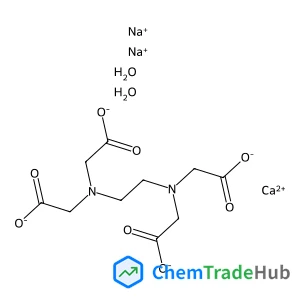
EthylenediaminetetraaceticacidcalciumDisodiumsalthydrate
CAS Number:
23411-34-9
Molecular Formula:
C10H16CaN2Na2O10

Recommended Suppliers




Disclaimer
This page provides academic journal information for reference and research purposes only. We are not affiliated with any journal publishers and do not handle publication submissions. For publication-related inquiries, please contact the respective journal publishers directly.
If you notice any inaccuracies in the information displayed, please contact us at support@chemtradehub.com. We will promptly review and address your concerns.