













A novel practical pedagogy for terminal assessment
Literature Information
Publication Date
2018-08-15
DOI
10.1039/C8RP00186C
Impact Factor
0
Authors
View Original
Abstract
The present paper reports upon the design and implementation of a novel practical work pedagogy that is shown to increase students’ retention of practical procedures. The chemistry exams, for 15 to 16-year olds in England, will be assessed entirely through terminal examination questions from 2018. Longer term retention of learning is critical if these students are to minimise any discrepancy in attainment that may arise from following curricula with a coursework component. The novel design, underpinned by Cognitive Load Theory and Social Constructivism, involves pre-laboratory preparation and employs oracy to promote thinking during practical work. Three equivalent chemistry groups within the same school undertook neutralisation and crystallisation practical tasks and their practical work exam question attainment data is analysed. The novel pedagogy is trialled as a neutralisation task with one group and affective outcomes are determined through Likert scale activity feedback questionnaire. Attainment data shows a statistically significant higher mark in practical exam question attainment for the intervention compared to the control group when tested ten weeks after the teaching episode.
Recommended Journals
Related Literature
Geometric and electronic effects on hydrogenation of cinnamaldehyde over unsupported Pt-based nanocrystals
William O. Oduro, Nick Cailuo, Kai Man K. Yu, Hongwei Yang, Shik Chi Tsang
2011-01-07
Paper
DOI: 10.1039/C0CP01832E
Which mechanism operates in the electron-transfer process at liquid/liquid interfaces?
Min Zhou, Shiyu Gan, Lijie Zhong, Xiandui Dong, Li Niu
2010-12-13
Paper
DOI: 10.1039/C0CP01692F
Synthesis of silica supported AuCu nanoparticlecatalysts and the effects of pretreatment conditions for the CO oxidation reaction
J. Chris Bauer, David Mullins, Meijun Li, E. Andrew Payzant
2011-01-18
Paper
DOI: 10.1039/C0CP01859G
Photocatalysis of PbS quantum dots in a quantum dot-sensitized solar cell: photovoltaic performance and characteristics
Beibei Ma, Liduo Wang, Haopeng Dong, Rui Gao, Yi Geng, Yifeng Zhu, Yong Qiu
2010-12-16
Communication
DOI: 10.1039/C0CP02415E
Mechanistic differences between methanol and dimethyl ethercarbonylation in side pockets and large channels of mordenite
Mercedes Boronat, Cristina Martínez, Avelino Corma
2011-01-19
Paper
DOI: 10.1039/C0CP01996H
Ammonia IRMS-TPD measurements on Brønsted acidity of proton-formed SAPO-34
Katsuki Suzuki, Takuma Nishio, Naonobu Katada, German Sastre, Miki Niwa
2010-12-20
Paper
DOI: 10.1039/C0CP00961J
Effect of substituents on redox, spectroscopic and structural properties of conjugated diaryltetrazines—a combined experimental and theoretical study
Ewa Kurach, David Djurado, Jan Rimarčik, Aleksandra Kornet, Marek Wlostowski, Vladimir Lukeš, Jacques Pécaut, Malgorzata Zagorska, Adam Pron
2010-12-09
Paper
DOI: 10.1039/C0CP01553A
Difluoro-boron-triaza-anthracene: a laser dye in the blue region. Theoretical simulation of alternative difluoro-boron-diaza-aromatic systems
Jorge Bañuelos, Fernando López Arbeloa, Virginia Martinez, Marta Liras, Angel Costela, Inmaculada García Moreno, Iñigo López Arbeloa
2010-12-20
Paper
DOI: 10.1039/C0CP01147A
Temperature dependence of the surfactant film bending elasticity in a bicontinuous sugar surfactant based microemulsion: a quasielastic scattering study
Stefan Wellert, Matthias Karg, Olaf Holderer, André Richardt, Thomas Hellweg
2010-12-10
Paper
DOI: 10.1039/C0CP02044C
Translation-rotation energy levels of one H2 molecule inside the small, medium and large cages of the structure H clathrate hydrate
Álvaro Valdés, Geert-Jan Kroes
2010-12-16
Paper
DOI: 10.1039/C0CP01804J
You might also like
Compound Q&A
What are the main uses of 1H-Indazole-6-carbonitrile (CAS: 141290-59-7)?
1H-Indazole-6-carbonitrile finds applications in pharmaceuticals, where it serve...
141290-59-71H-Indazole-6-carbon...
Compound Q&A
How should waste containing Dioctyl (2E)-2-butenedioate (CAS: 2997-85-5) be handled?
Waste containing Dioctyl (2E)-2-butenedioate (CAS: 2997-85-5) should be collecte...
2997-85-5Dioctyl (2E)-2-buten...
Compound Q&A
What industries use Sodium [(1,2-benzoxazol-3-ylmethyl)sulfonyl]azanide (CAS: 68291-98-5)?
Sodium [(1,2-benzoxazol-3-ylmethyl)sulfonyl]azanide is primarily used in pharmac...
68291-98-5Sodium [(1,2-benzoxa...
Compound Q&A
Are there alternatives to Dimethyl 4-(4,4,5,5-tetramethyl-1,3,2-dioxaborolan-2-yl)-2,6-pyridinedicarboxylate (CAS: 741709-66-0) in synthesis?
Dimethyl 4-(4,4,5,5-tetramethyl-1,3,2-dioxaborolan-2-yl)-2,6-pyridinedicarboxyla...
741709-66-0Dimethyl 4-(4,4,5,5-...
Compound Q&A
How should waste containing 2-Fluoro-6-hydrazinopyridine (CAS: 80714-39-2) be handled?
Waste containing 2-Fluoro-6-hydrazinopyridine (CAS: 80714-39-2) should be manage...
80714-39-22-Fluoro-6-hydrazino...
Compound Q&A
What is 6-Formyl-2-pyridinecarboxylic acid (CAS: 499214-11-8)?
6-Formyl-2-pyridinecarboxylic acid is an organic compound with the molecular for...
499214-11-86-Formyl-2-pyridinec...
Compound Q&A
What is the market or research trend for 3-(3,4-dimethoxyphenyl)-2,5-dimethyl-N-(2-morpholin-4-ylethyl)pyrazolo[1,5-a]pyrimidin-7-amine (CAS: 900874-91-1)?
Research trends for this compound indicate a focus on its potential applications...
900874-91-13-(3,4-dimethoxyphen...
Compound Q&A
How is 9H-Tribenzo[b,d,f]azepine (CAS: 29875-73-8) typically synthesized?
9H-Tribenzo[b,d,f]azepine is typically synthesized via a multi-step process invo...
29875-73-89H-Tribenzo[b,d,f]az...
Compound Q&A
How is 1-Cyclopropyl-7-ethoxy-6-fluoro-8-methoxy-4-oxo-1,4-dihydro-3-quinolinecarboxylic acid (CAS: 1797982-51-4) typically synthesized?
1-Cyclopropyl-7-ethoxy-6-fluoro-8-methoxy-4-oxo-1,4-dihydro-3-quinolinecarboxyli...
1797982-51-41-Cyclopropyl-7-etho...
Compound Q&A
How should waste containing Methyl 3-oxo-1,2,3,4-tetrahydro-6-quinoxalinecarboxylate (CAS: 671820-52-3) be handled?
Waste containing Methyl 3-oxo-1,2,3,4-tetrahydro-6-quinoxalinecarboxylate (CAS: ...
671820-52-3Methyl 3-oxo-1,2,3,4...
Source Journal
Chemistry Education Research and Practice

CiteScore:
4.8
Self-citation Rate:
38.5%
Articles per Year:
67
Chemistry Education Research and Practice (CERP) is the journal for teachers, researchers and other practitioners at all levels of chemistry education. It is published free of charge electronically four times a year, thanks to sponsorship by the Royal Society of Chemistry's Education Division. Coverage includes the following: Research, and reviews of research, in chemistry education Evaluations of effective innovative practice in the teaching of chemistry In-depth analyses of issues of direct relevance to chemistry education The objectives of the journal: To provide researchers with the means to publish their work in full in a journal exclusively dedicated to chemistry education To offer teachers of chemistry at all levels a place where they can share effective ideas and methods for the teaching and learning of chemistry To bridge the gap between the two groups so that researchers will have their results seen by those who could benefit from using them, and practitioners will gain from encountering the ideas and results of those who have made a particular study of the learning process
Recommended Compounds

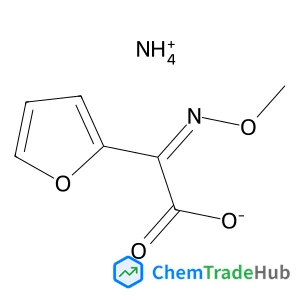
Ammonium (Z)-2-(furan-2-yl)-2-(methoxyimino)acetate
CAS Number:
97148-39-5
Molecular Formula:
C7H10N2O4


Recommended Suppliers




Disclaimer
This page provides academic journal information for reference and research purposes only. We are not affiliated with any journal publishers and do not handle publication submissions. For publication-related inquiries, please contact the respective journal publishers directly.
If you notice any inaccuracies in the information displayed, please contact us at support@chemtradehub.com. We will promptly review and address your concerns.