












Enhanced reactive CO2 species formation via V2O5-promoted Ni/KCC-1 for low temperature activation of CO2 methanation
Literature Information
Publication Date
2019-03-16
DOI
10.1039/C8RE00312B
Impact Factor
4.239
Authors
Muhamed Yusuf Shahul Hamid, Anis Farhana Abdul Rahman
View Original
Abstract
Application of CO2 methanation, especially in CO2-rich gas fields, could potentially provide additional value to the synthetic natural gas production. In this study, highly active vanadium (V2O5)-promoted Ni/KCC-1 catalysts with 5% nickel content were prepared using a co-impregnation method for CO2 methanation reaction. The influence of V2O5 on the textural properties, basicity and reducibility of the 5Ni/KCC-1 catalysts was systematically investigated. It was found that addition of V2O5 enhances the basicity of the catalysts; however, it decreases the surface area and pore volume. The amphoteric properties of V2O5 provide additional adsorption sites of CO2 producing more reactive unidentate CO2 adsorbed species. The presence of V2O5 also improved the dispersion and exposed more Ni species. This leads to an increased amount of reducible NiO species. Compared to 5Ni/KCC-1, the V2O5-Ni/KCC-1 series were active at lower temperature. The light off temperature for V2O5-Ni/KCC-1 was 423 K compared to 473 K for 5Ni/KCC-1. At 623 K, the 7.5V2O5-Ni/KCC-1 reaches 94.4% CO2 conversion, 15% higher than 5Ni/KCC-1. The presence of O2 negatively affects the catalytic activity as O2 interferes with the CO2 adsorption sites. The analysis of variance (ANOVA) indicates that the reaction temperature heavily influences the CH4 yield followed by the reduction temperature and H2 : CO2 ratio. The optimized conditions by the RSM are a reduction temperature of 696.9 K, a reaction temperature of 766.5 K and a H2 : CO2 ratio of 5.1.
Related Literature
A red-emissive aminobenzopyrano-xanthene dye: elucidation of fluorescence emission mechanisms in solution and in the aggregate state
Shinichiro Kamino, Miho Murakami, Asana Tatsumi, Noriyuki Nagaoka, Yoshinao Shirasaki, Keiko Watanabe, Kengo Yoshida, Jun Horigome, Seiji Komeda
2012-12-05
Paper
DOI: 10.1039/C2CP43503A
Metal centered oxidation or ligand centered oxidation of metal dithiolene? Spectral, electrochemical and structural studies on a nickel-4-pyridine-1,2-dithiolate system
Xin-Yu Li, Yong-Gang Sun, Peng Huo, Ming-Yan Shao, Shu-Fang Ji
2013-01-08
Paper
DOI: 10.1039/C3CP44054K
General treatment of the multimode Jahn–Teller effect: study of fullerenecations
Harry Ramanantoanina, Matija Zlatar, Pablo García-Fernández, Claude Daul
2012-11-22
Paper
DOI: 10.1039/C2CP43591H
Chemically-synthesised, atomically-precise gold clusters deposited and activated on titania
David P. Anderson, Jason F. Alvino, Alexander Gentleman, Hassan Al Qahtani, Lars Thomsen, Matthew I. J. Polson, Gregory F. Metha, Vladimir B. Golovko, Gunther G. Andersson
2013-01-17
Paper
DOI: 10.1039/C3CP44005B
Formation of dimethylketene and methacrolein by reaction of the CH radical with acetone
Fabien Goulay, Adeeb Derakhshan, Eamonn Maher, Adam J. Trevitt, John D. Savee, Adam M. Scheer, David L. Osborn, Craig A. Taatjes
2013-01-29
Paper
DOI: 10.1039/C3CP43829E
Dual reaction channels for photocatalytic oxidation of phenylmethanol on anatase
Ye-Fei Li, Zhi-Pan Liu
2012-11-22
Communication
DOI: 10.1039/C2CP44137C
Plasma electrochemistry: voltammetry in a flame plasma electrolyte
Atif Elahi, Daren J. Caruana
2012-11-20
Paper
DOI: 10.1039/C2CP43431H
Method/basis set dependence of NICS values among metallic nano-clusters and hydrocarbons
Zahra Badri, Cina Foroutan-Nejad, Parviz Rashidi-Ranjbar
2012-02-03
Paper
DOI: 10.1039/C2CP23205G
A new type of low-cost counter electrode catalyst based on platinum nanoparticles loaded onto silicon carbide (Pt/SiC) for dye-sensitized solar cells
Sining Yun, Liang Wang, Chunyu Zhao, Yanxiang Wang, Tingli Ma
2013-02-01
Communication
DOI: 10.1039/C3CP44048F
The catalytic mechanism of glyceraldehyde 3-phosphate dehydrogenase from Trypanosoma cruzi elucidated via the QM/MM approach
Cláudio Nahum Alves, Jerônimo Lameira, Iñaki Tuñón, Sergio Martí, Vicent Moliner
2013-01-14
Paper
DOI: 10.1039/C3CP43968B
You might also like
Compound Q&A
What is 3-Fluoro-2-methylbenzylamine (CAS: 771573-36-5)?
3-Fluoro-2-methylbenzylamine is an organic compound with the CAS number 771573-3...
771573-36-53-Fluoro-2-methylben...
Compound Q&A
Is Tert-butyl 2-(oxetan-3-ylidene)acetate (CAS: 1207175-03-8) safe?
Tert-butyl 2-(oxetan-3-ylidene)acetate is considered safe for its intended uses ...
1207175-03-8Tert-butyl 2-(oxetan...
Compound Q&A
What precautions should be taken when handling 4-Acetyl-2-fluorobenzonitrile (CAS: 214760-18-6)?
Proper personal protective equipment (PPE) such as gloves, goggles, and a lab co...
214760-18-64-Acetyl-2-fluoroben...
Compound Q&A
How is 2-Ethyl-4-methyl-1,3-thiazole (CAS: 15679-12-6) typically synthesized?
2-Ethyl-4-methyl-1,3-thiazole is commonly synthesized via the reaction of thiour...
15679-12-62-Ethyl-4-methyl-1,3...
Compound Q&A
How should 5',5''-([2,2'-Bithiophene]-5,5'-diyl)bis(([1,1':3',1''-terphenyl]-4,4''-dicarboxylic acid)) (CAS: 1227780-71-3) be stored?
This compound should be stored in a cool, dry place away from direct sunlight an...
1227780-71-35',5''''-([2,2'-Bith...
Compound Q&A
What regulatory guidelines apply to L-Lysine Acetate Salt (CAS: 52315-92-1)?
L-Lysine Acetate Salt (CAS: 52315-92-1) is subject to various regulatory guideli...
52315-92-1L-LYSINE ACETATE SAL...
Compound Q&A
Is 6-Fluoro-3-hydroxy-2-pyrazinecarboxamide (CAS: 259793-96-9) safe?
6-Fluoro-3-hydroxy-2-pyrazinecarboxamide (CAS: 259793-96-9) is generally conside...
259793-96-96-Fluoro-3-hydroxy-2...
Compound Q&A
What are the physical and chemical properties of 1,1'-Sulfonylbis(1H-imidazole) (CAS: 7189-69-7)?
1,1'-Sulfonylbis(1H-imidazole) is a crystalline solid with a molecular weight of...
7189-69-71,1'-Sulfonylbis(1H-...
Compound Q&A
What industries use 4-methyl-7-nitro-1H-indole-3-carbonitrile (CAS: 289483-82-5)?
4-Methyl-7-nitro-1H-indole-3-carbonitrile (CAS: 289483-82-5) is primarily used i...
289483-82-54-methyl-7-nitro-1H-...
Compound Q&A
How should waste containing 5-Bromo-3-indolyl-beta-galactoside (CAS: 97753-82-7) be handled?
Waste containing 5-Bromo-3-indolyl-beta-galactoside (CAS: 97753-82-7) should be ...
97753-82-75-Bromo-3-indolyl-be...
Source Journal
Reaction Chemistry & Engineering

CiteScore:
0
Self-citation Rate:
8.8%
Articles per Year:
284
Reaction Chemistry & Engineering is an interdisciplinary journal reporting cutting-edge research focused on enhancing the understanding and efficiency of reactions. Reaction engineering leverages the interface where fundamental molecular chemistry meets chemical engineering and technology. Challenges in chemistry can be overcome by the application of new technologies, while engineers may find improved solutions for process development from the latest developments in reaction chemistry. Reaction Chemistry & Engineering is a unique forum for researchers whose interests span the broad areas of chemical engineering and chemical sciences to come together in solving problems of importance to wider society. All papers should be written to be approachable by readers across the engineering and chemical sciences. Papers that consider multiple scales, from the laboratory up to and including plant scale, are particularly encouraged.
Recommended Compounds
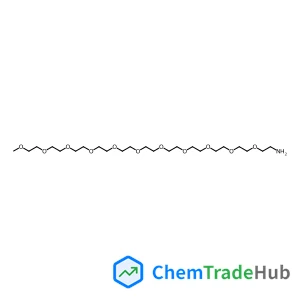
2,5,8,11,14,17,20,23,26,29,32-Undecaoxatetratriacontan-34-amine
CAS Number:
854601-60-8
Molecular Formula:
C23H49NO11
![(3R)-3-(3-Fluorophenyl)-3-({[(2-methyl-2-propanyl)oxy]carbonyl}amino)propanoic acid structure](https://static.chemtradehub.com/structs/500/500789-04-8-20dd.webp "(3R)-3-(3-Fluorophenyl)-3-({[(2-methyl-2-propanyl)oxy]carbonyl}amino)propanoic acid structure")
(3R)-3-(3-Fluorophenyl)-3-({[(2-methyl-2-propanyl)oxy]carbonyl}amino)propanoic acid
CAS Number:
500789-04-8
Molecular Formula:
C14H18FNO4
Recommended Suppliers




Disclaimer
This page provides academic journal information for reference and research purposes only. We are not affiliated with any journal publishers and do not handle publication submissions. For publication-related inquiries, please contact the respective journal publishers directly.
If you notice any inaccuracies in the information displayed, please contact us at support@chemtradehub.com. We will promptly review and address your concerns.