












Effect of salt on the formation of 5-hydroxymethylfurfural from ketohexoses under aqueous conditions
Literature Information
Publication Date
2019-02-04
DOI
10.1039/C8RE00300A
Impact Factor
4.239
Authors
Paul Körner, Stephan Beil, Andrea Kruse
View Original
Abstract
5-Hydroxymethylfurfural (HMF) is a valuable platform chemical that can be produced by an acid-catalysed triple dehydration of hexoses, in particular ketoses. The mechanism of HMF formation is not fully understood, i.a. it has been hypothesised that anions could be involved in the reaction, provided that they are present. In this work, the effect of different monovalent, weakly nucleophilic anions on the HMF formation from fructose and tagatose is studied in order to elucidate their possible role in the mechanism. All anions investigated cause an acceleration of the initial HMF formation compared with the salt-free sample, i.e. there is a reaction order with respect to the anion concentration between 0.12 and 0.68. Merely higher concentrations of nitrate inhibited the HMF formation. Furthermore, by studying the insertion of 18O from labelled water into fructose using LC-MS, a hydroxyl group exchange could be identified giving rise to the assumption that substitution reactions play an important role.
Recommended Journals
Related Literature
Functional biomimetic models for the active site in the respiratory enzyme cytochrome c oxidase
James P. Collman, Richard A. Decréau
2008-09-04
Feature Article
DOI: 10.1039/B808070B
Orthogonal or simultaneous use of disulfide and hydrazone exchange in dynamic covalent chemistry in aqueous solution
Zaida Rodriguez-Docampo
2008-09-11
Communication
DOI: 10.1039/B808725C
A facile approach to fabricate functional 3D macroscopic silica microtube networks using N,N′-methylenediacrylamide organogel as template
Yu Xia, Yu Wang, Kai Chen, Liming Tang
2008-09-23
Communication
DOI: 10.1039/B811412A
Facile preparation of low cytotoxicity fluorescent carbon nanocrystals by electrooxidation of graphite
Qiao-Ling Zhao, Zhi-Ling Zhang, Bi-Hai Huang, Jun Peng, Min Zhang, Dai-Wen Pang
2008-09-24
Communication
DOI: 10.1039/B812420E
Concomitant formation of two different solvates of a hexa-host from a binary mixture of solvents
Dinabandhu Das, Leonard J. Barbour
2008-09-26
Communication
DOI: 10.1039/B813891E
In vivo studies of a platinum(ii) metallointercalator
Dianne M. Fisher, Ronald R. Fenton, Janice R. Aldrich-Wright
2008-09-26
Communication
DOI: 10.1039/B811723C
Developing DNA tiles for oligonucleotide hybridization assay with higher accuracy and efficiency
Yonggang Ke, Jeanette Nangreave, Hao Yan, Stuart Lindsay, Yan Liu
2008-09-29
Communication
DOI: 10.1039/B811332G
A simple route to novel D spherosilicones; the first crystallographic structures of D6 and D8 cages
Alan R. Bassindale, Zhihua Liu, Peter G. Taylor, Peter N. Horton, Michael B. Hursthouse
2008-09-29
Communication
DOI: 10.1039/B808456D
Novel highly active FSM-16 supported molybdenum catalyst for hydrotreatment
Shelu Garg, Thallada Bhaskar, Kapil Soni, Gnanamani Muthu Kumaran, Akinori Muto, Yusaku Sakata, Gudimella Murali Dhar
2008-09-15
Communication
DOI: 10.1039/B809808E
You might also like
Compound Q&A
What are the main uses of 1H-Indazole-6-carbonitrile (CAS: 141290-59-7)?
1H-Indazole-6-carbonitrile finds applications in pharmaceuticals, where it serve...
141290-59-71H-Indazole-6-carbon...
Compound Q&A
How should waste containing Dioctyl (2E)-2-butenedioate (CAS: 2997-85-5) be handled?
Waste containing Dioctyl (2E)-2-butenedioate (CAS: 2997-85-5) should be collecte...
2997-85-5Dioctyl (2E)-2-buten...
Compound Q&A
What industries use Sodium [(1,2-benzoxazol-3-ylmethyl)sulfonyl]azanide (CAS: 68291-98-5)?
Sodium [(1,2-benzoxazol-3-ylmethyl)sulfonyl]azanide is primarily used in pharmac...
68291-98-5Sodium [(1,2-benzoxa...
Compound Q&A
Are there alternatives to Dimethyl 4-(4,4,5,5-tetramethyl-1,3,2-dioxaborolan-2-yl)-2,6-pyridinedicarboxylate (CAS: 741709-66-0) in synthesis?
Dimethyl 4-(4,4,5,5-tetramethyl-1,3,2-dioxaborolan-2-yl)-2,6-pyridinedicarboxyla...
741709-66-0Dimethyl 4-(4,4,5,5-...
Compound Q&A
How should waste containing 2-Fluoro-6-hydrazinopyridine (CAS: 80714-39-2) be handled?
Waste containing 2-Fluoro-6-hydrazinopyridine (CAS: 80714-39-2) should be manage...
80714-39-22-Fluoro-6-hydrazino...
Compound Q&A
What is 6-Formyl-2-pyridinecarboxylic acid (CAS: 499214-11-8)?
6-Formyl-2-pyridinecarboxylic acid is an organic compound with the molecular for...
499214-11-86-Formyl-2-pyridinec...
Compound Q&A
What is the market or research trend for 3-(3,4-dimethoxyphenyl)-2,5-dimethyl-N-(2-morpholin-4-ylethyl)pyrazolo[1,5-a]pyrimidin-7-amine (CAS: 900874-91-1)?
Research trends for this compound indicate a focus on its potential applications...
900874-91-13-(3,4-dimethoxyphen...
Compound Q&A
How is 9H-Tribenzo[b,d,f]azepine (CAS: 29875-73-8) typically synthesized?
9H-Tribenzo[b,d,f]azepine is typically synthesized via a multi-step process invo...
29875-73-89H-Tribenzo[b,d,f]az...
Compound Q&A
How is 1-Cyclopropyl-7-ethoxy-6-fluoro-8-methoxy-4-oxo-1,4-dihydro-3-quinolinecarboxylic acid (CAS: 1797982-51-4) typically synthesized?
1-Cyclopropyl-7-ethoxy-6-fluoro-8-methoxy-4-oxo-1,4-dihydro-3-quinolinecarboxyli...
1797982-51-41-Cyclopropyl-7-etho...
Compound Q&A
How should waste containing Methyl 3-oxo-1,2,3,4-tetrahydro-6-quinoxalinecarboxylate (CAS: 671820-52-3) be handled?
Waste containing Methyl 3-oxo-1,2,3,4-tetrahydro-6-quinoxalinecarboxylate (CAS: ...
671820-52-3Methyl 3-oxo-1,2,3,4...
Source Journal
Reaction Chemistry & Engineering

CiteScore:
0
Self-citation Rate:
8.8%
Articles per Year:
284
Reaction Chemistry & Engineering is an interdisciplinary journal reporting cutting-edge research focused on enhancing the understanding and efficiency of reactions. Reaction engineering leverages the interface where fundamental molecular chemistry meets chemical engineering and technology. Challenges in chemistry can be overcome by the application of new technologies, while engineers may find improved solutions for process development from the latest developments in reaction chemistry. Reaction Chemistry & Engineering is a unique forum for researchers whose interests span the broad areas of chemical engineering and chemical sciences to come together in solving problems of importance to wider society. All papers should be written to be approachable by readers across the engineering and chemical sciences. Papers that consider multiple scales, from the laboratory up to and including plant scale, are particularly encouraged.
Recommended Compounds
![(3aS,6aS)-1-Methyloctahydropyrrolo[3,4-b]pyrrole structure](https://static.chemtradehub.com/structs/877/877212-98-1-9157.webp "(3aS,6aS)-1-Methyloctahydropyrrolo[3,4-b]pyrrole structure")
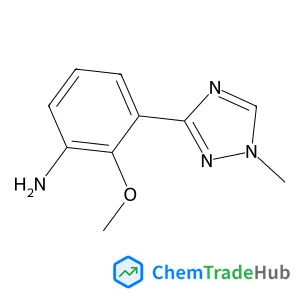
2-Methoxy-3-(1-methyl-1H-1,2,4-triazol-3-yl)aniline
CAS Number:
1609394-10-6
Molecular Formula:
C10H12N4O
![(3R)-4-(4-Chlorophenyl)-3-({[(2-methyl-2-propanyl)oxy]carbonyl}amino)butanoic acid structure](https://static.chemtradehub.com/structs/218/218608-96-9-f871.webp "(3R)-4-(4-Chlorophenyl)-3-({[(2-methyl-2-propanyl)oxy]carbonyl}amino)butanoic acid structure")
(3R)-4-(4-Chlorophenyl)-3-({[(2-methyl-2-propanyl)oxy]carbonyl}amino)butanoic acid
CAS Number:
218608-96-9
Molecular Formula:
C15H20ClNO4
Recommended Suppliers






Disclaimer
This page provides academic journal information for reference and research purposes only. We are not affiliated with any journal publishers and do not handle publication submissions. For publication-related inquiries, please contact the respective journal publishers directly.
If you notice any inaccuracies in the information displayed, please contact us at support@chemtradehub.com. We will promptly review and address your concerns.