












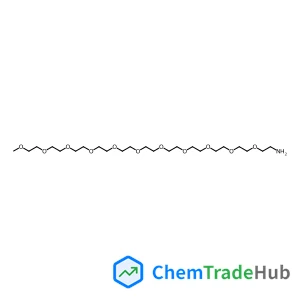
2,5,8,11,14,17,20,23,26,29,32-Undecaoxatetratriacontan-34-amine
CAS Number:
854601-60-8
Molecular Formula:
C23H49NO11
María José Nieves-Remacha, Myriam Torres, María Ruiz-Abad, Juan A. Rincón, Graham R. Cumming, Pablo Garcia-Losada
A continuous phase-transfer catalysis process for N-alkylation integrated with separation was developed. This approach circumvents the heat and mass transfer limitations encountered in batch scale-up, enabling a safer process and yielding a higher-quality product. Two continuous flow approaches are analyzed: a) an automated fill–empty reactor with an integrated gravity separator and b) a tubular flow reactor with an inline membrane separator. The fill–empty platform enabled the direct technology transfer from batch, achieving conversions >99% (by HPLC) and purities >90%. The tubular flow reactor allowed the reduction of the base solution requirements, yielding conversions of 91% and purities >88%. Both the setups provide a small process footprint with downstream integrated separation. The on-demand scale-up was efficiently and safely demonstrated using the fill–empty approach for the production of various substrates at the multigram scale.
K. M. Liew, Chunxu Pan
DOI: 10.1039/C3CP43549K
Xin Wang, Fenyong Deng, Zhongzhi Tang, Bo Wu
DOI: 10.1039/C3CP44528C
Hamdy F. M. Mohamed, S. Kuroda, Y. Kobayashi, N. Oshima, R. Suzuki
DOI: 10.1039/C2CP43727A
Fengyun Chen, Zhenpeng Hu, Yongfei Ji, Aidi Zhao, Bing Wang, Jinlong Yang, J. G. Hou
DOI: 10.1039/C2CP23190E
Renata Rybakiewicz, David Djurado, Robert Nowakowski, Petr Toman, Jiri Pfleger, Jean-Marie Verilhac, Malgorzata Zagorska, Adam Pron
DOI: 10.1039/C2CP43505E
Zhi-Yong Yang, Yuan Tao, Ting Chen, Hui-Juan Yan, Zhi-Xiang Wang
DOI: 10.1039/C2CP42828H
Gengtao Fu, Ke Wu, Xian Jiang, Lin Tao, Yu Chen, Jun Lin, Yiming Zhou, Shaohua Wei, Yawen Tang, Tianhong Lu, Xinghua Xia
DOI: 10.1039/C3CP44191A
Riccarda Caputo, Arkadiusz Kupczak, Wieslawa Sikora, Adem Tekin
DOI: 10.1039/C2CP43090H
Tobias Cramer, Beatrice Chelli, Mauro Murgia, Marianna Barbalinardo, Eva Bystrenova, Dago M. de Leeuw, Fabio Biscarini
DOI: 10.1039/C3CP44251A
Sergey Yakovlev, Kenneth H. Downing
DOI: 10.1039/C2CP42969A
3-Fluoro-2-methylbenzylamine is an organic compound with the CAS number 771573-3...
Tert-butyl 2-(oxetan-3-ylidene)acetate is considered safe for its intended uses ...
Proper personal protective equipment (PPE) such as gloves, goggles, and a lab co...
2-Ethyl-4-methyl-1,3-thiazole is commonly synthesized via the reaction of thiour...
This compound should be stored in a cool, dry place away from direct sunlight an...
L-Lysine Acetate Salt (CAS: 52315-92-1) is subject to various regulatory guideli...
6-Fluoro-3-hydroxy-2-pyrazinecarboxamide (CAS: 259793-96-9) is generally conside...
1,1'-Sulfonylbis(1H-imidazole) is a crystalline solid with a molecular weight of...
4-Methyl-7-nitro-1H-indole-3-carbonitrile (CAS: 289483-82-5) is primarily used i...
Waste containing 5-Bromo-3-indolyl-beta-galactoside (CAS: 97753-82-7) should be ...

Reaction Chemistry & Engineering is an interdisciplinary journal reporting cutting-edge research focused on enhancing the understanding and efficiency of reactions. Reaction engineering leverages the interface where fundamental molecular chemistry meets chemical engineering and technology. Challenges in chemistry can be overcome by the application of new technologies, while engineers may find improved solutions for process development from the latest developments in reaction chemistry. Reaction Chemistry & Engineering is a unique forum for researchers whose interests span the broad areas of chemical engineering and chemical sciences to come together in solving problems of importance to wider society. All papers should be written to be approachable by readers across the engineering and chemical sciences. Papers that consider multiple scales, from the laboratory up to and including plant scale, are particularly encouraged.
![trans,trans-4-n-Propyl-4-[4-(trifluoromethoxy)phenyl]bicyclohexyl structure](https://static.chemtradehub.com/structs/133/133937-72-1-25ef.webp "trans,trans-4-n-Propyl-4-[4-(trifluoromethoxy)phenyl]bicyclohexyl structure")
![5-(2-Phenylpyrazolo[1,5-a]pyridin-3-yl)-2H-pyrazolo[3,4-c]pyridazin-3-amine structure](https://static.chemtradehub.com/structs/865/865362-74-9-0091.webp "5-(2-Phenylpyrazolo[1,5-a]pyridin-3-yl)-2H-pyrazolo[3,4-c]pyridazin-3-amine structure")
![(1S,4aR,5R,7S,7aS)-1-(beta-D-Glucopyranosyloxy)-5-hydroxy-7-methyl-1,4a,5,6,7,7a-hexahydrocyclopenta[c]pyran-7-yl alpha-D-galactopyranoside structure](https://static.chemtradehub.com/structs/817/81720-07-2-4ffd.webp "(1S,4aR,5R,7S,7aS)-1-(beta-D-Glucopyranosyloxy)-5-hydroxy-7-methyl-1,4a,5,6,7,7a-hexahydrocyclopenta[c]pyran-7-yl alpha-D-galactopyranoside structure")




