












NMR analyses on N-hydroxymethylated nucleobases – implications for formaldehyde toxicity and nucleic acid demethylases
Literature Information
Publication Date
2018-05-16
DOI
10.1039/C8OB00734A
Impact Factor
3.876
Authors
S. Shishodia, D. Zhang, T. Brown, T. D. W. Claridge, C. J. Schofield
View Original
Abstract
Formaldehyde is produced in cells by enzyme-catalysed demethylation reactions, including those occurring on N-methylated nucleic acids. Formaldehyde reacts with nucleobases to form N-hydroxymethylated adducts that may contribute to its toxicity/carcinogenicity when added exogenously, but the chemistry of these reactions has been incompletely defined. We report NMR studies on the reactions of formaldehyde with canonical/modified nucleobases. The results reveal that hydroxymethyl hemiaminals on endocyclic nitrogens, as observed with thymidine and uridine monophosphates, are faster to form than equivalent hemiaminals on exocyclic nitrogens; however, the exocyclic adducts, as formed with adenine, guanine and cytosine, are more stable in solution. Nucleic acid demethylase (FTO)-catalysed hydroxylation of (6-methyl)adenosine results in (6-hydroxymethyl)adenosine as the major observed product; by contrast no evidence for a stable 3-hydroxymethyl adduct was accrued with FTO-catalysed oxidation of (3-methyl)thymidine. Collectively, our results imply N-hydroxymethyled adducts of nucleic acid bases, formed either by reactions with formaldehyde or via demethylase catalysis, have substantially different stabilities, with some being sufficiently stable to have functional roles in disease or the regulation of nucleic acid/nucleobase activity.
Related Literature
Carbenes from cyclopropanated aromatics
Alexander D. Roth, Dasan M. Thamattoor
2023-11-16
Review Article
DOI: 10.1039/D3OB01525D
Proline-catalyzed synthesis of α-substituted (E)-α,β-unsaturated aldehydes from epoxides
Ajay Sharma, Satyendra Kumar Pandey
2023-11-23
Communication
DOI: 10.1039/D3OB01750H
Synthesis of functionalized tetrahydrodibenzo[b,g][1,8]naphthyridin-1(2H)-ones through base-promoted annulation of quinoline-derived dipolarophiles and cyclic enaminones
Wenjun Luo, Xinghua Zheng, Fanglian Zhang, Qiuya Luo, Wen-Ting Deng, Lipeng Long, Daohong Yu, Zhong-Xia Wang, Zhengwang Chen
2023-11-16
Communication
DOI: 10.1039/D3OB01547E
Iridium-catalysed reductive allylic amination of α,β-unsaturated aldehydes
Liang Liu, Renshi Luo, Jinghui Tong, Jianhua Liao
2023-12-12
Paper
DOI: 10.1039/D3OB01753B
Photo-induced radical transformations of tosyl cyanide
Ya Liu, Rui Li, Bing Yu
2023-11-29
Review Article
DOI: 10.1039/D3OB01771K
Synthesis of sulfinamides via photocatalytic alkylation or arylation of sulfinylamine
Yong-po Zhang, Jin-zhong Zhao, Zhuo Tang, Guang-xun Li
2023-12-07
Paper
DOI: 10.1039/D3OB01782F
TADDOL-based P,S-bidentate phosphoramidite ligands in palladium-catalyzed asymmetric allylic substitution
Konstantin N. Gavrilov, Ilya V. Chuchelkin, Ilya D. Firsin, Valeria M. Trunina, Vladislav K. Gavrilov, Sergey V. Zheglov, Denis A. Fedorov, Victor A. Tafeenko, Ilya A. Zamilatskov
2023-12-13
Paper
DOI: 10.1039/D3OB01891A
Oligourea helix bundle binds detergents with diverse polar head groups
Jérémie Buratto, Arup Roy, Morgane Pasco, Karolina Pulka-Ziach, Gavin W. Collie, Gilles Guichard
2023-12-18
Communication
DOI: 10.1039/D3OB01873C
FeCl3-catalyzed regioselective ring-opening of aryl oxirane with 4-hydroxycoumarin for the synthesis of furo[3,2-c]coumarins‡
Simra Faraz, Ahmad Ali, Abu Taleb Khan
2023-11-22
Paper
DOI: 10.1039/D3OB01721D
You might also like
Compound Q&A
What regulatory guidelines apply to 4-Amino-3-bromophenol (CAS: 74440-80-5)?
4-Amino-3-bromophenol (CAS: 74440-80-5) falls under the classification of a haza...
74440-80-54-Amino-3-bromopheno...
Compound Q&A
How should (17beta)-3-Oxoestr-4-en-17-yl acetate (CAS: 1425-10-1) be stored?
(17beta)-3-Oxoestr-4-en-17-yl acetate should be stored in a cool, dry place away...
1425-10-1(17beta)-3-Oxoestr-4...
Compound Q&A
What are the physical and chemical properties of 2-[(2,2-Diethoxyethyl)disulfanyl]-1,1-diethoxyethane (CAS: 76505-71-0)?
2-[(2,2-Diethoxyethyl)disulfanyl]-1,1-diethoxyethane (CAS: 76505-71-0) is a colo...
76505-71-02-[(2,2-Diethoxyethy...
Compound Q&A
What is the market or research trend for 1-(β-D-ribofuranosyl)-1H-imidazo[4,5-c]pyridin-4-amine?
The market and research for 1-(β-D-ribofuranosyl)-1H-imidazo[4,5-c]pyridin-4-ami...
6736-58-91-(beta-D-Ribofurano...
Compound Q&A
How should waste containing Conjugated Estrogen (CAS: 12126-59-9) be handled?
Waste containing Conjugated Estrogen (CAS: 12126-59-9) should be collected and d...
12126-59-9Conjugated Estrogen
Compound Q&A
What is the market or research trend for Bis(2,2,2-trifluoroethyl) (methoxycarbonylmethyl)phosphonate?
The market for Bis(2,2,2-trifluoroethyl) (methoxycarbonylmethyl)phosphonate (CAS...
88738-78-7Bis(2,2,2-trifluoroe...
Compound Q&A
Are there alternatives to 3,4'-Di-O-methylellagic acid (CAS: 57499-59-9) in synthesis?
There are several alternatives to 3,4'-Di-O-methylellagic acid (CAS: 57499-59-9)...
57499-59-93,4'-Di-O-methylella...
Compound Q&A
What regulatory guidelines apply to 2-Chloro-N,N-dimethylpyridin-4-amine (CAS: 59047-70-0)?
2-Chloro-N,N-dimethylpyridin-4-amine (CAS: 59047-70-0) is regulated under the Gl...
59047-70-02-Chloro-N,N-dimethy...
Compound Q&A
What is cerium(3+);oxygen(2-);vanadium(5+) (CAS: 13597-19-8)?
Cerium(3+);oxygen(2-);vanadium(5+) (CAS: 13597-19-8) is a complex inorganic comp...
13597-19-8cerium(3+);oxygen(2-...
Compound Q&A
Is 7-Chloro-1-iodoisoquinoline (CAS: 1203579-27-4) safe?
7-Chloro-1-iodoisoquinoline (CAS: 1203579-27-4) is generally considered safe whe...
1203579-27-47-Chloro-1-iodoisoqu...
Source Journal
Organic & Biomolecular Chemistry

CiteScore:
3.4
Self-citation Rate:
10.3%
Articles per Year:
1041
Organic & Biomolecular Chemistry (OBC) publishes original and high impact research and reviews in organic chemistry. We welcome research that shows new or significantly improved protocols or methodologies in total synthesis, synthetic methodology or physical and theoretical organic chemistry as well as research that shows a significant advance in the organic chemistry or molecular design aspects of chemical biology, catalysis, supramolecular and macromolecular chemistry, theoretical chemistry, mechanism-oriented physical organic chemistry, medicinal chemistry or natural products. Articles published in the journal should report new work which makes a highly-significant impact in the field. Routine and incremental work is generally not suitable for publication in the journal. More details about key areas of our scope are below. In all cases authors should include in their article clear rationale for why their research has been carried out.
Recommended Compounds
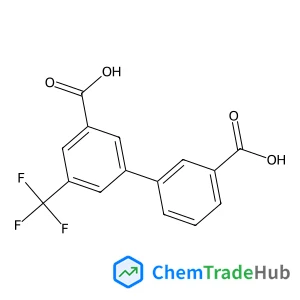
3-(3-Carboxyphenyl)-5-(trifluoromethyl)benzoic acid
CAS Number:
1261930-96-4
Molecular Formula:
C15H9F3O4
![N-[(1R,2R)-2-Amino-1,2-diphenylethyl]-1,1,1-trifluoromethanesulfonamide structure](https://static.chemtradehub.com/structs/852/852212-89-6-5ef9.webp "N-[(1R,2R)-2-Amino-1,2-diphenylethyl]-1,1,1-trifluoromethanesulfonamide structure")
N-[(1R,2R)-2-Amino-1,2-diphenylethyl]-1,1,1-trifluoromethanesulfonamide
CAS Number:
852212-89-6
Molecular Formula:
C15H15F3N2O2S
Recommended Suppliers







Disclaimer
This page provides academic journal information for reference and research purposes only. We are not affiliated with any journal publishers and do not handle publication submissions. For publication-related inquiries, please contact the respective journal publishers directly.
If you notice any inaccuracies in the information displayed, please contact us at support@chemtradehub.com. We will promptly review and address your concerns.