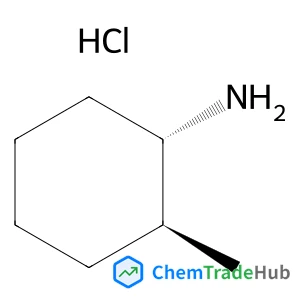
(1R,2R)-2-Methylcyclohexanamine hydrochloride (1:1)
CAS Number:
39558-31-1
Molecular Formula:
C7H16ClN
Guijun Li, Wing-Cheung Law, Kang Cheung Chan
Seawater dehydrates humans when it is drunk untreated, due to its high concentrations of salts. Currently, it can only be purified into large amounts of freshwater using reverse osmosis, with large electricity consumption, carbon emissions and environmental damage. Although seawater directly evaporates under natural sunlight, the efficiencies and scales are too small for practical collection. Herein, we report a floating graphene membrane for evaporating seawater into freshwater exclusively using solar energy, with high efficiency and large scalability. Polyimide films can be fully converted to graphene membranes using one-step laser scribing, without involving chemicals or generating wastes. These green desalination graphene membranes evaporate water at a rate up to 1.37 kg m−2 h−1 under one sun illumination, which possesses even higher purity than domestic water. These graphene membranes can float firmly at the air–water interface with a self-righting ability, such that the process is feasible for practical water desalination on ocean surfaces.
DOI: 10.1039/D0CP00824A
Kaifu Gao, Duc Duy Nguyen, Vishnu Sresht, Alan M. Mathiowetz, Meihua Tu
DOI: 10.1039/D0CP00305K
Camillo Sartorio, Giuliana Giuliano, Michelangelo Scopelliti, Valeria Vetri, Maurizio Leone, Bruno Pignataro
DOI: 10.1039/D0CP00336K
Jing Li, Huan Yuan, Qiuping Zhang, Kaiyi Luo, Yutong Liu, Wenyu Hu, Ming Xu, Shuyan Xu
DOI: 10.1039/D0CP04731G
DOI: 10.1039/C9CP05699H
Alessandro Soncini
DOI: 10.1039/D0CP00539H
Nathaniel W. Kabat, Ehsan Monazami, Petra Reinke
DOI: 10.1039/D0CP03658G
James A. Green, Roberto Improta
DOI: 10.1039/C9CP06373K
Hatsuho Usuda, Mafumi Hishida, Elizabeth G. Kelley, Yasuhisa Yamamura, Kazuya Saito
DOI: 10.1039/C9CP06059F
(5-Sulfamoyl-3-pyridinyl)boronic acid is primarily used in chemical synthesis, p...
Benzyl 2-methyl-2-(methylsulfonyl)-4-pentenoate is typically synthesized via est...
When handling 8-Fluoroquinolin-6-ol (CAS: 209353-22-0), it is important to use p...
1,3-Dibromo-5-(2-methyl-2-propanyl)benzene (CAS: 129316-09-2) is a crystalline c...
Ethyl 7-chloro-4-oxo-1-(1,3-thiazol-2-yl)-1,4-dihydro-1,8-naphthyridine-3-carbox...
When handling Delta-7-Avenasterol (CAS: 23290-26-8), it is important to wear app...
Proper handling involves the use of personal protective equipment such as gloves...
When handling 2-Methyl-2-proanyl 4-[(2-aminophenyl)amino]-1-piperidinecarboxylat...
N-Methyl-4-chlorobenzylamine hydrochloride (CAS: 65542-24-7) is a organic compou...
[2-(Dodecyloxy)ethoxy]acetic acid (CAS: 27306-90-7) is generally considered safe...

Green Chemistry provides a unique forum for the publication of innovative research on the development of alternative green and sustainable technologies. The scope of Green Chemistry is based on, but not limited to, the definition proposed by Anastas and Warner (Green Chemistry: Theory and Practice, P T Anastas and J C Warner, Oxford University Press, Oxford, 1998). Green chemistry is the utilisation of a set of principles that reduces or eliminates the use or generation of hazardous substances in the design, manufacture and application of chemical products. Green Chemistry is at the frontiers of this continuously-evolving interdisciplinary science and publishes research that attempts to reduce the environmental impact of the chemical enterprise by developing a technology base that is inherently non-toxic to living things and the environment. Submissions on all aspects of research relating to the endeavour are welcome. The journal publishes original and significant cutting-edge research that is likely to be of wide general appeal. To be published, work must present a significant advance in green chemistry. Papers must contain a comparison with existing methods and demonstrate advantages over those methods before publication can be considered. For more information please see this Editorial. Coverage includes the following, but is not limited to: Design (e.g. biomimicry, design for degradation/recycling/reduced toxicity…) Reagents & Feedstocks (e.g. renewables, CO2, solvents, auxiliary agents, waste utilization…) Synthesis (e.g. organic, inorganic, synthetic biology…) Catalysis (e.g. homogeneous, heterogeneous, enzyme, whole cell…) Process (e.g. process design, intensification, separations, recycling, efficiency…) Energy (e.g. renewable energy, fuels, photovoltaics, fuel cells, energy storage, energy carriers…) Applications (e.g. electronics, dyes, consumer products, coatings, pharmaceuticals, preservatives, building materials, chemicals for industry/agriculture/mining…) Impact (e.g. safety, metrics, LCA, sustainability, (eco)toxicology…) Green chemistry is, by definition, a continuously-evolving frontier. Therefore, the inclusion of a particular material or technology does not, of itself, guarantee that a paper is suitable for the journal. To be suitable, the novel advance should have the potential for reduced environmental impact relative to the state of the art. Green Chemistry does not normally deal with research associated with 'end-of-pipe' or remediation issues.