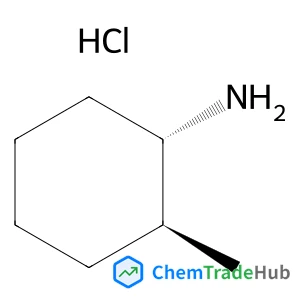
(1R,2R)-2-Methylcyclohexanamine hydrochloride (1:1)
CAS Number:
39558-31-1
Molecular Formula:
C7H16ClN
Camillo Sartorio, Giuliana Giuliano, Michelangelo Scopelliti, Valeria Vetri, Maurizio Leone, Bruno Pignataro
In this paper, we developed different three-component organic heterojunction structures supported by PET/ITO substrates with the aim to study the possible synergies and/or compromises between charge transfer (CT) and energy transfer (ET) processes in organic solar cells (OSCs). As components, we employed poly(3-hexylthiophene-2,5-diyl) (P3HT; donor), [6,6]-phenyl-C61-butyric acid methyl ester (PCBM; acceptor) and poly(9,9-dioctylfluorene-alt-benzothiadiazole) (F8BT) that is known to give good ET to P3HT. At first, we observed that in a planar heterojunction (PHJ) solar cell, F8BT has to be properly located in between P3HT and PCBM to get a cascade energy level configuration allowing for a better CT and power conversion efficiency. Then, we observed that by producing a P3HT:F8BT blend, the energy transfer process can be improved in the P3HT:F8BT/PCBM active layer. This may enable decreasing the thickness of the active layer while maintaining a similar PCE that is very interesting for the development of transparent OSCs. However, the P3HT:F8BT blend limits the P3HT–PCBM CT with respect to a P3HT/F8BT/PCBM PHJ, showing that a compromise between CT and ET is needed to get a higher PCE or higher transparency. By the above approach, in this paper, we developed highly transparent heterojunction structures for solar cell devices with PCEs comparable to those observed from the colorful reference P3HT/PCBM PHJ solar cells on PET/ITO substrates.
Kyla J. Woelk, Kushal Dhake, Nathan D. Schley, David C. Leitch
DOI: 10.1039/D3CC04234K
Zuan Yu, Tianlun Ren, Jiangwei Xie, Hongjie Yu, Kai Deng, Ziqiang Wang, Hongjing Wang, Liang Wang, You Xu
DOI: 10.1039/D3CC03293K
Cédric Espinet, Simon Amigues, David Mesguich, Christophe Laurent
DOI: 10.1039/D3CC04472F
Anna A. Wilson, Lucy Hart, Thomas Shalvey, Michael Sachs, Weidong Xu, Benjamin Moss, Eva Mazzolini, Asim Mumtaz
DOI: 10.1039/D3CC04616H
Yaogeng Ma, Min Li, Huilin Sun, Jing-Yuan Ge, Yang Bai, Lin Qiu, Xuan Wu, Jiuxi Chen, Zhongyan Chen
DOI: 10.1039/D3CC04041K
Yuxuan Liang, Meijia Qiu, Peng Sun, Wenjie Mai
DOI: 10.1039/D3SC05334B
DOI: 10.1039/D3CC02621C
(5-Sulfamoyl-3-pyridinyl)boronic acid is primarily used in chemical synthesis, p...
Benzyl 2-methyl-2-(methylsulfonyl)-4-pentenoate is typically synthesized via est...
When handling 8-Fluoroquinolin-6-ol (CAS: 209353-22-0), it is important to use p...
1,3-Dibromo-5-(2-methyl-2-propanyl)benzene (CAS: 129316-09-2) is a crystalline c...
Ethyl 7-chloro-4-oxo-1-(1,3-thiazol-2-yl)-1,4-dihydro-1,8-naphthyridine-3-carbox...
When handling Delta-7-Avenasterol (CAS: 23290-26-8), it is important to wear app...
Proper handling involves the use of personal protective equipment such as gloves...
When handling 2-Methyl-2-proanyl 4-[(2-aminophenyl)amino]-1-piperidinecarboxylat...
N-Methyl-4-chlorobenzylamine hydrochloride (CAS: 65542-24-7) is a organic compou...
[2-(Dodecyloxy)ethoxy]acetic acid (CAS: 27306-90-7) is generally considered safe...

Physical Chemistry Chemical Physics (PCCP) is an international journal co-owned by 19 physical chemistry and physics societies from around the world. This journal publishes original, cutting-edge research in physical chemistry, chemical physics and biophysical chemistry. To be suitable for publication in PCCP, articles must include significant innovation and/or insight into physical chemistry; this is the most important criterion that reviewers and Editors will judge against when evaluating submissions. The journal has a broad scope and welcomes contributions spanning experiment, theory, computation and data science. Topical coverage includes spectroscopy, dynamics, kinetics, statistical mechanics, thermodynamics, electrochemistry, catalysis, surface science, quantum mechanics, quantum computing and machine learning. Interdisciplinary research areas such as polymers and soft matter, materials, nanoscience, energy, surfaces/interfaces, and biophysical chemistry are welcomed if they demonstrate significant innovation and/or insight into physical chemistry. Joined experimental/theoretical studies are particularly appreciated when complementary and based on up-to-date approaches.
![4,10-Dihydroxy-3H-pyrano[3,4,5-kl]xanthen-3-one structure](https://static.chemtradehub.com/structs/125/1259330-61-4-de48.webp "4,10-Dihydroxy-3H-pyrano[3,4,5-kl]xanthen-3-one structure")