












Understanding the charging dynamics of an ionic liquid electric double layer capacitor via molecular dynamics simulations
Literature Information
Publication Date
2019-01-24
DOI
10.1039/C8CP07200K
Impact Factor
3.676
Authors
Chanwoo Noh, YounJoon Jung
View Original
Abstract
We investigate the charging phenomena of an electric double layer capacitor (EDLC) by conducting both equilibrium and non-equilibrium molecular dynamics (MD) simulations. A graphene electrode and 1-ethyl-3-methylimidazolium thiocyanate ([EMIM]+[SCN]−) ionic liquid were used as a system for the EDLC. We clarify the ionic layer structure and show that an abrupt change of the ionic layers leads to a high differential capacitance of the EDLC. The charging simulations reveal that the charging dynamics of the EDLC is highly dependent on the rearrangement of the ionic layer structure. Particularly, the electrode charge during the charging process is consistent with the perpendicular displacement of ionic liquid molecules. From this property, we analyze the contribution of each molecular ion to the electrode charge stored during charging. Charging of the EDLC is largely dependent on the desorption of the co-ions from the electrode rather than the adsorption of the counter-ions. In addition, the contribution of bulk ions to the charge stored in the EDLC is as important as that of ions adjacent to the electrode surface contrary to the conventional viewpoint. From these results, we identify the charging mechanism of the EDLC and discuss the relevance to experimental results. Our findings in the present study are expected to play an important role in designing an efficient EDLC with a novel perspective on the charging of the EDLC.
Recommended Journals
Related Literature
Active droplet-array (ADA) microfluidics enables multiplexed complex bioassays for point of care testing
Zhujun Li, Feng Xiao
2018-02-05
Communication
DOI: 10.1039/C7CC09377B
Photoresponsive smart template for reversible cell micropatterning
Yu-Hui Gong, Juan Yang, Feng-Yi Cao, Jing Zhang, Han Cheng, Ren-Xi Zhuo, Xian-Zheng Zhang
2013-02-26
Communication
DOI: 10.1039/C3TB20073F
A ratiometric fluorescence strategy based on polyethyleneimine surface-modified carbon dots and Eosin Y for the ultrasensitive determination of protamine and trypsin
Wenying Sun, Feng Zhang, Mengke Wang, Nan Wang, Guannan Wang, Xingguang Su
2021-12-31
Paper
DOI: 10.1039/D1AN02138A
Hybrid gold nanocube@silica@graphene-quantum-dot superstructures: synthesis and specific cell surface protein imaging applications
Liu Deng, Ling Liu, Chengzhou Zhu, Dan Li, Shaojun Dong
2013-02-07
Communication
DOI: 10.1039/C3CC38776C
Predicting the conformations of the silk protein through deep learning
Mingrui Jiang, Ting Shu, Chao Ye, Jing Ren, Shengjie Ling
2021-03-05
Paper
DOI: 10.1039/D1AN00290B
Exceptional TcO4− sorption capacity and highly efficient ReO4− luminescence sensing by Zr4+ MOFs
Sofia Rapti, Stavros A. Diamantis, Argyro Dafnomili, Anastasia Pournara, Euaggelia Skliri, Gerasimos S. Armatas, Athanassios C. Tsipis, Ioannis Spanopoulos, Christos D. Malliakas, Mercouri G. Kanatzidis, John C. Plakatouras, Fotini Noli, Theodore Lazarides, Manolis J. Manos
2018-10-01
Paper
DOI: 10.1039/C8TA07901C
Lipid-soluble arsenic species identified in the brain of the marine fish skipjack tuna (Katsuwonus pelamis) using a sequential extraction and HPLC/mass spectrometry
Michael Stiboller, Fabiana P. Freitas, Kevin A. Francesconi, Tanja Schwerdtle, António J. A. Nogueira, Georg Raber
2019-10-29
Paper
DOI: 10.1039/C9JA00249A
Ultrasensitive detection of vitamin E by signal conversion combined with core-satellite structure-based plasmon coupling effect
Keying Xu, Jing Li, Qingyi Han, Dingding Zhang, Libing Zhang, Zhen Zhang, Xiaoquan Lu
2022-01-04
Paper
DOI: 10.1039/D1AN02289J
Facile fabrication and application of near-IR light-responsive drug release system based on gold nanorods and phase change material
Junseok Lee, Cherlhyun Jeong, Won Jong Kim
2014-10-07
Paper
DOI: 10.1039/C4TB01631A
The effects of TiO2 nanotube arrays with different diameters on macrophage/endothelial cell response and ex vivo hemocompatibility
Zeyu Du, Rui Hao, Ruiqiang Hang, Xiaohong Yao, Nan Huang, Bin Tang
2018-08-31
Paper
DOI: 10.1039/C8TB01675E
You might also like
Compound Q&A
How is Ethyl 4-chlorothieno[2,3-b]pyridine-5-carboxylate (CAS: 59713-58-5) typically synthesized?
Ethyl 4-chlorothieno[2,3-b]pyridine-5-carboxylate (CAS: 59713-58-5) can be synth...
59713-58-5Ethyl 4-chlorothieno...
Compound Q&A
What regulatory guidelines apply to 5-Methyl-1H-indole-3-carbaldehyde (CAS: 52562-50-2)?
5-Methyl-1H-indole-3-carbaldehyde (CAS: 52562-50-2) is subject to various regula...
52562-50-25-Methyl-1H-indole-3...
Compound Q&A
What are the physical and chemical properties of (1,3-Dimethyl-2,4-dioxo-1,2,3,4-tetrahydro-5-pyrimidinyl)boronic acid (CAS: 223418-73-3)?
(1,3-Dimethyl-2,4-dioxo-1,2,3,4-tetrahydro-5-pyrimidinyl)boronic acid is a white...
223418-73-3(1,3-Dimethyl-2,4-di...
Compound Q&A
How should waste containing Sulfocostunolide A (CAS: 1016983-51-9) be handled?
Waste containing Sulfocostunolide A (CAS: 1016983-51-9) should be handled with c...
1016983-51-9Sulfocostunolide A
Compound Q&A
What precautions should be taken when handling Murraxocin (CAS: 88478-44-8)?
When handling Murraxocin (CAS: 88478-44-8), ensure proper personal protective eq...
88478-44-8Murraxocin
Compound Q&A
What are the physical and chemical properties of Formvar (CAS: 63148-64-1)?
Formvar (CAS: 63148-64-1) is an alkyd resin characterized by a high molecular we...
63148-64-1Formvar(R)
Compound Q&A
Is (S)-4-benzyl-2-((benzyloxy)methyl)morpholine (CAS: 205242-66-6) safe?
(S)-4-benzyl-2-((benzyloxy)methyl)morpholine is generally safe when handled with...
205242-66-6(S)-4-benzyl-2-((ben...
Compound Q&A
What industries use Methyl 1-(5-bromo-2-pyrimidinyl)cyclopropanecarboxylate (CAS: 1447607-69-3)?
Methyl 1-(5-bromo-2-pyrimidinyl)cyclopropanecarboxylate (CAS: 1447607-69-3) is p...
1447607-69-3Methyl 1-(5-bromo-2-...
Compound Q&A
Is 2-Methyl-1-phenyl-1-propanamine hydrochloride (CAS: 24290-47-9) safe?
2-Methyl-1-phenyl-1-propanamine hydrochloride (CAS: 24290-47-9) is generally con...
24290-47-92-Methyl-1-phenyl-1-...
Compound Q&A
How is 3-(4-Bromophenyl)-2-methylpropanoic acid (CAS: 66735-01-1) typically synthesized?
3-(4-Bromophenyl)-2-methylpropanoic acid is synthesized through a multi-step pro...
66735-01-13-(4-Bromophenyl)-2-...
Source Journal
Physical Chemistry Chemical Physics

CiteScore:
5.5
Self-citation Rate:
10.3%
Articles per Year:
3036
Physical Chemistry Chemical Physics (PCCP) is an international journal co-owned by 19 physical chemistry and physics societies from around the world. This journal publishes original, cutting-edge research in physical chemistry, chemical physics and biophysical chemistry. To be suitable for publication in PCCP, articles must include significant innovation and/or insight into physical chemistry; this is the most important criterion that reviewers and Editors will judge against when evaluating submissions. The journal has a broad scope and welcomes contributions spanning experiment, theory, computation and data science. Topical coverage includes spectroscopy, dynamics, kinetics, statistical mechanics, thermodynamics, electrochemistry, catalysis, surface science, quantum mechanics, quantum computing and machine learning. Interdisciplinary research areas such as polymers and soft matter, materials, nanoscience, energy, surfaces/interfaces, and biophysical chemistry are welcomed if they demonstrate significant innovation and/or insight into physical chemistry. Joined experimental/theoretical studies are particularly appreciated when complementary and based on up-to-date approaches.
Recommended Compounds
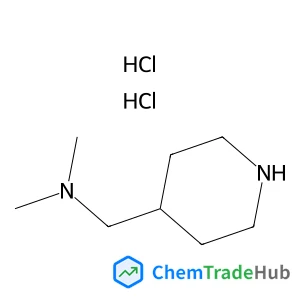
N,N-dimethyl(piperidin-4-yl)methanamine hydrochloride
CAS Number:
172281-72-0
Molecular Formula:
C8H20Cl2N2
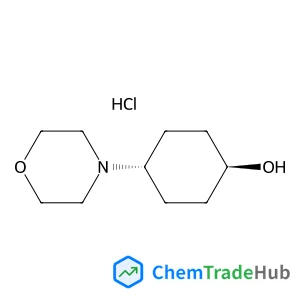
trans-4-(4-Morpholinyl)cyclohexanol hydrochloride (1:1)
CAS Number:
1588441-09-1
Molecular Formula:
C10H20ClNO2
Recommended Suppliers





Disclaimer
This page provides academic journal information for reference and research purposes only. We are not affiliated with any journal publishers and do not handle publication submissions. For publication-related inquiries, please contact the respective journal publishers directly.
If you notice any inaccuracies in the information displayed, please contact us at support@chemtradehub.com. We will promptly review and address your concerns.