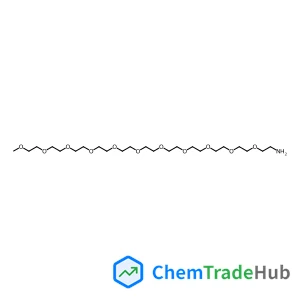
2,5,8,11,14,17,20,23,26,29,32-Undecaoxatetratriacontan-34-amine
CAS Number:
854601-60-8
Molecular Formula:
C23H49NO11
Ravi C. Dutta, Suresh K. Bhatia
We use atomistic simulations of CH4, H2 and CO2 transport to elucidate the effect of internal interfacial barriers on gas transport within nanoscale zeolite crystals of different morphology; such barriers are shown here to have critical significance for the performance of ultrathin membranes and nanoscale mixed matrix composite membranes for gas separation. These interfacial resistances are seen to be confined to a narrow region within the zeolite, adjacent to the phase boundary, and are distinct from the external fluid phase resistance. Our results indicate that interfacial barriers depend on the nature of the zeolite pore network, and significantly hinder gas transport in nanocrystals. We show that interaction with dense surrounding media such as a polymer enhances the interfacial resistance internal to the zeolite, and further attenuates gas transport. The relative contribution of the interfacial resistance to the gas transport resistance is more significant at lower temperatures, and this resistance is larger than the external gas phase resistance by an order of magnitude. We determine the critical membrane thickness, below which these interfacial barriers are pronounced, and find that interfacial barriers can be significant up to a thickness of about 0.1 μm. Furthermore, these interfacial barriers to gas transport are significantly higher for a gas with a kinetic diameter comparable to that of the limiting pore diameter of the zeolite (methane in this case), thus improving the H2/CH4 kinetic selectivity in finite crystals. We show that small finite crystals of SAS type zeolite are selective for H2 over CH4, while large crystals are selective for CH4 over H2.
DOI: 10.1039/A903282G
DOI: 10.1039/A906473G
DOI: 10.1039/A901576K
DOI: 10.1039/A901767D
DOI: 10.1039/A901894H
DOI: 10.1039/A809870K
3-Fluoro-2-methylbenzylamine is an organic compound with the CAS number 771573-3...
Tert-butyl 2-(oxetan-3-ylidene)acetate is considered safe for its intended uses ...
Proper personal protective equipment (PPE) such as gloves, goggles, and a lab co...
2-Ethyl-4-methyl-1,3-thiazole is commonly synthesized via the reaction of thiour...
This compound should be stored in a cool, dry place away from direct sunlight an...
L-Lysine Acetate Salt (CAS: 52315-92-1) is subject to various regulatory guideli...
6-Fluoro-3-hydroxy-2-pyrazinecarboxamide (CAS: 259793-96-9) is generally conside...
1,1'-Sulfonylbis(1H-imidazole) is a crystalline solid with a molecular weight of...
4-Methyl-7-nitro-1H-indole-3-carbonitrile (CAS: 289483-82-5) is primarily used i...
Waste containing 5-Bromo-3-indolyl-beta-galactoside (CAS: 97753-82-7) should be ...

Physical Chemistry Chemical Physics (PCCP) is an international journal co-owned by 19 physical chemistry and physics societies from around the world. This journal publishes original, cutting-edge research in physical chemistry, chemical physics and biophysical chemistry. To be suitable for publication in PCCP, articles must include significant innovation and/or insight into physical chemistry; this is the most important criterion that reviewers and Editors will judge against when evaluating submissions. The journal has a broad scope and welcomes contributions spanning experiment, theory, computation and data science. Topical coverage includes spectroscopy, dynamics, kinetics, statistical mechanics, thermodynamics, electrochemistry, catalysis, surface science, quantum mechanics, quantum computing and machine learning. Interdisciplinary research areas such as polymers and soft matter, materials, nanoscience, energy, surfaces/interfaces, and biophysical chemistry are welcomed if they demonstrate significant innovation and/or insight into physical chemistry. Joined experimental/theoretical studies are particularly appreciated when complementary and based on up-to-date approaches.