











![Pyrazolo[1,5-a]pyridine-3-carbothioamide structure](https://static.chemtradehub.com/structs/885/885275-44-5-aae0.webp "Pyrazolo[1,5-a]pyridine-3-carbothioamide structure")
Towards high-level theoretical studies of large biodiesel molecules: an ONIOM/RRKM/Master-equation approach to the isomerization and dissociation kinetics of methyl decanoate radicals
Literature Information
Publication Date
2019-02-06
DOI
10.1039/C8CP05593A
Impact Factor
3.676
Authors
Yicheng Chi, Lidong Zhang, Peng Zhang, Liusi Sheng
View Original
Abstract
The isomerization and dissociation reactions of methyl decanoate (MD) radicals were theoretically investigated by using high-level theoretical calculations based on a two-layer ONIOM method, employing the QCISD(T)/CBS method for the high layer and the M06-2X/6-311++G(d,p) method for the low layer. Temperature- and pressure-dependent rate coefficients for the involved reactions were computed by using the transition state theory and the Rice–Ramsperger–Kassel–Marcus/Master-equation method. The structure–reactivity relationships were explored for the complicated multiple-well interconnected system of ten isomeric MD radicals. Comparative studies of methyl butanoate (MB) and MD were also performed systematically. Results show that the isomerization reactions are appreciably responsible for the population distribution of MD radicals at low and intermediate temperatures, while the β-scission reactions are dominant at higher temperatures. Although the rate constants of MB specific to methyl esters are close to those of MD in certain temperature ranges, MB is unable to simulate most of the dissociation reactions due to its short aliphatic chain. Significant differences of rate constants for isomerization reactions were observed between the calculated results and the literature data, which were estimated by analogy to alkane systems, but the rate constants of β-scissions show generally good agreement between theory and experiment. The current work extends kinetic data for isomerization and dissociation reactions of MD radicals, and it serves as a reference for the studies of detailed combustion chemistry of practical biodiesels.
Recommended Journals
Related Literature
Cooperatively designed aptamer-PROTACs for spatioselective degradation of nucleocytoplasmic shuttling protein for enhanced combinational therapy
Ran Liu, Zheng Liu, Mohan Chen, Hang Xing, Penghui Zhang, Jingjing Zhang
2023-11-29
Edge Article
DOI: 10.1039/D3SC04249A
Ultrasensitive detection of aromatic water pollutants through protein immobilization driven organic electrochemical transistors
Subhankar Sahu, Lokesh Kumar, Sumita Das, Dipti Gupta, Ruchi Anand
2023-12-13
Edge Article
DOI: 10.1039/D3SC03509C
Organic metal chalcogenide-assisted metabolic molecular diagnosis of central precocious puberty
Dan Ouyang, Chuanzhe Wang, Chao Zhong, Juan Lin, Gang Xu, Guane Wang, Zian Lin
2023-11-27
Edge Article
DOI: 10.1039/D3SC05633C
Supramolecular “baking powder”: a hexameric halogen-bonded phosphonium salt cage encapsulates and functionalises small-molecule carbonyl compounds
Hatem M. Titi, Yong Teoh
2023-11-28
Edge Article
DOI: 10.1039/D2SC04615F
Oxidative cleavage of ketoximes to ketones using photoexcited nitroarenes
Lucas T. Göttemann, Stefan Wiesler, Richmond Sarpong
2023-11-24
Edge Article
DOI: 10.1039/D3SC05414D
Artificial cells with viscoadaptive behavior based on hydrogel-loaded giant unilamellar vesicles
2023-12-04
Edge Article
DOI: 10.1039/D3SC04687G
1,2-Disubstituted bicyclo[2.1.1]hexanes as saturated bioisosteres of ortho-substituted benzene
Aleksandr Denisenko, Pavel Garbuz, Yelyzaveta Makovetska, Dmytro Lesyk, Rodion Korzh, Iryna V. Sadkova, Pavel K. Mykhailiuk
2023-10-27
Edge Article
DOI: 10.1039/D3SC05121H
An expeditive and green chemo-enzymatic route to diester sinapoyl-l-malate analogues: sustainable bioinspired and biosourced UV filters and molecular heaters
Benjamin Rioux, Louis M. M. Mouterde, Jimmy Alarcan, Matthias J. A. Vink, Jack M. Woolley, Aurélien A. M. Peru, Matthieu M. Mention, Fanny Brunissen, Giel Berden, Jos Oomens, Albert Braeuning, Florent Allais
2023-11-21
Edge Article
DOI: 10.1039/D3SC04836E
Towards routine organic structure determination using Raman microscopy
Jason Malenfant, Lucille Kuster, Yohann Gagné, Kouassi Signo, Maxime Denis, Sylvain Canesi, Mathieu Frenette
2023-11-14
Edge Article
DOI: 10.1039/D3SC02954A
Photoinduced cerium-catalyzed C–H acylation of unactivated alkanes
Jing Cao, Joshua L. Zhu, Karl A. Scheidt
2023-11-25
Edge Article
DOI: 10.1039/D3SC05162E
You might also like
Compound Q&A
What precautions should be taken when handling 4-(2-Furylmethyl)thiomorpholine 1,1-dioxide (CAS: 79206-94-3)?
When handling 4-(2-Furylmethyl)thiomorpholine 1,1-dioxide (CAS: 79206-94-3), it ...
79206-94-34-(2-Furylmethyl)thi...
Compound Q&A
What precautions should be taken when handling 4-Chloro-N-[2-(4-morpholinyl)ethyl]benzamide (CAS: 71320-77-9)?
When handling 4-Chloro-N-[2-(4-morpholinyl)ethyl]benzamide (CAS: 71320-77-9), it...
71320-77-94-Chloro-N-[2-(4-mor...
Compound Q&A
How should waste containing 2-[2-(2-Methoxyethoxy)ethoxy]ethyl 4-methylbenzenesulfonate (CAS: 62921-74-8) be handled?
Waste containing this compound (CAS: 62921-74-8) should be handled according to ...
62921-74-82-[2-(2-Methoxyethox...
Compound Q&A
How should waste containing (S)-Methyl 2-amino-3-cyclohexylpropanoate be handled?
Waste containing (S)-Methyl 2-amino-3-cyclohexylpropanoate should be collected i...
40056-18-6(S)-Methyl 2-amino-3...
Compound Q&A
How is 5-({4-[(2S,4R)-4-Hydroxy-2-methyltetrahydro-2H-pyran-4-yl]-2-thienyl}sulfanyl)-1-methyl-1,3-dihydro-2H-indol-2-one (CAS: 166882-70-8) typically synthesized?
This compound can be synthesized using a multi-step process involving the conjug...
166882-70-85-({4-[(2S,4R)-4-Hyd...
Compound Q&A
Are there alternatives to (2E)-3-(3,4-Dichlorophenyl)acrylic acid (CAS: 7312-27-8) in synthesis?
There are several alternatives to (2E)-3-(3,4-Dichlorophenyl)acrylic acid in syn...
7312-27-8(2E)-3-(3,4-Dichloro...
Compound Q&A
How should Ethyl 6-(2-nitrophenyl)imidazo[2,1-b][1,3]thiazole-3-carboxylate (CAS: 925437-84-9) be stored?
Ethyl 6-(2-nitrophenyl)imidazo[2,1-b][1,3]thiazole-3-carboxylate (CAS: 925437-84...
925437-84-9Ethyl 6-(2-nitrophen...
Compound Q&A
How should waste containing 2-(1,3-Thiazol-2-yl)ethanamine (CAS: 18453-07-1) be handled?
Waste containing 2-(1,3-Thiazol-2-yl)ethanamine (CAS: 18453-07-1) should be coll...
18453-07-12-(1,3-Thiazol-2-yl)...
Compound Q&A
How is Methyl 5-iodo-2-methylbenzoate (CAS: 103440-54-6) typically synthesized?
Methyl 5-iodo-2-methylbenzoate can be synthesized through the iodination of meth...
103440-54-6Methyl 5-iodo-2-meth...
Compound Q&A
How is 5-Chloro[1,2,4]triazolo[1,5-a]pyridine (CAS: 1427399-34-5) typically synthesized?
5-Chloro[1,2,4]triazolo[1,5-a]pyridine is commonly synthesized via the condensat...
1427399-34-55-Chloro[1,2,4]triaz...
Source Journal
Physical Chemistry Chemical Physics

CiteScore:
5.5
Self-citation Rate:
10.3%
Articles per Year:
3036
Physical Chemistry Chemical Physics (PCCP) is an international journal co-owned by 19 physical chemistry and physics societies from around the world. This journal publishes original, cutting-edge research in physical chemistry, chemical physics and biophysical chemistry. To be suitable for publication in PCCP, articles must include significant innovation and/or insight into physical chemistry; this is the most important criterion that reviewers and Editors will judge against when evaluating submissions. The journal has a broad scope and welcomes contributions spanning experiment, theory, computation and data science. Topical coverage includes spectroscopy, dynamics, kinetics, statistical mechanics, thermodynamics, electrochemistry, catalysis, surface science, quantum mechanics, quantum computing and machine learning. Interdisciplinary research areas such as polymers and soft matter, materials, nanoscience, energy, surfaces/interfaces, and biophysical chemistry are welcomed if they demonstrate significant innovation and/or insight into physical chemistry. Joined experimental/theoretical studies are particularly appreciated when complementary and based on up-to-date approaches.
Recommended Compounds
![Methyl 4-({[(2-methyl-2-propanyl)oxy]carbonyl}amino)bicyclo[2.2.2]octane-1-carboxylate structure](https://static.chemtradehub.com/structs/943/943845-74-7-b7e5.webp "Methyl 4-({[(2-methyl-2-propanyl)oxy]carbonyl}amino)bicyclo[2.2.2]octane-1-carboxylate structure")
Methyl 4-({[(2-methyl-2-propanyl)oxy]carbonyl}amino)bicyclo[2.2.2]octane-1-carboxylate
CAS Number:
943845-74-7
Molecular Formula:
C15H25NO4
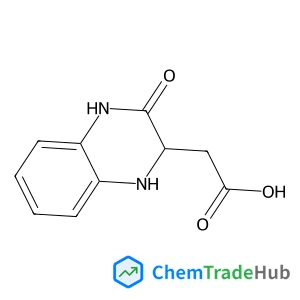
(3-Oxo-1,2,3,4-tetrahydro-2-quinoxalinyl)acetic acid
CAS Number:
136584-14-0
Molecular Formula:
C10H10N2O3
Recommended Suppliers




Disclaimer
This page provides academic journal information for reference and research purposes only. We are not affiliated with any journal publishers and do not handle publication submissions. For publication-related inquiries, please contact the respective journal publishers directly.
If you notice any inaccuracies in the information displayed, please contact us at support@chemtradehub.com. We will promptly review and address your concerns.