












Tropospheric oxidation of methyl hydrotrioxide (CH3OOOH) by hydroxyl radical
Literature Information
Publication Date
2018-10-10
DOI
10.1039/C8CP04486D
Impact Factor
3.676
Authors
Josep M. Anglada, Albert Solé
View Original
Abstract
We have employed high level theoretical methods to investigate the oxidation of methyl hydrotrioxide by hydroxyl radical, which is of interest in atmospheric chemistry research. The reaction can proceed by abstraction of either the terminal hydrogen atom of OOH group producing CH3O, O2 and H2O, or one hydrogen atom of the CH3 group forming H2CO, HO2 and H2O. The rate constants for both reactions at 298 K are computed to be 4.7 × 10⁻¹¹ and 2.1 × 10⁻¹² cm3 molecule−1 s−1, respectively, that is, the abstraction of terminal hydrogen atom of the OOH group is about 22 times faster than that of a hydrogen atom of the CH3 group. The rate constant for the overall CH3OOOH + OH reaction is computed to be 4.9 × 10⁻¹¹ cm3 molecule−1 s−1. Our calculations predict branching ratios between 99.0 and 93.9% for the formation of methoxy radical plus molecular oxygen and water, and between 1.0 and 6.1% for the formation of formaldehyde plus hydroperoxyl radical and water, in the 225–325 K temperature range. The lifetime of CH3OOOH in the troposphere is predicted to range from of 1.8 hours at 225 K, up to 3.9 hours at 275 K and decreasing to 0.2 hours at 310 K. CH3OOO and CH2OOOH radicals have been also investigated.
Related Literature
Enhanced electron extraction capability of polymer solar cells via modifying the cathode buffer layer with inorganic quantum dots
Zhiqi Li, Shujun Li, Zhihui Zhang, Xinyuan Zhang, Jingfeng Li, Chunyu Liu, Wenbin Guo, Shengping Ruan
2016-04-04
Paper
DOI: 10.1039/C6CP00989A
Femtosecond to nanosecond excited state dynamics of vapor deposited copper phthalocyanine thin films
Benjamin W. Caplins, Tyler K. Mullenbach, Russell J. Holmes, David A. Blank
2016-03-29
Paper
DOI: 10.1039/C6CP00958A
The crystallization of metal soaps and fatty acids in oil paint model systems
Joen J. Hermans, Annelies van Loon, Piet D. Iedema
2016-03-07
Paper
DOI: 10.1039/C6CP00487C
Underlying mechanisms of the synergistic role of Li2MnO3 and LiNi1/3Co1/3Mn1/3O2 in high-Mn, Li-rich oxides
Jin-Myoung Lim, Duho Kim, Maenghyo Cho
2016-03-18
Paper
DOI: 10.1039/C6CP00088F
Structural analysis of bioinspired nano materials with synchrotron far IR spectroscopy
Rania S. Seoudi, Annette Dowd, Brian J. Smith, Adam Mechler
2016-04-04
Paper
DOI: 10.1039/C6CP01355D
Current transient and in situ AFM studies of initial growth stages of electrochemically deposited nickel cobalt hydroxide nanosheet films
Tuyen Nguyen, M. Fátima Montemor
2016-03-29
Paper
DOI: 10.1039/C6CP00709K
Dynamics of GCN4 facilitate DNA interaction: a model-free analysis of an intrinsically disordered region
R. Andrew Byrd, Arthur G. Palmer, III
2015-11-30
Paper
DOI: 10.1039/C5CP06197K
Proton coupled electron transfer from the excited state of a ruthenium(ii) pyridylimidazole complex
Andrea Pannwitz, Oliver S. Wenger
2016-04-08
Paper
DOI: 10.1039/C6CP00437G
Elucidation of adsorption processes at the surface of Pt(331) model electrocatalysts in acidic aqueous media
Marcus D. Pohl, Viktor Colic
2016-02-29
Paper
DOI: 10.1039/C5CP08000B
The use of the Rx spin label in orientation measurement on proteins, by EPR
M. A. Stevens, J. E. McKay, J. L. S. Robinson, H. EL Mkami, G. M. Smith, D. G. Norman
2015-09-25
Paper
DOI: 10.1039/C5CP04753F
You might also like
Compound Q&A
What are the main uses of 1-(3-Aminophenyl)-3-[(3R)-1-(3,3-dimethyl-2-oxobutyl)-2-oxo-5-(2-pyridinyl)-2,3-dihydro-1H-1,4-benzodiazepin-3-yl]urea (CAS: 155412-88-7)?
This compound is mainly used as an intermediate in the synthesis of antipsychoti...
155412-88-71-(3-Aminophenyl)-3-...
Compound Q&A
How should waste containing 1-(D-Ribofuranosyl)-1,4-dihydro-3-pyridinecarboxamide (CAS: 19132-12-8) be handled?
Waste containing 1-(D-Ribofuranosyl)-1,4-dihydro-3-pyridinecarboxamide (CAS: 191...
19132-12-81-(D-Ribofuranosyl)-...
Compound Q&A
What regulatory guidelines apply to 2-Methyl-2-propanyl 3-bromo-3-(hydroxymethyl)-1-azetidinecarboxylate (CAS: 2007919-81-3)?
2-Methyl-2-propanyl 3-bromo-3-(hydroxymethyl)-1-azetidinecarboxylate (CAS: 20079...
2007919-81-32-Methyl-2-propanyl ...
Compound Q&A
What is N-(4-Chloro-2-pyridinyl)acetamide (CAS: 245056-66-0)?
N-(4-Chloro-2-pyridinyl)acetamide (CAS: 245056-66-0) is a chemical compound with...
245056-66-0N-(4-Chloro-2-pyridi...
Compound Q&A
What is 5-Chloro-2-hydroxybenzoic acid (CAS: 321-14-2)?
5-Chloro-2-hydroxybenzoic acid, also known as 5-chlorosalicylic acid, is an arom...
321-14-25-Chloro-2-hydroxybe...
Compound Q&A
What precautions should be taken when handling 1,1-Dichloro-1-fluoroethane (CAS: 1717-00-6)?
When handling 1,1-Dichloro-1-fluoroethane (CAS: 1717-00-6), it is important to u...
1717-00-61,1-Dichloro-1-fluor...
Compound Q&A
What are the physical and chemical properties of Fmoc-(2S,3R)-3-phenylpyrrolidine-2-carboxylic acid (CAS: 281655-32-1)?
Fmoc-(2S,3R)-3-phenylpyrrolidine-2-carboxylic acid is a white crystalline solid ...
281655-32-1Fmoc-(2S,3R)-3-pheny...
Compound Q&A
What are the main uses of 4-Amino-5-bromo-2-pyridinecarboxylic acid (CAS: 1363381-01-4)?
4-Amino-5-bromo-2-pyridinecarboxylic acid is primarily used as a precursor in th...
1363381-01-44-Amino-5-bromo-2-py...
Compound Q&A
What precautions should be taken when handling (S)-tert-butyl 2-((2-(4-bromophenyl)-2-oxoethyl)carbamoyl)pyrrolidine-1-carboxylate (CAS: 1007881-98-2)?
Handling this compound should be done with personal protective equipment (PPE) i...
1007881-98-2(S)-tert-butyl 2-((2...
Compound Q&A
What precautions should be taken when handling 8-bromo-2,2-dimethyl-3,4-dihydro-2H-1,4-benzoxazin-3-one (CAS: 688363-73-7)?
When handling 8-bromo-2,2-dimethyl-3,4-dihydro-2H-1,4-benzoxazin-3-one, use prop...
688363-73-78-bromo-2,2-dimethyl...
Source Journal
Physical Chemistry Chemical Physics

CiteScore:
5.5
Self-citation Rate:
10.3%
Articles per Year:
3036
Physical Chemistry Chemical Physics (PCCP) is an international journal co-owned by 19 physical chemistry and physics societies from around the world. This journal publishes original, cutting-edge research in physical chemistry, chemical physics and biophysical chemistry. To be suitable for publication in PCCP, articles must include significant innovation and/or insight into physical chemistry; this is the most important criterion that reviewers and Editors will judge against when evaluating submissions. The journal has a broad scope and welcomes contributions spanning experiment, theory, computation and data science. Topical coverage includes spectroscopy, dynamics, kinetics, statistical mechanics, thermodynamics, electrochemistry, catalysis, surface science, quantum mechanics, quantum computing and machine learning. Interdisciplinary research areas such as polymers and soft matter, materials, nanoscience, energy, surfaces/interfaces, and biophysical chemistry are welcomed if they demonstrate significant innovation and/or insight into physical chemistry. Joined experimental/theoretical studies are particularly appreciated when complementary and based on up-to-date approaches.
Recommended Compounds
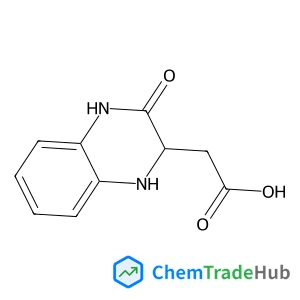
(3-Oxo-1,2,3,4-tetrahydro-2-quinoxalinyl)acetic acid
CAS Number:
136584-14-0
Molecular Formula:
C10H10N2O3
![2,6-Bis({(2R)-2-[hydroxy(diphenyl)methyl]-1-pyrrolidinyl}methyl)-4-methylphenol structure](https://static.chemtradehub.com/structs/877/877395-58-9-70bf.webp "2,6-Bis({(2R)-2-[hydroxy(diphenyl)methyl]-1-pyrrolidinyl}methyl)-4-methylphenol structure")
2,6-Bis({(2R)-2-[hydroxy(diphenyl)methyl]-1-pyrrolidinyl}methyl)-4-methylphenol
CAS Number:
877395-58-9
Molecular Formula:
C43H46N2O3
Recommended Suppliers





Disclaimer
This page provides academic journal information for reference and research purposes only. We are not affiliated with any journal publishers and do not handle publication submissions. For publication-related inquiries, please contact the respective journal publishers directly.
If you notice any inaccuracies in the information displayed, please contact us at support@chemtradehub.com. We will promptly review and address your concerns.