













Atomistic insights into the adsorption and stimuli-responsive behavior of poly(N-isopropylacrylamide)–graphene hybrid systems
Literature Information
Publication Date
2018-10-31
DOI
10.1039/C8CP04191A
Impact Factor
3.676
Authors
Mahdi Moshref-Javadi, George P. Simon, Nikhil V. Medhekar
View Original
Abstract
Non-covalent functionalization of graphene materials with responsive polymers is a promising approach for synthesizing new, hybrid composites with improved dispersibility and functional properties. However, the interplay between various components of the hybrid systems, their structural configurations, and stimuli-responsive behavior are not yet well understood at the atomic level. Here, we investigate the temperature-responsive behavior of physisorbed poly(N-isopropylacrylamide) (PNIPAM) on to graphene (G) and graphene oxide (GO) sheets in aqueous solution using large scale molecular dynamics simulations. It was observed that PNIPAM can be spontaneously anchored to the surfaces of both G and GO at 290 K with a macromolecular coil shape. However, the configuration of PNIPAM on G is markedly different in comparison with that on GO, leading to its distinct thermoresponsive behavior. Specifically, the adsorption on G gives rise to an increase in the temperature of the coil-to-globule transition when compared to the native polymer, the origin of which can be interpreted in terms of the interactions and the solvation behavior. The results obtained here are of significance to the design and manipulation of graphene-based stimuli-responsive hybrid systems with optimal functional properties.
Related Literature
Adsorption of light hydrocarbons in the flexible MIL-53(Cr) and rigid MIL-47(V) metal–organic frameworks: a combination of molecular simulations and microcalorimetry/gravimetry measurements
N. Rosenbach Jr, A. Ghoufi, I. Déroche, P. L. Llewellyn, T. Devic, S. Bourrelly, C. Serre, G. Férey, G. Maurin
2010-05-07
Paper
DOI: 10.1039/C001173H
Highly ordered aluminium-planted mesoporous silica as active catalyst for Biginelli reaction and formyl C–H insertion reaction with diazoester
Hiroaki Murata, Haruro Ishitani, Masakazu Iwamoto
2010-10-12
Communication
DOI: 10.1039/C0CP00565G
Effect of protonation on the electronic structure of aromatic molecules: naphthaleneH+
Ivan Alata, Otto Dopfer
2010-10-06
Communication
DOI: 10.1039/C0CP00792G
Electrical conductivity in patterned silver–mesoporous titania nanocomposite thin films: towards robust 3D nano-electrodes
Eduardo D. Martínez, Leticia Granja, Martín G. Bellino, Galo J. A. A. Soler-Illia
2010-10-01
Communication
DOI: 10.1039/C0CP00824A
Spectroelectrochemical studies of hole percolation on functionalised nanocrystalline TiO2 films: a comparison of two different ruthenium complexes
Xiaoe Li, Mohammad K. Nazeeruddin, Mukundan Thelakkat, Piers R. F. Barnes, Ramón Vilar, James R. Durrant
2010-11-16
Paper
DOI: 10.1039/C0CP01013H
The nature of nitrate at the ice surface studied by XPS and NEXAFS
Adéla Křepelová, John Newberg, Thomas Huthwelker, Hendrik Bluhm, Markus Ammann
2010-06-08
Paper
DOI: 10.1039/C0CP00359J
Rovibrational levels of HD
Krzysztof Pachucki, Jacek Komasa
2010-08-05
Paper
DOI: 10.1039/C0CP00209G
Titania supported gold nanoparticles as photocatalyst
2010-11-17
Perspective
DOI: 10.1039/C0CP00917B
Study of polycyclic aromatic hydrocarbons adsorbed on graphene using density functional theory with empirical dispersion correction
Olga V. Ershova, Timothy C. Lillestolen, Elena Bichoutskaia
2010-04-09
Paper
DOI: 10.1039/C000370K
You might also like
Compound Q&A
How should waste containing N-Methoxy-N-methyl-1,3-thiazole-5-carboxamide (CAS: 898825-89-3) be handled?
Waste containing N-Methoxy-N-methyl-1,3-thiazole-5-carboxamide (CAS: 898825-89-3...
898825-89-3N-Methoxy-N-methyl-1...
Compound Q&A
How should N-(4-Biphenylyl)dibenzo[b,d]furan-4-amine (CAS: 1318338-47-4) be stored?
N-(4-Biphenylyl)dibenzo[b,d]furan-4-amine should be stored in a tightly sealed c...
1318338-47-4N-(4-Biphenylyl)dibe...
Compound Q&A
What is the market or research trend for 3-Acetamido-5-amino-2,4,6-triiodobenzoic acid (CAS: 1713-07-1)?
The market for 3-Acetamido-5-amino-2,4,6-triiodobenzoic acid (CAS: 1713-07-1) is...
1713-07-13-Acetamido-5-amino-...
Compound Q&A
How should Benzyl 2-O-acetyl-3,4,6-tri-O-benzyl-beta-D-galactopyranoside (CAS: 61820-03-9) be stored?
Benzyl 2-O-acetyl-3,4,6-tri-O-benzyl-beta-D-galactopyranoside (CAS: 61820-03-9) ...
61820-03-9Benzyl 2-O-acetyl-3,...
Compound Q&A
What regulatory guidelines apply to 2-Ethylpiperazine dihydrochloride (CAS: 438050-52-3)?
2-Ethylpiperazine dihydrochloride (CAS: 438050-52-3) is regulated under the Glob...
438050-52-32-Ethylpiperazine di...
Compound Q&A
What regulatory guidelines apply to 1,1'-[1,3-Phenylenebis(methylene)]bis(3-methyl-1H-pyrrole-2,5-dione) (CAS: 119462-56-5)?
1,1'-[1,3-Phenylenebis(methylene)]bis(3-methyl-1H-pyrrole-2,5-dione) (CAS: 11946...
119462-56-51,1'-[1,3-Phenyleneb...
Compound Q&A
Are there alternatives to 5-Fluoro-2-(1-pyrrolidinyl)pyridine (CAS: 1287217-79-1) in synthesis?
Several alternatives can be used in the synthesis of 5-Fluoro-2-(1-pyrrolidinyl)...
1287217-79-15-Fluoro-2-(1-pyrrol...
Compound Q&A
What precautions should be taken when handling 1-((2R,3R,4R,5R)-5-((bis(4-methoxyphenyl)(phenyl)methoxy)methyl)-4-hydroxy-3-methoxytetrahydrofuran-2-yl)-5-methylpyrimidine-2,4(1H,3H)-dione (CAS: 153631-19-7)?
Proper personal protective equipment (PPE) must be worn when handling this compo...
153631-19-71-((2R,3R,4R,5R)-5-(...
Compound Q&A
What precautions should be taken when handling 6-Bromoimidazo[1,2-a]pyridin-8-amine (CAS: 676371-00-9)?
When handling 6-Bromoimidazo[1,2-a]pyridin-8-amine, it is important to wear appr...
676371-00-96-Bromoimidazo[1,2-a...
Compound Q&A
Are there alternatives to (2S,4R)-4-(4-Nitrobenzyl)pyrrolidine-2-carboxylic acid hydrochloride (CAS: 1049740-22-8) in synthesis?
Alternatives to (2S,4R)-4-(4-Nitrobenzyl)pyrrolidine-2-carboxylic acid hydrochlo...
1049740-22-8(2S,4R)-4-(4-Nitrobe...
Source Journal
Physical Chemistry Chemical Physics

CiteScore:
5.5
Self-citation Rate:
10.3%
Articles per Year:
3036
Physical Chemistry Chemical Physics (PCCP) is an international journal co-owned by 19 physical chemistry and physics societies from around the world. This journal publishes original, cutting-edge research in physical chemistry, chemical physics and biophysical chemistry. To be suitable for publication in PCCP, articles must include significant innovation and/or insight into physical chemistry; this is the most important criterion that reviewers and Editors will judge against when evaluating submissions. The journal has a broad scope and welcomes contributions spanning experiment, theory, computation and data science. Topical coverage includes spectroscopy, dynamics, kinetics, statistical mechanics, thermodynamics, electrochemistry, catalysis, surface science, quantum mechanics, quantum computing and machine learning. Interdisciplinary research areas such as polymers and soft matter, materials, nanoscience, energy, surfaces/interfaces, and biophysical chemistry are welcomed if they demonstrate significant innovation and/or insight into physical chemistry. Joined experimental/theoretical studies are particularly appreciated when complementary and based on up-to-date approaches.
Recommended Compounds
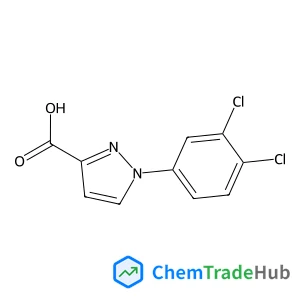
1-(3,4-Dichlorophenyl)-1H-pyrazole-3-carboxylic acid
CAS Number:
1152949-12-6
Molecular Formula:
C10H6Cl2N2O2
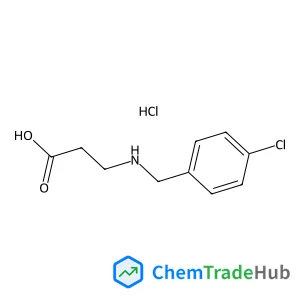
N-(4-Chlorobenzyl)-beta-alanine hydrochloride (1:1)
CAS Number:
1172479-10-5
Molecular Formula:
C10H13Cl2NO2
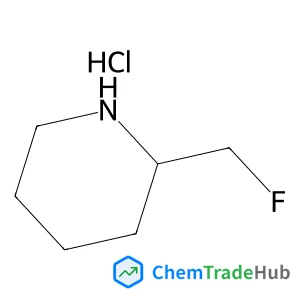
(2S)-2-(Fluoromethyl)piperidine hydrochloride (1:1)
CAS Number:
886216-73-5
Molecular Formula:
C6H13ClFN
Recommended Suppliers





Disclaimer
This page provides academic journal information for reference and research purposes only. We are not affiliated with any journal publishers and do not handle publication submissions. For publication-related inquiries, please contact the respective journal publishers directly.
If you notice any inaccuracies in the information displayed, please contact us at support@chemtradehub.com. We will promptly review and address your concerns.