













QM and ONIOM studies on thermally activated delayed fluorescence of copper(i) complexes in gas phase, solution, and crystal
Literature Information
Publication Date
2018-09-07
DOI
10.1039/C8CP03657H
Impact Factor
3.676
Authors
Yuan-Jun Gao, Wen-Kai Chen, Zi-Rui Wang, Wei-Hai Fang, Ganglong Cui
View Original
Abstract
Herein, we have employed B3LYP and TD-B3LYP methods with the QM/MM approach to study the thermally activated delayed fluorescence (TADF) phenomenon of two Cu(I) complexes bearing 5-(2-pyridyl)-tetrazolate (PyrTet) and phosphine (POP) ligands in the gas phase, solution, and crystal form. On the basis of spectroscopic properties, ground- and excited-state geometric and electronic structures, and related radiative and nonradiative rates, we have found that (1) the S1 and T1 excited states have clear metal-to-ligand charge transfer character from the Cu(I) atom to the PyrTet group; (2) the S1 and T1 states have a very small energy gap ΔES1–T1, less than 0.18 eV, which makes the forward and reverse intersystem crossing ISC and rISC processes between the S1 and T1 states very efficient; and (3) the low-frequency vibrational modes related to the torsional motion of the POP and PyrTet groups are found to have significant Huang–Rhys factors and are responsible for the efficient ISC and rISC rates. However, the corresponding Huang–Rhys factors are remarkably suppressed in the crystal compared with those in the gas phase and in solution due to the rigidity of the crystal surroundings; as a result, the ISC and rISC rates are accordingly reduced slightly in the crystal. This comparison also demonstrates that the surrounding effects are very important for modulating the photophysical properties of the Cu(I) complexes. Finally, our work gives helpful insights into the TADF mechanism of the Cu(I) compounds, which could assist in rationally designing TADF materials with excellent performance.
Related Literature
Al20+ does melt, albeit above the bulk melting temperature of aluminium
Udbhav Ojha, Krista G. Steenbergen, Nicola Gaston
2014-12-16
Paper
DOI: 10.1039/C4CP05143B
Formation of complex organic molecules in methanol and methanol–carbon monoxide ices exposed to ionizing radiation – a combined FTIR and reflectron time-of-flight mass spectrometry study
Surajit Maity, Ralf I. Kaiser, Brant M. Jones
2014-11-10
Paper
DOI: 10.1039/C4CP04149F
Investigation of solvent dynamic effects on the electron self-exchange in two thianthrene couples with large inner reorganization energies
P. Choto, K. Rasmussen, G. Grampp
2014-12-11
Paper
DOI: 10.1039/C4CP04581E
The molecular interfacial structure and plasticizer migration behavior of “green” plasticized poly(vinyl chloride)
Xiaoxian Zhang, Yaoxin Li, Jeanne M. Hankett, Zhan Chen
2015-01-02
Paper
DOI: 10.1039/C4CP05287K
A kinetic study of the CH2OO Criegee intermediate self-reaction, reaction with SO2 and unimolecular reaction using cavity ring-down spectroscopy
Rabi Chhantyal-Pun, Anthony Davey, Dudley E. Shallcross, Carl J. Percival, Andrew J. Orr-Ewing
2014-12-22
Paper
DOI: 10.1039/C4CP04198D
Ligand-modulated interactions between charged monolayer-protected Au144(SR)60 gold nanoparticles in physiological saline
Oscar D. Villarreal, Liao Y. Chen, Robert L. Whetten, Miguel J. Yacaman
2014-12-18
Paper
DOI: 10.1039/C4CP05137H
Correction: Theoretical study and design of multifunctional phosphorescent platinum(ii) complexes containing triarylboron moieties for efficient OLED emitters
Yong Wu, Guo-Gang Shan, Hai-Bin Li, Shui-Xing Wu, Xin-Yao Ren, Yun Geng, Zhong-Min Su
2015-01-09
Correction
DOI: 10.1039/C4CP90185A
Aggregation induced emission enhancement of 4,4′-bis(diethylamino)benzophenone with an exceptionally large blue shift and its potential use as glucose sensor
Prativa Mazumdar, Debasish Das, Gobinda Prasad Sahoo, Guillermo Salgado-Morán, Ajay Misra
2014-11-26
Paper
DOI: 10.1039/C4CP03772C
Reactivity of the free and (5,5)-carbon nanotube-supported AuPt bimetallic clusters towards O2 activation: a theoretical study
Fazel Shojaei, Masoumeh Mousavi, Francesc Illas
2014-12-12
Paper
DOI: 10.1039/C4CP05109B
Moderate band-gap-broadening induced high separation of electron–hole pairs in Br substituted BiOI: a combined experimental and theoretical investigation
Hongwei Huang, Xiaowei Li, Xu Han, Na Tian, Yihe Zhang, Tierui Zhang
2014-12-15
Paper
DOI: 10.1039/C4CP04842C
You might also like
Compound Q&A
What precautions should be taken when handling 4-(2-Furylmethyl)thiomorpholine 1,1-dioxide (CAS: 79206-94-3)?
When handling 4-(2-Furylmethyl)thiomorpholine 1,1-dioxide (CAS: 79206-94-3), it ...
79206-94-34-(2-Furylmethyl)thi...
Compound Q&A
What precautions should be taken when handling 4-Chloro-N-[2-(4-morpholinyl)ethyl]benzamide (CAS: 71320-77-9)?
When handling 4-Chloro-N-[2-(4-morpholinyl)ethyl]benzamide (CAS: 71320-77-9), it...
71320-77-94-Chloro-N-[2-(4-mor...
Compound Q&A
How should waste containing 2-[2-(2-Methoxyethoxy)ethoxy]ethyl 4-methylbenzenesulfonate (CAS: 62921-74-8) be handled?
Waste containing this compound (CAS: 62921-74-8) should be handled according to ...
62921-74-82-[2-(2-Methoxyethox...
Compound Q&A
How should waste containing (S)-Methyl 2-amino-3-cyclohexylpropanoate be handled?
Waste containing (S)-Methyl 2-amino-3-cyclohexylpropanoate should be collected i...
40056-18-6(S)-Methyl 2-amino-3...
Compound Q&A
How is 5-({4-[(2S,4R)-4-Hydroxy-2-methyltetrahydro-2H-pyran-4-yl]-2-thienyl}sulfanyl)-1-methyl-1,3-dihydro-2H-indol-2-one (CAS: 166882-70-8) typically synthesized?
This compound can be synthesized using a multi-step process involving the conjug...
166882-70-85-({4-[(2S,4R)-4-Hyd...
Compound Q&A
Are there alternatives to (2E)-3-(3,4-Dichlorophenyl)acrylic acid (CAS: 7312-27-8) in synthesis?
There are several alternatives to (2E)-3-(3,4-Dichlorophenyl)acrylic acid in syn...
7312-27-8(2E)-3-(3,4-Dichloro...
Compound Q&A
How should Ethyl 6-(2-nitrophenyl)imidazo[2,1-b][1,3]thiazole-3-carboxylate (CAS: 925437-84-9) be stored?
Ethyl 6-(2-nitrophenyl)imidazo[2,1-b][1,3]thiazole-3-carboxylate (CAS: 925437-84...
925437-84-9Ethyl 6-(2-nitrophen...
Compound Q&A
How should waste containing 2-(1,3-Thiazol-2-yl)ethanamine (CAS: 18453-07-1) be handled?
Waste containing 2-(1,3-Thiazol-2-yl)ethanamine (CAS: 18453-07-1) should be coll...
18453-07-12-(1,3-Thiazol-2-yl)...
Compound Q&A
How is Methyl 5-iodo-2-methylbenzoate (CAS: 103440-54-6) typically synthesized?
Methyl 5-iodo-2-methylbenzoate can be synthesized through the iodination of meth...
103440-54-6Methyl 5-iodo-2-meth...
Compound Q&A
How is 5-Chloro[1,2,4]triazolo[1,5-a]pyridine (CAS: 1427399-34-5) typically synthesized?
5-Chloro[1,2,4]triazolo[1,5-a]pyridine is commonly synthesized via the condensat...
1427399-34-55-Chloro[1,2,4]triaz...
Source Journal
Physical Chemistry Chemical Physics

CiteScore:
5.5
Self-citation Rate:
10.3%
Articles per Year:
3036
Physical Chemistry Chemical Physics (PCCP) is an international journal co-owned by 19 physical chemistry and physics societies from around the world. This journal publishes original, cutting-edge research in physical chemistry, chemical physics and biophysical chemistry. To be suitable for publication in PCCP, articles must include significant innovation and/or insight into physical chemistry; this is the most important criterion that reviewers and Editors will judge against when evaluating submissions. The journal has a broad scope and welcomes contributions spanning experiment, theory, computation and data science. Topical coverage includes spectroscopy, dynamics, kinetics, statistical mechanics, thermodynamics, electrochemistry, catalysis, surface science, quantum mechanics, quantum computing and machine learning. Interdisciplinary research areas such as polymers and soft matter, materials, nanoscience, energy, surfaces/interfaces, and biophysical chemistry are welcomed if they demonstrate significant innovation and/or insight into physical chemistry. Joined experimental/theoretical studies are particularly appreciated when complementary and based on up-to-date approaches.
Recommended Compounds
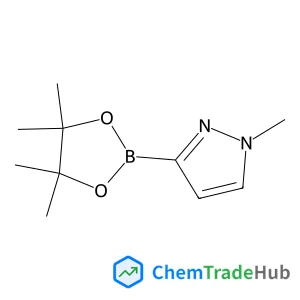
1-Methyl-3-(4,4,5,5-tetramethyl-1,3,2-dioxaborolan-2-yl)-1H-pyrazole
CAS Number:
1020174-04-2
Molecular Formula:
C10H17BN2O2
![N-[(Benzyloxy)carbonyl]serine structure](https://static.chemtradehub.com/structs/276/2768-56-1-77f7.webp "N-[(Benzyloxy)carbonyl]serine structure")
Recommended Suppliers





Disclaimer
This page provides academic journal information for reference and research purposes only. We are not affiliated with any journal publishers and do not handle publication submissions. For publication-related inquiries, please contact the respective journal publishers directly.
If you notice any inaccuracies in the information displayed, please contact us at support@chemtradehub.com. We will promptly review and address your concerns.