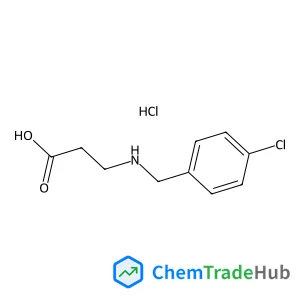
N-(4-Chlorobenzyl)-beta-alanine hydrochloride (1:1)
CAS Number:
1172479-10-5
Molecular Formula:
C10H13Cl2NO2
Seon Joon Kim, Ohmin Kwon, Dae Woo Kim
Controlling wrinkle nanostructures of two-dimensional materials is critical for optimizing the material properties and device performance. In this study, we demonstrated the in situ synthesis of large-area MoS2 wrinkles on graphene by chemical-vapor-deposition-assisted sulfurization, and investigated the influence of graphene thickness and grain structures on the feature dimensions of MoS2 wrinkle nanostructures. The height, width, and overall surface roughness of the MoS2 wrinkles diminish as the number of graphene layers increases, which was further verified by determining the binding energy of graphene layers by density functional theory calculations. Furthermore, the feature dimensions of MoS2 wrinkle nanostructures were also influenced by graphene domain boundaries because of the difference in graphene nucleation density. This may be attributed to the influence of the mechanical properties of graphene substrates on the overall feature dimensions of MoS2 wrinkles, which are directly correlated with the interfacial adhesion energy. We believe that our findings may contribute toward the controllable synthesis of MoS2 wrinkle nanostructures and other two-dimensional materials used for high-performance devices.
Gao Tu, Xianquan Ming, Haiqing Zhan, Feng Zhan
DOI: 10.1039/D0CP05744D
Yutichai Mueanngern, Cheng-Han Li, Meiling Spelic, Joshua Graham, Nathan Pimental, Yehia Khalifa, Joerg R. Jinschek, L. Robert Baker
DOI: 10.1039/D1CP00637A
Rizcky Tamarany, Dong Yun Shin, Sukho Kang, Hyangsoo Jeong, Jun Kim, Dong-Hee Lim
DOI: 10.1039/D1CP00236H
Andres Jaramillo-Botero, Xue-hai Ju, William A. Goddard, III
DOI: 10.1039/D0CP05767C
Nikoleta Kotsina
DOI: 10.1039/D1CP00933H
Johannes Kirschner, Anderson H. A. Gomes, Olle Björneholm, Vincenzo Carravetta, Niklas Ottosson, Arnaldo Naves de Brito, Huib J. Bakker
DOI: 10.1039/D0CP06387H
DOI: 10.1039/D0CP06002J
Xiaowen Wang, Jiaying Pan, Haiqiao Wei, Wenjia Li, Jun Zhao, Zhen Hu
DOI: 10.1039/D1CP01015H
Xia Xu, Jianxiong Dai, Xing Guo, Cheng Qian, Pei Zhang, Yixiang Duan, Yonghui Tian
DOI: 10.1039/D1CP00903F
Waste containing N-Methoxy-N-methyl-1,3-thiazole-5-carboxamide (CAS: 898825-89-3...
N-(4-Biphenylyl)dibenzo[b,d]furan-4-amine should be stored in a tightly sealed c...
The market for 3-Acetamido-5-amino-2,4,6-triiodobenzoic acid (CAS: 1713-07-1) is...
Benzyl 2-O-acetyl-3,4,6-tri-O-benzyl-beta-D-galactopyranoside (CAS: 61820-03-9) ...
2-Ethylpiperazine dihydrochloride (CAS: 438050-52-3) is regulated under the Glob...
1,1'-[1,3-Phenylenebis(methylene)]bis(3-methyl-1H-pyrrole-2,5-dione) (CAS: 11946...
Several alternatives can be used in the synthesis of 5-Fluoro-2-(1-pyrrolidinyl)...
Proper personal protective equipment (PPE) must be worn when handling this compo...
When handling 6-Bromoimidazo[1,2-a]pyridin-8-amine, it is important to wear appr...
Alternatives to (2S,4R)-4-(4-Nitrobenzyl)pyrrolidine-2-carboxylic acid hydrochlo...

Physical Chemistry Chemical Physics (PCCP) is an international journal co-owned by 19 physical chemistry and physics societies from around the world. This journal publishes original, cutting-edge research in physical chemistry, chemical physics and biophysical chemistry. To be suitable for publication in PCCP, articles must include significant innovation and/or insight into physical chemistry; this is the most important criterion that reviewers and Editors will judge against when evaluating submissions. The journal has a broad scope and welcomes contributions spanning experiment, theory, computation and data science. Topical coverage includes spectroscopy, dynamics, kinetics, statistical mechanics, thermodynamics, electrochemistry, catalysis, surface science, quantum mechanics, quantum computing and machine learning. Interdisciplinary research areas such as polymers and soft matter, materials, nanoscience, energy, surfaces/interfaces, and biophysical chemistry are welcomed if they demonstrate significant innovation and/or insight into physical chemistry. Joined experimental/theoretical studies are particularly appreciated when complementary and based on up-to-date approaches.