












Size and shape dependency of the surface energy of metallic nanoparticles: unifying the atomic and thermodynamic approaches
Literature Information
Publication Date
2018-07-13
DOI
10.1039/C8CP02346H
Impact Factor
3.676
Authors
Bastiaan Molleman, Tjisse Hiemstra
View Original
Abstract
Surface energy is a fundamental property of metallic nanoparticles (MeNPs), which plays a crucial role in nucleation and growth and has strong implications for the application and environmental impact of MeNPs. Surface energy (J m−2) can be size dependent, but experimental data on surface energy trends for MeNPs are inconclusive. Computational chemistry may resolve the issue, but the location and area of the surface used for scaling, which dramatically influences the outcome and interpretation, has not been properly investigated. The size dependency of the surface energy can only be determined by scaling to the thermodynamic surface of tension. To identify this, we have derived a generalized Tolman approach for non-spherical particles, which is used to analyze the thermodynamic consistency of various surface definitions. Only the physical surface, defined here, is consistent with the surface of tension. Scaling of recent computational data for faceted MeNPs to this surface yields a low size dependency of surface energy, in good agreement with the Tolman lengths corresponding to its interfacial position. We find Tolman lengths of −0.03 nm for icosahedra and −0.04 nm for cuboctahedra of gold or silver. With this result, our approach can be used to quantify the twinning energy for icosahedral nanoparticles, being ∼0.06 J per m2 twin area. To understand the unorthodox negative Tolman lengths, we have analyzed the surface energetics of the solid–gas interface of metals in relation to the liquid–vapor interface of water. Surface entropy is found to be imperative in determining the size dependence of surface free energy. At room temperature, the influence of surface entropy on surface enthalpy is much smaller for metals than for water. It explains why these two interfaces have opposite size dependencies of the surface Gibbs free energy and opposite signs of the Tolman length. For water, forming nanodroplets or nanobubbles, the Tolman length is negative (∼−0.014 nm) for the surface enthalpy, but positive (∼+0.06 ± 0.02 nm) for the surface Gibbs free energy. For MeNPs at room temperature, both entities are negative, but at high temperature, the increased surface entropy term may cause the size dependency of surface Gibbs free energy to become reversed.
Related Literature
Hydrogen adsorption in microporous organic framework polymer
Saad Makhseed, Jacob Samuel
2008-07-18
Communication
DOI: 10.1039/B805656K
Trapping Pd(0) in nanoparticle-assembled microcapsules: an efficient and reusable catalyst
Arlin Jose Amali, Rohit Kumar Rana
2008-07-15
Communication
DOI: 10.1039/B807736C
PVP-functionalized nanometre scale metal oxide coatings for cathode materials: successful application to LiMn2O4 spinel nanoparticles
2008-07-30
Communication
DOI: 10.1039/B807973K
A self-propagating system for Ge incorporation into nanostructured silica
Aubrey K. Davis, Mark Hildebrand
2008-08-04
Communication
DOI: 10.1039/B804955F
Unusual temperature dependence of salt effects for “on water” Wittig reaction: hydrophobicity at the interface
Shraeddha Tiwari, Anil Kumar
2008-07-28
Communication
DOI: 10.1039/B809127G
Facile one pot synthesis of a range of reversible addition–fragmentation chain transfer (RAFT) agents
Jared Skey, Rachel K. O’Reilly
2008-07-25
Communication
DOI: 10.1039/B804260H
B-Alkyl Suzuki couplings for the stereoselective synthesis of substituted pyrans
Gregory W. O’Neil, Alois Fürstner
2008-07-16
Communication
DOI: 10.1039/B806898D
Homogeneous photochemical oxidationvia singlet O2 in supercritical CO2
Richard A. Bourne, Xue Han, Adrian O. Chapman, Nicholas J. Arrowsmith, Hajime Kawanami, Martyn Poliakoff, Michael W. George
2008-08-05
Communication
DOI: 10.1039/B806063K
Carborane-based metal–organic frameworks as highly selective sorbents for CO2 over methane
Youn-Sang Bae, Omar K. Farha, Alexander M. Spokoyny, Chad A. Mirkin, Joseph T. Hupp, Randall Q. Snurr
2008-07-15
Communication
DOI: 10.1039/B805785K
You might also like
Compound Q&A
What precautions should be taken when handling 4-(2-Furylmethyl)thiomorpholine 1,1-dioxide (CAS: 79206-94-3)?
When handling 4-(2-Furylmethyl)thiomorpholine 1,1-dioxide (CAS: 79206-94-3), it ...
79206-94-34-(2-Furylmethyl)thi...
Compound Q&A
What precautions should be taken when handling 4-Chloro-N-[2-(4-morpholinyl)ethyl]benzamide (CAS: 71320-77-9)?
When handling 4-Chloro-N-[2-(4-morpholinyl)ethyl]benzamide (CAS: 71320-77-9), it...
71320-77-94-Chloro-N-[2-(4-mor...
Compound Q&A
How should waste containing 2-[2-(2-Methoxyethoxy)ethoxy]ethyl 4-methylbenzenesulfonate (CAS: 62921-74-8) be handled?
Waste containing this compound (CAS: 62921-74-8) should be handled according to ...
62921-74-82-[2-(2-Methoxyethox...
Compound Q&A
How should waste containing (S)-Methyl 2-amino-3-cyclohexylpropanoate be handled?
Waste containing (S)-Methyl 2-amino-3-cyclohexylpropanoate should be collected i...
40056-18-6(S)-Methyl 2-amino-3...
Compound Q&A
How is 5-({4-[(2S,4R)-4-Hydroxy-2-methyltetrahydro-2H-pyran-4-yl]-2-thienyl}sulfanyl)-1-methyl-1,3-dihydro-2H-indol-2-one (CAS: 166882-70-8) typically synthesized?
This compound can be synthesized using a multi-step process involving the conjug...
166882-70-85-({4-[(2S,4R)-4-Hyd...
Compound Q&A
Are there alternatives to (2E)-3-(3,4-Dichlorophenyl)acrylic acid (CAS: 7312-27-8) in synthesis?
There are several alternatives to (2E)-3-(3,4-Dichlorophenyl)acrylic acid in syn...
7312-27-8(2E)-3-(3,4-Dichloro...
Compound Q&A
How should Ethyl 6-(2-nitrophenyl)imidazo[2,1-b][1,3]thiazole-3-carboxylate (CAS: 925437-84-9) be stored?
Ethyl 6-(2-nitrophenyl)imidazo[2,1-b][1,3]thiazole-3-carboxylate (CAS: 925437-84...
925437-84-9Ethyl 6-(2-nitrophen...
Compound Q&A
How should waste containing 2-(1,3-Thiazol-2-yl)ethanamine (CAS: 18453-07-1) be handled?
Waste containing 2-(1,3-Thiazol-2-yl)ethanamine (CAS: 18453-07-1) should be coll...
18453-07-12-(1,3-Thiazol-2-yl)...
Compound Q&A
How is Methyl 5-iodo-2-methylbenzoate (CAS: 103440-54-6) typically synthesized?
Methyl 5-iodo-2-methylbenzoate can be synthesized through the iodination of meth...
103440-54-6Methyl 5-iodo-2-meth...
Compound Q&A
How is 5-Chloro[1,2,4]triazolo[1,5-a]pyridine (CAS: 1427399-34-5) typically synthesized?
5-Chloro[1,2,4]triazolo[1,5-a]pyridine is commonly synthesized via the condensat...
1427399-34-55-Chloro[1,2,4]triaz...
Source Journal
Physical Chemistry Chemical Physics

CiteScore:
5.5
Self-citation Rate:
10.3%
Articles per Year:
3036
Physical Chemistry Chemical Physics (PCCP) is an international journal co-owned by 19 physical chemistry and physics societies from around the world. This journal publishes original, cutting-edge research in physical chemistry, chemical physics and biophysical chemistry. To be suitable for publication in PCCP, articles must include significant innovation and/or insight into physical chemistry; this is the most important criterion that reviewers and Editors will judge against when evaluating submissions. The journal has a broad scope and welcomes contributions spanning experiment, theory, computation and data science. Topical coverage includes spectroscopy, dynamics, kinetics, statistical mechanics, thermodynamics, electrochemistry, catalysis, surface science, quantum mechanics, quantum computing and machine learning. Interdisciplinary research areas such as polymers and soft matter, materials, nanoscience, energy, surfaces/interfaces, and biophysical chemistry are welcomed if they demonstrate significant innovation and/or insight into physical chemistry. Joined experimental/theoretical studies are particularly appreciated when complementary and based on up-to-date approaches.
Recommended Compounds
![Methyl 4-({[(2-methyl-2-propanyl)oxy]carbonyl}amino)bicyclo[2.2.2]octane-1-carboxylate structure](https://static.chemtradehub.com/structs/943/943845-74-7-b7e5.webp "Methyl 4-({[(2-methyl-2-propanyl)oxy]carbonyl}amino)bicyclo[2.2.2]octane-1-carboxylate structure")
Methyl 4-({[(2-methyl-2-propanyl)oxy]carbonyl}amino)bicyclo[2.2.2]octane-1-carboxylate
CAS Number:
943845-74-7
Molecular Formula:
C15H25NO4
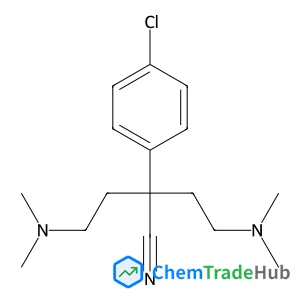
2-(4-Chlorophenyl)-4-(dimethylamino)-2-(2-(dimethylamino)ethyl)butanenitrile
CAS Number:
1246816-57-8
Molecular Formula:
C16H24ClN3
Recommended Suppliers




Disclaimer
This page provides academic journal information for reference and research purposes only. We are not affiliated with any journal publishers and do not handle publication submissions. For publication-related inquiries, please contact the respective journal publishers directly.
If you notice any inaccuracies in the information displayed, please contact us at support@chemtradehub.com. We will promptly review and address your concerns.