


Bright, stable, and tunable solid-state luminescence of carbon nanodot organogels
Literature Information
Publication Date
2018-06-11
DOI
10.1039/C8CP02069H
Impact Factor
3.676
Authors
Lizhe Liu, Li Wang, Guangsheng Luo, Chunlan Mo, Chenliang Chang
View Original
Abstract
Despite the sustained enthusiastic interest in fluorescent carbon nanodots (FCNDs), it is still challenging to achieve bright and widely tunable solid-state luminescence. Herein, organogels embedded with FCNDs were simply synthesized via a one-pot pyrolysis method. Subsequently, the excitation of a single ultraviolet (UV) excitation line results in tunable solid-state luminescence ranging from blue to red with quantum yields (QYs) >14%. In this study, N and S elements were co-doped to regulate the aggregation of FCNDs, which consequently modulated the Stokes shift of the photoluminescence (PL) by managing the degree of photon reabsorption. Notably, without compact aggregations, the dispersions of FCNDs in the organogel matrix indeed render bright fluorescence, which results from the suppression of excessive photon reabsorption and nonradiative resonant energy transfer (NRET).
Recommended Journals

Lab on a Chip

Journal of Medical Biochemistry

Environmental Toxicology and Pharmacology

Molecular Diversity

Advanced Engineering Materials

Foundations of Chemistry

Current Pharmaceutical Biotechnology

Journal of Enzyme inhibition and Medicinal Chemistry

Contact Lens & Anterior Eye

Nature Reviews Drug Discovery
Related Literature
Understanding the unusual stiffness of hydrophobic dipeptide crystals
Jorge M. del Campo, Joel Ireta
2021-04-27
Paper
DOI: 10.1039/D0CP06018F
Effects of solvation shell relaxation on chain association mechanisms in poly(3-hexylthiophene) solutions
Ching H. Wu, Chi C. Hua, Chun I. Wang
2021-05-04
Paper
DOI: 10.1039/D1CP00869B
From photosensitizers to light harvesters adapting the molecular structure in all-BODIPY assemblies
Edurne Avellanal-Zaballa, Alejandro Prieto-Castañeda, Carolina Díaz-Norambuena, Jorge Bañuelos, Antonia R. Agarrabeitia, Inmaculada García-Moreno, Santiago de la Moya, María J. Ortiz
2021-04-19
Communication
DOI: 10.1039/D1CP00991E
The role of the potential field on occurrence and flow of octane in quartz nanopores
Kaiyun Zhan, Wenjing Fang, Zhiming Pan, Guilei Teng, Haixia Zheng, Li Zhao, Bing Liu
2021-04-27
Paper
DOI: 10.1039/D1CP00891A
The curious case of ion migration in solid-state and liquid electrolyte-based perovskite devices: unveiling the role of charge accumulation and extraction at the interfaces
Priya Srivastava, Ramesh Kumar
2021-04-14
Paper
DOI: 10.1039/D1CP01214B
Role of conformational heterogeneity in ligand recognition by viral RNA molecules
Lev Levintov, Harish Vashisth
2021-04-01
Paper
DOI: 10.1039/D1CP00679G
Understanding the magnetization blocking mechanism in N23−-radical-bridged dilanthanide single-molecule magnets
Giang T. Nguyen, Liviu Ungur
2021-04-09
Paper
DOI: 10.1039/D1CP00452B
Aqueous TMAO solution under high hydrostatic pressure
Inga Kolling, Christoph Hölzl, Sho Imoto, Serena R. Alfarano, Hendrik Vondracek, Lukas Knake, Fabio Novelli, Claudius Hoberg, Jean-Blaise Brubach, Pascale Roy, Harald Forbert, Gerhard Schwaab, Dominik Marx, Martina Havenith
2021-04-29
Paper
DOI: 10.1039/D1CP00703C
The molecular structure of the surface of water–ethanol mixtures
Johannes Kirschner, Anderson H. A. Gomes, Olle Björneholm, Vincenzo Carravetta, Niklas Ottosson, Arnaldo Naves de Brito, Huib J. Bakker
2021-05-11
Paper
DOI: 10.1039/D0CP06387H
Ordered mesoporous metal oxides for electrochemical applications: correlation between structure, electrical properties and device performance
Erdogan Celik, Yanjiao Ma, Torsten Brezesinski
2021-03-31
Perspective
DOI: 10.1039/D1CP00834J
You might also like
Compound Q&A
How should waste containing N-Methoxy-N-methyl-1,3-thiazole-5-carboxamide (CAS: 898825-89-3) be handled?
Waste containing N-Methoxy-N-methyl-1,3-thiazole-5-carboxamide (CAS: 898825-89-3...
898825-89-3N-Methoxy-N-methyl-1...
Compound Q&A
How should N-(4-Biphenylyl)dibenzo[b,d]furan-4-amine (CAS: 1318338-47-4) be stored?
N-(4-Biphenylyl)dibenzo[b,d]furan-4-amine should be stored in a tightly sealed c...
1318338-47-4N-(4-Biphenylyl)dibe...
Compound Q&A
What is the market or research trend for 3-Acetamido-5-amino-2,4,6-triiodobenzoic acid (CAS: 1713-07-1)?
The market for 3-Acetamido-5-amino-2,4,6-triiodobenzoic acid (CAS: 1713-07-1) is...
1713-07-13-Acetamido-5-amino-...
Compound Q&A
How should Benzyl 2-O-acetyl-3,4,6-tri-O-benzyl-beta-D-galactopyranoside (CAS: 61820-03-9) be stored?
Benzyl 2-O-acetyl-3,4,6-tri-O-benzyl-beta-D-galactopyranoside (CAS: 61820-03-9) ...
61820-03-9Benzyl 2-O-acetyl-3,...
Compound Q&A
What regulatory guidelines apply to 2-Ethylpiperazine dihydrochloride (CAS: 438050-52-3)?
2-Ethylpiperazine dihydrochloride (CAS: 438050-52-3) is regulated under the Glob...
438050-52-32-Ethylpiperazine di...
Compound Q&A
What regulatory guidelines apply to 1,1'-[1,3-Phenylenebis(methylene)]bis(3-methyl-1H-pyrrole-2,5-dione) (CAS: 119462-56-5)?
1,1'-[1,3-Phenylenebis(methylene)]bis(3-methyl-1H-pyrrole-2,5-dione) (CAS: 11946...
119462-56-51,1'-[1,3-Phenyleneb...
Compound Q&A
Are there alternatives to 5-Fluoro-2-(1-pyrrolidinyl)pyridine (CAS: 1287217-79-1) in synthesis?
Several alternatives can be used in the synthesis of 5-Fluoro-2-(1-pyrrolidinyl)...
1287217-79-15-Fluoro-2-(1-pyrrol...
Compound Q&A
What precautions should be taken when handling 1-((2R,3R,4R,5R)-5-((bis(4-methoxyphenyl)(phenyl)methoxy)methyl)-4-hydroxy-3-methoxytetrahydrofuran-2-yl)-5-methylpyrimidine-2,4(1H,3H)-dione (CAS: 153631-19-7)?
Proper personal protective equipment (PPE) must be worn when handling this compo...
153631-19-71-((2R,3R,4R,5R)-5-(...
Compound Q&A
What precautions should be taken when handling 6-Bromoimidazo[1,2-a]pyridin-8-amine (CAS: 676371-00-9)?
When handling 6-Bromoimidazo[1,2-a]pyridin-8-amine, it is important to wear appr...
676371-00-96-Bromoimidazo[1,2-a...
Compound Q&A
Are there alternatives to (2S,4R)-4-(4-Nitrobenzyl)pyrrolidine-2-carboxylic acid hydrochloride (CAS: 1049740-22-8) in synthesis?
Alternatives to (2S,4R)-4-(4-Nitrobenzyl)pyrrolidine-2-carboxylic acid hydrochlo...
1049740-22-8(2S,4R)-4-(4-Nitrobe...
Source Journal
Physical Chemistry Chemical Physics

CiteScore:
5.5
Self-citation Rate:
10.3%
Articles per Year:
3036
Physical Chemistry Chemical Physics (PCCP) is an international journal co-owned by 19 physical chemistry and physics societies from around the world. This journal publishes original, cutting-edge research in physical chemistry, chemical physics and biophysical chemistry. To be suitable for publication in PCCP, articles must include significant innovation and/or insight into physical chemistry; this is the most important criterion that reviewers and Editors will judge against when evaluating submissions. The journal has a broad scope and welcomes contributions spanning experiment, theory, computation and data science. Topical coverage includes spectroscopy, dynamics, kinetics, statistical mechanics, thermodynamics, electrochemistry, catalysis, surface science, quantum mechanics, quantum computing and machine learning. Interdisciplinary research areas such as polymers and soft matter, materials, nanoscience, energy, surfaces/interfaces, and biophysical chemistry are welcomed if they demonstrate significant innovation and/or insight into physical chemistry. Joined experimental/theoretical studies are particularly appreciated when complementary and based on up-to-date approaches.
Recommended Compounds
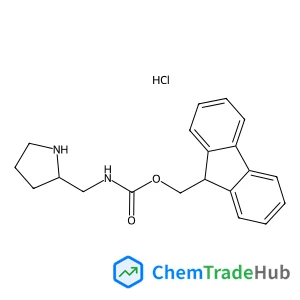
(S)-(9H-Fluoren-9-yl)methyl (pyrrolidin-2-ylmethyl)carbamate hydrochloride
CAS Number:
1217813-15-4
Molecular Formula:
C20H23ClN2O2

Recommended Suppliers





Disclaimer
This page provides academic journal information for reference and research purposes only. We are not affiliated with any journal publishers and do not handle publication submissions. For publication-related inquiries, please contact the respective journal publishers directly.
If you notice any inaccuracies in the information displayed, please contact us at support@chemtradehub.com. We will promptly review and address your concerns.