













The curious case of ion migration in solid-state and liquid electrolyte-based perovskite devices: unveiling the role of charge accumulation and extraction at the interfaces
Literature Information
Publication Date
2021-04-14
DOI
10.1039/D1CP01214B
Impact Factor
3.676
Authors
Priya Srivastava, Ramesh Kumar
View Original
Abstract
Electrochemical impedance spectroscopy (EIS) has been extensively used for the detailed investigation and understanding of the plethora of physical properties of variegated electrochemical and solid-state systems. Over the past few years, EIS has revealed many significant findings in hybrid halide perovskite (HHP)-based optoelectronic devices too. Photoinduced ion-migration, negative capacitance, anomalous mid-frequency capacitance, hysteresis, and instability to heat, light and moisture in HHP-based devices are among the few issues addressed by the IS technique. However, performing EIS in perovskite devices presents new challenges related to multilayer solid-state device geometry and complicated material properties. The ions in the perovskite behave in a specified manner, which is dictated by the energy-levels of the transport layer. Electronic-ionic coupling is one of the major challenges to understand ion transport kinetics in solid-state devices. In this work, we have performed impedance measurements in both solid-state (S-S) and liquid-electrolyte (L-E) device geometry to unfold the effect of charge transport layers on the ac ionic conductivity in perovskite materials. We have modelled the impedance spectra using the electrical equivalent circuit (EEC) and compared the behaviour of ions in different controlling environments. It was concluded that the AC as well as dc ionic conductivity and the accumulation of ions in the perovskite material are highly influenced by the nature of the interface in different device geometry. Charge accumulation in the S-S device gives rise to large polarisation, thereby negative capacitance or any inductive loop can be observed in the Nyquist plot while in the L-E device the presence of an electric double layer at the perovskite/electrolyte interface reduces the surface polarisation effect. Ionic conductivity is hopping limited in the low field regime and diffusion limited in the high field regime in the S-S device. Moreover, the perovskite/electrolyte based devices are promising candidates for electrolyte gated field-effect transistors, perovskite-based supercapacitors and electrochemical cells for water splitting or CO2 reduction.
Related Literature
The unexpectedly rich reconstructions of rutile TiO2(011)-(2 × 1) surface and the driving forces behind their formation: an ab initio evolutionary study
Oleg D. Feya, Qiang Zhu, Dongwei Ma
2016-04-07
Paper
DOI: 10.1039/C6CP01203E
Growth of Cu particles on a Cu2O truncated octahedron: tuning of the Cu content for efficient glucose sensing
Gang Wang, Hong Sun, Lu Ding, Gang Zhou, Zhong-Sheng Wang
2015-08-24
Paper
DOI: 10.1039/C5CP03748D
Comparative density functional theory and density functional tight binding study of arginine and arginine-rich cell penetrating peptide TAT adsorption on anatase TiO2
Wenxuan Li, Konstantinos Kotsis, Sergei Manzhos
2016-06-29
Paper
DOI: 10.1039/C6CP02671K
Electrochemical electron paramagnetic resonance utilizing loop gap resonators and micro-electrochemical cells
Mika A. Tamski, Julie V. Macpherson, Patrick R. Unwin, Mark E. Newton
2015-08-13
Paper
DOI: 10.1039/C5CP04259C
Fabrication of hierarchical ZnO/CdS heterostructured nanocomposites for enhanced hydrogen evolution from solar water splitting
2015-07-01
Paper
DOI: 10.1039/C5CP02689J
Oxygen–iron interaction in liquid lead–bismuth eutectic alloy
A. Aerts, S. Gavrilov, G. Manfredi, A. Marino, K. Rosseel, J. Lim
2016-06-30
Communication
DOI: 10.1039/C6CP01561A
The time scale of the quaternary structural changes in hemoglobin revealed using the transient grating technique
Jungkweon Choi
2015-08-14
Communication
DOI: 10.1039/C5CP03059E
Non-linear photoelectron effect contributes to the formation of negative matrix ions in UV-MALDI
E. Alonso, R. Zenobi
2016-04-26
Paper
DOI: 10.1039/C6CP00649C
A novel anode comprised of C&N co-doped Co3O4 hollow nanofibres with excellent performance for lithium-ion batteries
Chunshuang Yan, Gang Chen, Jingxue Sun, Xin Zhou, Chade Lv
2016-06-10
Communication
DOI: 10.1039/C6CP02660E
You might also like
Compound Q&A
How should waste containing N-Methoxy-N-methyl-1,3-thiazole-5-carboxamide (CAS: 898825-89-3) be handled?
Waste containing N-Methoxy-N-methyl-1,3-thiazole-5-carboxamide (CAS: 898825-89-3...
898825-89-3N-Methoxy-N-methyl-1...
Compound Q&A
How should N-(4-Biphenylyl)dibenzo[b,d]furan-4-amine (CAS: 1318338-47-4) be stored?
N-(4-Biphenylyl)dibenzo[b,d]furan-4-amine should be stored in a tightly sealed c...
1318338-47-4N-(4-Biphenylyl)dibe...
Compound Q&A
What is the market or research trend for 3-Acetamido-5-amino-2,4,6-triiodobenzoic acid (CAS: 1713-07-1)?
The market for 3-Acetamido-5-amino-2,4,6-triiodobenzoic acid (CAS: 1713-07-1) is...
1713-07-13-Acetamido-5-amino-...
Compound Q&A
How should Benzyl 2-O-acetyl-3,4,6-tri-O-benzyl-beta-D-galactopyranoside (CAS: 61820-03-9) be stored?
Benzyl 2-O-acetyl-3,4,6-tri-O-benzyl-beta-D-galactopyranoside (CAS: 61820-03-9) ...
61820-03-9Benzyl 2-O-acetyl-3,...
Compound Q&A
What regulatory guidelines apply to 2-Ethylpiperazine dihydrochloride (CAS: 438050-52-3)?
2-Ethylpiperazine dihydrochloride (CAS: 438050-52-3) is regulated under the Glob...
438050-52-32-Ethylpiperazine di...
Compound Q&A
What regulatory guidelines apply to 1,1'-[1,3-Phenylenebis(methylene)]bis(3-methyl-1H-pyrrole-2,5-dione) (CAS: 119462-56-5)?
1,1'-[1,3-Phenylenebis(methylene)]bis(3-methyl-1H-pyrrole-2,5-dione) (CAS: 11946...
119462-56-51,1'-[1,3-Phenyleneb...
Compound Q&A
Are there alternatives to 5-Fluoro-2-(1-pyrrolidinyl)pyridine (CAS: 1287217-79-1) in synthesis?
Several alternatives can be used in the synthesis of 5-Fluoro-2-(1-pyrrolidinyl)...
1287217-79-15-Fluoro-2-(1-pyrrol...
Compound Q&A
What precautions should be taken when handling 1-((2R,3R,4R,5R)-5-((bis(4-methoxyphenyl)(phenyl)methoxy)methyl)-4-hydroxy-3-methoxytetrahydrofuran-2-yl)-5-methylpyrimidine-2,4(1H,3H)-dione (CAS: 153631-19-7)?
Proper personal protective equipment (PPE) must be worn when handling this compo...
153631-19-71-((2R,3R,4R,5R)-5-(...
Compound Q&A
What precautions should be taken when handling 6-Bromoimidazo[1,2-a]pyridin-8-amine (CAS: 676371-00-9)?
When handling 6-Bromoimidazo[1,2-a]pyridin-8-amine, it is important to wear appr...
676371-00-96-Bromoimidazo[1,2-a...
Compound Q&A
Are there alternatives to (2S,4R)-4-(4-Nitrobenzyl)pyrrolidine-2-carboxylic acid hydrochloride (CAS: 1049740-22-8) in synthesis?
Alternatives to (2S,4R)-4-(4-Nitrobenzyl)pyrrolidine-2-carboxylic acid hydrochlo...
1049740-22-8(2S,4R)-4-(4-Nitrobe...
Source Journal
Physical Chemistry Chemical Physics

CiteScore:
5.5
Self-citation Rate:
10.3%
Articles per Year:
3036
Physical Chemistry Chemical Physics (PCCP) is an international journal co-owned by 19 physical chemistry and physics societies from around the world. This journal publishes original, cutting-edge research in physical chemistry, chemical physics and biophysical chemistry. To be suitable for publication in PCCP, articles must include significant innovation and/or insight into physical chemistry; this is the most important criterion that reviewers and Editors will judge against when evaluating submissions. The journal has a broad scope and welcomes contributions spanning experiment, theory, computation and data science. Topical coverage includes spectroscopy, dynamics, kinetics, statistical mechanics, thermodynamics, electrochemistry, catalysis, surface science, quantum mechanics, quantum computing and machine learning. Interdisciplinary research areas such as polymers and soft matter, materials, nanoscience, energy, surfaces/interfaces, and biophysical chemistry are welcomed if they demonstrate significant innovation and/or insight into physical chemistry. Joined experimental/theoretical studies are particularly appreciated when complementary and based on up-to-date approaches.
Recommended Compounds
![[5-fluoro-2-(morpholine-4-carbonyl)phenyl]boronic acid structure](https://static.chemtradehub.com/structs/121/1217501-26-2-505c.webp "[5-fluoro-2-(morpholine-4-carbonyl)phenyl]boronic acid structure")
[5-fluoro-2-(morpholine-4-carbonyl)phenyl]boronic acid
CAS Number:
1217501-26-2
Molecular Formula:
C11H13BFNO4
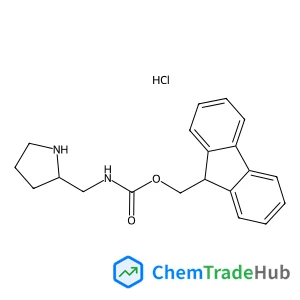
(S)-(9H-Fluoren-9-yl)methyl (pyrrolidin-2-ylmethyl)carbamate hydrochloride
CAS Number:
1217813-15-4
Molecular Formula:
C20H23ClN2O2

Recommended Suppliers




Disclaimer
This page provides academic journal information for reference and research purposes only. We are not affiliated with any journal publishers and do not handle publication submissions. For publication-related inquiries, please contact the respective journal publishers directly.
If you notice any inaccuracies in the information displayed, please contact us at support@chemtradehub.com. We will promptly review and address your concerns.