












![5-Acetyl-2,3-dihydrobenzo[b]furan structure](https://static.chemtradehub.com/structs/908/90843-31-5-eea4.webp "5-Acetyl-2,3-dihydrobenzo[b]furan structure")
CS2 capture in the ionic liquid 1-alkyl-3-methylimidazolium acetate: reaction mechanism and free energetics
Literature Information
Publication Date
2018-07-02
DOI
10.1039/C8CP01724G
Impact Factor
3.676
Authors
Fangyong Yan, Ryohei Kakuchi, Kenji Takahashi, Hyung J. Kim
View Original
Abstract
Reaction pathways for CS2 and COS in the ionic liquid, 1-ethyl-3-methylimidazolium (EMI+) acetate (OAc−), are studied using the ab initio self-consistent reaction field theory (SCRF) and molecular dynamics (MD) computer simulations. It is found that while CS2 converts to COS nearly at the 100% level through S/O exchange with acetate, both conversion and capture processes are kinetically possible for COS, yielding CO2/thioacetate and 1-ethyl-3-methylimidazole-2-thiocarboxylate (EMI-COS)/acetic acid as reaction products, respectively. These findings are in excellent agreement with recent experimental observations in the closely related 1-butyl-3-methylimidazolium acetate (BMI+OAc−) ionic liquid system. Constrained ab initio MD indicates that the capture reaction of COS (and CS2 if allowed) proceeds in a concerted fashion; viz., proton transfer from EMI+ to OAc− and carboxylation of EMI+ by COS (and CS2) occur concurrently, analogous to the concerted pathway proposed recently for CO2 capture in the imidazolium acetate ionic liquid family. As N-heterocyclic carbene (NHC) is not required, the concerted mechanism is fully consistent with the experimental fact that NHC has not been detected directly in this ionic liquid family. Computational analysis further predicts that if NHC would be present in the ionic liquid, it would react with CS2 and produce 1-ethyl-3-imidazole-2-dithiocarboxylate, prior to the conversion of CS2 to COS. Since such a dithiocarboxylate compound was not detected experimentally, the present analysis lends support to the view that NHC is not formed in the pure imidazolium acetate ionic liquid family.
Related Literature
Biosensor surface functionalization by a simple photochemical immobilization of antibodies: experimental characterization by mass spectrometry and surface enhanced Raman spectroscopy
Bartolomeo Della Ventura, Martina Banchelli, Riccardo Funari, Anna Illiano, Marella De Angelis, Paola Taroni, Angela Amoresano, Paolo Matteini, Raffaele Velotta
2019-10-10
Paper
DOI: 10.1039/C9AN00443B
Solvent-independent determination of heteroatom protonation states from NMR spectra by differential deuterium isotope shifts
Sebastian Tassoti, Martin Walenta, Alexander Pöcheim, Kathrin Buchberger, Olaf Kunert, Klaus Zangger
2019-11-11
Paper
DOI: 10.1039/C9AN01364D
A novel logic gate based on liquid-crystals responding to the DNA conformational transition
Fubing Xiao, Hui Tan, Yan Wu, Shuzhen Liao, Zhaoyang Wu, Guoli Shen, Ruqin Yu
2016-04-13
Communication
DOI: 10.1039/C6AN00504G
An ionic liquid composed of purely functional sensing molecules: a colorimetrically calcium responsive ionic liquid
Yusuke Niwa, Tatsumi Mizuta, Kenji Sueyoshi, Tatsuro Endo, Hideaki Hisamoto
2019-10-21
Communication
DOI: 10.1039/C9AN01769K
Competitive adsorption on gold nanoparticles for human papillomavirus 16 L1 protein detection by LDI-MS
Jing Han, Zhihua Wang, Lihui Yin, Wei Zhang, You Peng, Zongxiu Nie
2019-09-29
Paper
DOI: 10.1039/C9AN01612K
SERS monitoring the dynamics of local pH in lysosome of living cells during photothermal therapy
Rongxing Luo, Yinhui Li, Qifeng Zhou, Jing Zheng, Dandan Ma, Pinting Tang, Sheng Yang, Zhihe Qing
2016-04-19
Communication
DOI: 10.1039/C6AN00467A
Addressing the practicalities of anodic stripping voltammetry for heavy metal detection: a tutorial review
Julie V. Macpherson
2019-10-15
Tutorial Review
DOI: 10.1039/C9AN01437C
A two-photon fluorescent probe for bio-imaging of formaldehyde in living cells and tissues
Jun-Bin Li, Qian-Qian Wang, Lin Yuan, Yong-Xiang Wu, Xiao-Xiao Hu, Xiao-Bing Zhang, Weihong Tan
2016-04-14
Paper
DOI: 10.1039/C6AN00473C
Expression pattern of androgen receptors, AR-V7 and AR-567es, in circulating tumor cells and paired plasma-derived extracellular vesicles in metastatic castration resistant prostate cancer
Areti Strati, Martha Zavridou, Evangelos Bournakis, Sophia Mastoraki, Evi Lianidou
2019-10-09
Paper
DOI: 10.1039/C9AN00999J
pulSED: pulsed sonoelectrodeposition of fractal nanoplatinum for enhancing amperometric biosensor performance
M. Taguchi, N. Schwalb, Y. Rong, N. Garland, M. Tan, H. Yamaguchi, J. C. Claussen, E. S. McLamore
2016-04-20
Paper
DOI: 10.1039/C6AN00069J
You might also like
Compound Q&A
What precautions should be taken when handling 4-(2-Furylmethyl)thiomorpholine 1,1-dioxide (CAS: 79206-94-3)?
When handling 4-(2-Furylmethyl)thiomorpholine 1,1-dioxide (CAS: 79206-94-3), it ...
79206-94-34-(2-Furylmethyl)thi...
Compound Q&A
What precautions should be taken when handling 4-Chloro-N-[2-(4-morpholinyl)ethyl]benzamide (CAS: 71320-77-9)?
When handling 4-Chloro-N-[2-(4-morpholinyl)ethyl]benzamide (CAS: 71320-77-9), it...
71320-77-94-Chloro-N-[2-(4-mor...
Compound Q&A
How should waste containing 2-[2-(2-Methoxyethoxy)ethoxy]ethyl 4-methylbenzenesulfonate (CAS: 62921-74-8) be handled?
Waste containing this compound (CAS: 62921-74-8) should be handled according to ...
62921-74-82-[2-(2-Methoxyethox...
Compound Q&A
How should waste containing (S)-Methyl 2-amino-3-cyclohexylpropanoate be handled?
Waste containing (S)-Methyl 2-amino-3-cyclohexylpropanoate should be collected i...
40056-18-6(S)-Methyl 2-amino-3...
Compound Q&A
How is 5-({4-[(2S,4R)-4-Hydroxy-2-methyltetrahydro-2H-pyran-4-yl]-2-thienyl}sulfanyl)-1-methyl-1,3-dihydro-2H-indol-2-one (CAS: 166882-70-8) typically synthesized?
This compound can be synthesized using a multi-step process involving the conjug...
166882-70-85-({4-[(2S,4R)-4-Hyd...
Compound Q&A
Are there alternatives to (2E)-3-(3,4-Dichlorophenyl)acrylic acid (CAS: 7312-27-8) in synthesis?
There are several alternatives to (2E)-3-(3,4-Dichlorophenyl)acrylic acid in syn...
7312-27-8(2E)-3-(3,4-Dichloro...
Compound Q&A
How should Ethyl 6-(2-nitrophenyl)imidazo[2,1-b][1,3]thiazole-3-carboxylate (CAS: 925437-84-9) be stored?
Ethyl 6-(2-nitrophenyl)imidazo[2,1-b][1,3]thiazole-3-carboxylate (CAS: 925437-84...
925437-84-9Ethyl 6-(2-nitrophen...
Compound Q&A
How should waste containing 2-(1,3-Thiazol-2-yl)ethanamine (CAS: 18453-07-1) be handled?
Waste containing 2-(1,3-Thiazol-2-yl)ethanamine (CAS: 18453-07-1) should be coll...
18453-07-12-(1,3-Thiazol-2-yl)...
Compound Q&A
How is Methyl 5-iodo-2-methylbenzoate (CAS: 103440-54-6) typically synthesized?
Methyl 5-iodo-2-methylbenzoate can be synthesized through the iodination of meth...
103440-54-6Methyl 5-iodo-2-meth...
Compound Q&A
How is 5-Chloro[1,2,4]triazolo[1,5-a]pyridine (CAS: 1427399-34-5) typically synthesized?
5-Chloro[1,2,4]triazolo[1,5-a]pyridine is commonly synthesized via the condensat...
1427399-34-55-Chloro[1,2,4]triaz...
Source Journal
Physical Chemistry Chemical Physics

CiteScore:
5.5
Self-citation Rate:
10.3%
Articles per Year:
3036
Physical Chemistry Chemical Physics (PCCP) is an international journal co-owned by 19 physical chemistry and physics societies from around the world. This journal publishes original, cutting-edge research in physical chemistry, chemical physics and biophysical chemistry. To be suitable for publication in PCCP, articles must include significant innovation and/or insight into physical chemistry; this is the most important criterion that reviewers and Editors will judge against when evaluating submissions. The journal has a broad scope and welcomes contributions spanning experiment, theory, computation and data science. Topical coverage includes spectroscopy, dynamics, kinetics, statistical mechanics, thermodynamics, electrochemistry, catalysis, surface science, quantum mechanics, quantum computing and machine learning. Interdisciplinary research areas such as polymers and soft matter, materials, nanoscience, energy, surfaces/interfaces, and biophysical chemistry are welcomed if they demonstrate significant innovation and/or insight into physical chemistry. Joined experimental/theoretical studies are particularly appreciated when complementary and based on up-to-date approaches.
Recommended Compounds
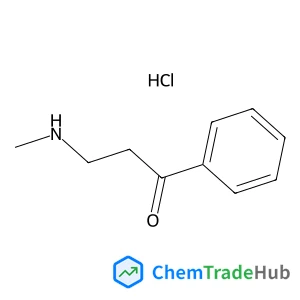
3-(Methylamino)-1-phenyl-1-propanone hydrochloride (1:1)
CAS Number:
2538-50-3
Molecular Formula:
C10H14ClNO
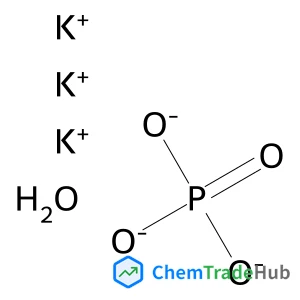
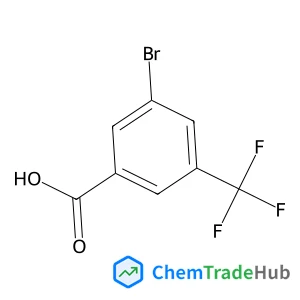
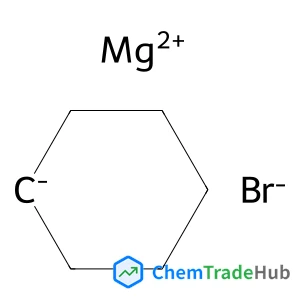
Recommended Suppliers






Disclaimer
This page provides academic journal information for reference and research purposes only. We are not affiliated with any journal publishers and do not handle publication submissions. For publication-related inquiries, please contact the respective journal publishers directly.
If you notice any inaccuracies in the information displayed, please contact us at support@chemtradehub.com. We will promptly review and address your concerns.