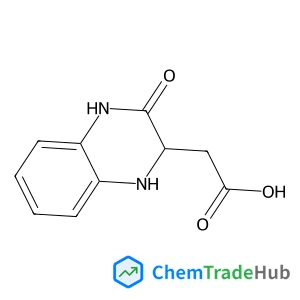
(3-Oxo-1,2,3,4-tetrahydro-2-quinoxalinyl)acetic acid
CAS Number:
136584-14-0
Molecular Formula:
C10H10N2O3
Guannan Li, Hong He
F-Doping effects on polyaniline-derived carbon coated Li3V2(PO4)3 (Li3V2(PO4)3−xFx@C) as a cathode for high performance Li rechargeable batteries are systematically investigated with a combined experimental and DFT theoretical calculation approach. The results clearly indicate that the doping amount has a significant impact on the rate capability and long cycle life. The optimal material (Li3V2(PO4)2.88F0.12@C) delivers 123.16 mA h g−1@2C, which is close to the theoretical value (133 mA h g−1), while showing a greatly improved cycle stability. Rietveld refinements show that the F− doping does not obey Vegard's Law, which may be attributed to the generated lower valence of V ions. AC impedance spectroscopy shows that the F-doping can achieve faster interfacial charge transfer for higher reaction reversibility. DFT calculations confirm that the lower V2+ (t2g↑)3 does exist in Li3V2(PO4)2.88F0.12, and the mean nearest neighbor Li–O bond length also increases for faster electrochemical kinetics, and further reveal that there is a tendency for a transition from the insulator to the n-type semiconductor due to the F dopant. The combined experimental and calculated results suggest that F-doping indeed greatly facilitates the charge transfer rate of the Li+ insertion/de-insertion process for better reversibility and enhances the Li+ diffusion rate to access the reaction sites, thus resulting in high rate capacity and cycling stability. This work not only offers a facile and effective approach to synthesize high performance Li-ion battery material for very promising practical applications, but also discloses scientific insights on element coating and doping to guide the electrode material design for fast electrode kinetics in energy storage devices.
Jörg Meyer, Anja Wadewitz, Lokamani, Cormac Toher, Roland Gresser, Karl Leo, Moritz Riede, Francesca Moresco
DOI: 10.1039/C1CP20999J
Kwan Kim, Kyung Lock Kim, Jeong-Young Choi, Dongha Shin, Kuan Soo Shin
DOI: 10.1039/C1CP21249D
Shinobu Gonsui, Tetsuya Tsuda, Ken-ichi Fukui
DOI: 10.1039/C1CP20643E
N. Crivillers, A. Liscio, F. Di Stasio, C. Van Dyck, S. Osella, D. Cornil, S. Mian, G. M. Lazzerini, O. Fenwick, E. Orgiu, F. Reinders, S. Braun, M. Fahlman, J. Cornil, V. Palermo, F. Cacialli, P. Samorì
DOI: 10.1039/C1CP20851A
J.M. Granadino-Roldán, M. Fernández-Gómez, Lin-Wang Wang
DOI: 10.1039/C1CP20329K
Artur Ratkiewicz
DOI: 10.1039/C1CP21229J
Jakob Kryger Sørensen, Emanuel Lörtscher, Tom Vosch, Heike Riel, Kristine Kilså, Thomas Bjørnholm, Herre van der Zant
DOI: 10.1039/C1CP20861F
Paulo R. Silva, Lucas L. R. Vono, Breno P. Espósito, Maurício S. Baptista, Liane M. Rossi
DOI: 10.1039/C1CP21525F
Haiping He, Yanjie Wang, Jingrui Wang, Zhizhen Ye
DOI: 10.1039/C1CP21527B
This compound is mainly used as an intermediate in the synthesis of antipsychoti...
Waste containing 1-(D-Ribofuranosyl)-1,4-dihydro-3-pyridinecarboxamide (CAS: 191...
2-Methyl-2-propanyl 3-bromo-3-(hydroxymethyl)-1-azetidinecarboxylate (CAS: 20079...
N-(4-Chloro-2-pyridinyl)acetamide (CAS: 245056-66-0) is a chemical compound with...
5-Chloro-2-hydroxybenzoic acid, also known as 5-chlorosalicylic acid, is an arom...
When handling 1,1-Dichloro-1-fluoroethane (CAS: 1717-00-6), it is important to u...
Fmoc-(2S,3R)-3-phenylpyrrolidine-2-carboxylic acid is a white crystalline solid ...
4-Amino-5-bromo-2-pyridinecarboxylic acid is primarily used as a precursor in th...
Handling this compound should be done with personal protective equipment (PPE) i...
When handling 8-bromo-2,2-dimethyl-3,4-dihydro-2H-1,4-benzoxazin-3-one, use prop...

Physical Chemistry Chemical Physics (PCCP) is an international journal co-owned by 19 physical chemistry and physics societies from around the world. This journal publishes original, cutting-edge research in physical chemistry, chemical physics and biophysical chemistry. To be suitable for publication in PCCP, articles must include significant innovation and/or insight into physical chemistry; this is the most important criterion that reviewers and Editors will judge against when evaluating submissions. The journal has a broad scope and welcomes contributions spanning experiment, theory, computation and data science. Topical coverage includes spectroscopy, dynamics, kinetics, statistical mechanics, thermodynamics, electrochemistry, catalysis, surface science, quantum mechanics, quantum computing and machine learning. Interdisciplinary research areas such as polymers and soft matter, materials, nanoscience, energy, surfaces/interfaces, and biophysical chemistry are welcomed if they demonstrate significant innovation and/or insight into physical chemistry. Joined experimental/theoretical studies are particularly appreciated when complementary and based on up-to-date approaches.
![Pyrazolo[1,5-a]pyridine-3-carbothioamide structure](https://static.chemtradehub.com/structs/885/885275-44-5-aae0.webp "Pyrazolo[1,5-a]pyridine-3-carbothioamide structure")