













An aptamer based voltammetric biosensor for endotoxins using a functionalized graphene and molybdenum disulfide composite as a new nanocarrier
Literature Information
Publication Date
2018-11-23
DOI
10.1039/C8AN02139B
Impact Factor
4.616
Authors
Yonghua Yuan, Linlin Li, Min Zhao, Jing Zhou, Zhihui Chen, Lijuan Bai
View Original
Abstract
Lipopolysaccharides (LPS), known as endotoxins, can cause a strong inflammatory response and lead to multiple organ failure in severe cases. This work reports a simple label-free voltammetric aptasensor for highly sensitive determination of LPS using a polyethyleneimine (PEI) functionalized reduced graphene oxide (rGO) and molybdenum disulfide (MoS2) composite (PEI-rGO-MoS2) as a new nanocarrier for electroactive toluidine blue (TB). The PEI-rGO-MoS2 nanocomposite with high electrical conductivity and large specific surface area can greatly increase the loading of TB and facilitate electron transfer from TB to an electrode. Then gold nanoparticles (AuNPs) were utilized to immobilize a thiolated LPS binding aptamer (LBA), which not only exhibited excellent biocompatibility, but also significantly amplified the electrochemical signal of TB. The proposed aptasensor exhibited high sensitivity for LPS and showed a wide linear range from 5.0 × 10⁻⁵ ng mL−1 to 2.0 × 10² ng mL−1 with a low limit of detection (LOD) of 3.01 × 10⁻⁵ ng mL−1, which overcame the shortcomings of traditional detection methods and achieved fast and accurate detection of LPS. Moreover, it exhibited excellent recovery and specificity upon spiking LPS in serum samples, indicating that this method has promising application in the field of trace analysis of LPS in clinical detection.
Related Literature
Mechanical properties and thermal conductivity of newly introduced graphene-like borophanes: a reactive molecular dynamics study
2021-08-02
Paper
DOI: 10.1039/D1CP01831K
Generation, contraction, and polarisation of Gaussian basis sets for atomic and molecular calculations using the generator coordinate method with polynomial discretisation: atoms from Na through Cl
Amanda R. Guimarães, Rugles C. Barbosa, Ana Cristina Mora Tello, Aldineia P. da Silva, Júlia M. A. Alves, Milena Palhares Maringolo, Albérico B. F. da Silva
2021-07-23
Paper
DOI: 10.1039/D1CP01879E
Robustness and accuracy improvement of data processing with 2D neural networks for transient absorption dynamics
Ruixuan Zhao, Daxin Wu, Jiao Wen, Qi Zhang, Guanglei Zhang, Jiebo Li
2021-07-16
Paper
DOI: 10.1039/D1CP02521J
Enhanced strain-induced magnetoelectric coupling in polarization-free Fe/BaTiO3 heterostructures
Carlos O. Amorim, João S. Amaral, Vítor S. Amaral
2021-07-01
Paper
DOI: 10.1039/D1CP00885D
Designing nanoscale capacitors based on twin-graphene
Jyotirmoy Deb, Harkishan Dua, Utpal Sarkar
2021-07-12
Paper
DOI: 10.1039/D1CP02680A
Phase analysis of tungsten and phonon behavior of beryllium layers in W/Be periodic multilayers
Niranjan Kumar, Roman S. Pleshkov, Aleksey V. Nezhdanov, Vladimir N. Polkovnikov, Nikolay I. Chkhalo, Aleksandr I. Mashin
2021-09-21
Paper
DOI: 10.1039/D1CP02815D
Mixed-diphosphine-protected chiral undecagold clusters Au11(S,S-DIOP)4(rac-/R-/S-BINAP): effect of the handedness of BINAP on their chiroptical responses
Yasuhiko Sato, Hiroshi Yao
2021-07-26
Paper
DOI: 10.1039/D1CP02106K
An evaluation of solvent effects and ethanol oxidation
Yuhan Mei, N. Aaron Deskins
2021-07-19
Paper
DOI: 10.1039/D1CP00630D
Assessing nickel oxide electrocatalysts incorporating diamines and having improved oxygen evolution activity using operando UV/visible and X-ray absorption spectroscopy
Takafumi Miura, Shun Tsunekawa, Sho Onishi, Toshiaki Ina, Kehsuan Wang, Genta Watanabe, Chechia Hu, Hiroshi Kondoh, Takeshi Kawai
2021-10-11
Paper
DOI: 10.1039/D1CP03323A
Dissolution kinetics of a sodium borosilicate glass in Tris buffer solutions: impact of Tris concentration and acid (HCl/HNO3) identity
Nicholas Stone-Weiss, Nicholas J. Smith, Randall E. Youngman, Eric M. Pierce, Ashutosh Goel
2021-07-08
Paper
DOI: 10.1039/D0CP06425D
You might also like
Compound Q&A
How is Ethyl 4-chlorothieno[2,3-b]pyridine-5-carboxylate (CAS: 59713-58-5) typically synthesized?
Ethyl 4-chlorothieno[2,3-b]pyridine-5-carboxylate (CAS: 59713-58-5) can be synth...
59713-58-5Ethyl 4-chlorothieno...
Compound Q&A
What regulatory guidelines apply to 5-Methyl-1H-indole-3-carbaldehyde (CAS: 52562-50-2)?
5-Methyl-1H-indole-3-carbaldehyde (CAS: 52562-50-2) is subject to various regula...
52562-50-25-Methyl-1H-indole-3...
Compound Q&A
What are the physical and chemical properties of (1,3-Dimethyl-2,4-dioxo-1,2,3,4-tetrahydro-5-pyrimidinyl)boronic acid (CAS: 223418-73-3)?
(1,3-Dimethyl-2,4-dioxo-1,2,3,4-tetrahydro-5-pyrimidinyl)boronic acid is a white...
223418-73-3(1,3-Dimethyl-2,4-di...
Compound Q&A
How should waste containing Sulfocostunolide A (CAS: 1016983-51-9) be handled?
Waste containing Sulfocostunolide A (CAS: 1016983-51-9) should be handled with c...
1016983-51-9Sulfocostunolide A
Compound Q&A
What precautions should be taken when handling Murraxocin (CAS: 88478-44-8)?
When handling Murraxocin (CAS: 88478-44-8), ensure proper personal protective eq...
88478-44-8Murraxocin
Compound Q&A
What are the physical and chemical properties of Formvar (CAS: 63148-64-1)?
Formvar (CAS: 63148-64-1) is an alkyd resin characterized by a high molecular we...
63148-64-1Formvar(R)
Compound Q&A
Is (S)-4-benzyl-2-((benzyloxy)methyl)morpholine (CAS: 205242-66-6) safe?
(S)-4-benzyl-2-((benzyloxy)methyl)morpholine is generally safe when handled with...
205242-66-6(S)-4-benzyl-2-((ben...
Compound Q&A
What industries use Methyl 1-(5-bromo-2-pyrimidinyl)cyclopropanecarboxylate (CAS: 1447607-69-3)?
Methyl 1-(5-bromo-2-pyrimidinyl)cyclopropanecarboxylate (CAS: 1447607-69-3) is p...
1447607-69-3Methyl 1-(5-bromo-2-...
Compound Q&A
Is 2-Methyl-1-phenyl-1-propanamine hydrochloride (CAS: 24290-47-9) safe?
2-Methyl-1-phenyl-1-propanamine hydrochloride (CAS: 24290-47-9) is generally con...
24290-47-92-Methyl-1-phenyl-1-...
Compound Q&A
How is 3-(4-Bromophenyl)-2-methylpropanoic acid (CAS: 66735-01-1) typically synthesized?
3-(4-Bromophenyl)-2-methylpropanoic acid is synthesized through a multi-step pro...
66735-01-13-(4-Bromophenyl)-2-...
Source Journal
Analyst

CiteScore:
7.8
Self-citation Rate:
5.6%
Articles per Year:
653
Analyst publishes analytical and bioanalytical research that reports premier fundamental discoveries and inventions, and the applications of those discoveries, unconfined by traditional discipline barriers.
Recommended Compounds
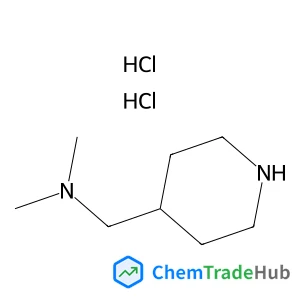
N,N-dimethyl(piperidin-4-yl)methanamine hydrochloride
CAS Number:
172281-72-0
Molecular Formula:
C8H20Cl2N2
Recommended Suppliers






Disclaimer
This page provides academic journal information for reference and research purposes only. We are not affiliated with any journal publishers and do not handle publication submissions. For publication-related inquiries, please contact the respective journal publishers directly.
If you notice any inaccuracies in the information displayed, please contact us at support@chemtradehub.com. We will promptly review and address your concerns.