












A separation voltage polarity switching method for higher sample loading capacity and better separation resolution in transient capillary isotachophoresis separation
Literature Information
Publication Date
2018-11-16
DOI
10.1039/C8AN01779D
Impact Factor
4.616
Authors
Huanming Wu, Lian Yi, Roza Wojcik, Tujin Shi, Keqi Tang
View Original
Abstract
A separation voltage polarity switching transient capillary isotachophoresis (PS-tCITP) was developed to overcome a major sample loading volume limitation in transient capillary isotachophoresis (tCITP). The fundamental idea of PS-tCITP is to let sample ions move back and forth in a separation capillary during their initial isotachophoresis focusing stage by switching the polarity of the separation voltage, in order to both increase the sample loading volume and improve the separation efficiency as compared to the conventional tCITP method. The experimental evaluation of the novel PS-tCITP method by using two peptide standards at 2 μM concentration showed that the maximum sample loading volume could be increased from 45% of the total separation capillary volume in tCITP to 70% in PS-tCITP, which resulted in a more than 1.5 fold increase in the peptide peak intensity at a given length/volume of the separation capillary. Due to the consecutive focusing of sample volume from each polarity switching of the separation voltage, the separation time window at a given sample loading volume was also increased significantly in PS-tCITP as compared to tCITP. Experiment comparison between tCITP and PS-tCITP at 45% sample loading volume using the same setup showed that the migration time difference between the two peptide peaks increased from 0.3 min in tCITP to 0.363 min in PS-tCITP with similar peak widths and heights, resulting in roughly a 21% improvement in separation resolution. The performance advantages of PS-tCITP separation over tCITP separation were further verified by using a mixture of six peptide standards.
Related Literature
Adenine ultrafast photorelaxation via electron-driven proton transfer
Naeem Ullah, Shunwei Chen
2021-09-18
Paper
DOI: 10.1039/D1CP03162G
Effects of substituent position on aminobenzoate relaxation pathways in solution
Jack M. Woolley, Konstantina M. Krokidi, Maria A. Tesa-Serrate, Nicholas D. M. Hine, Vasilios G. Stavros
2021-10-06
Paper
DOI: 10.1039/D1CP03759E
AromTool: predicting aromatic stacking energy using an atomic neural network model
Wengan He, Danhong Liang, Hongjuan Diao, Ruibo Wu
2021-06-29
Paper
DOI: 10.1039/D1CP01954F
Aggregation-induced negative differential resistance in graphene oxide quantum dots
Sonia Sharma, Chieh-An Cheng, Svette Reina Merden Santiago, Denice N. Feria, Chi-Tsu Yuan, Sheng-Hsiung Chang, Tai-Yuan Lin, Ji-Lin Shen
2021-08-01
Paper
DOI: 10.1039/D1CP01529J
A theoretical approach to evaluate and understand the electrical properties of the electrode materials of batteries
Hatef Yousefi-Mashhour, Mohammad Mahdi Kalantarian
2021-07-06
Paper
DOI: 10.1039/D1CP01796A
Mechanical properties and thermal conductivity of newly introduced graphene-like borophanes: a reactive molecular dynamics study
2021-08-02
Paper
DOI: 10.1039/D1CP01831K
Phase transitions in 1-bromoadamantane compared to 1-chloroadamantane: similarities and unique features
Igor V. Danilov, Elena L. Gromnitskaya, Vadim V. Brazhkin
2021-10-04
Paper
DOI: 10.1039/D1CP03080A
Optical pressure and temperature sensing properties of Nd3+:YTaO4
Pengyu Zhou, Qingli Zhang, Xiuming Dou, Jian Wang, Baoquan Sun, Yuhua Shen, Bao Liu, Dandan Han
2021-09-22
Paper
DOI: 10.1039/D1CP03418A
Photochemistry and UV/vis spectroscopy of hydrated vanadium cations, V+(H2O)n, n = 1–41, a model system for photochemical hydrogen evolution
Jakob Heller, Tobias F. Pascher, Dominik Muß, Christian van der Linde, Martin K. Beyer, Milan Ončák
2021-08-06
Paper
DOI: 10.1039/D1CP02382A
Excited states of modified oxygen-deficient centers and Si quantum dots in Gd-implanted silica glasses: emission dynamics and lifetime distributions
A. F. Zatsepin, Yu. A. Kuznetsova, E. S. Trofimova, V. A. Pustovarov
2021-09-24
Paper
DOI: 10.1039/D1CP03826E
You might also like
Compound Q&A
How is Ethyl 4-chlorothieno[2,3-b]pyridine-5-carboxylate (CAS: 59713-58-5) typically synthesized?
Ethyl 4-chlorothieno[2,3-b]pyridine-5-carboxylate (CAS: 59713-58-5) can be synth...
59713-58-5Ethyl 4-chlorothieno...
Compound Q&A
What regulatory guidelines apply to 5-Methyl-1H-indole-3-carbaldehyde (CAS: 52562-50-2)?
5-Methyl-1H-indole-3-carbaldehyde (CAS: 52562-50-2) is subject to various regula...
52562-50-25-Methyl-1H-indole-3...
Compound Q&A
What are the physical and chemical properties of (1,3-Dimethyl-2,4-dioxo-1,2,3,4-tetrahydro-5-pyrimidinyl)boronic acid (CAS: 223418-73-3)?
(1,3-Dimethyl-2,4-dioxo-1,2,3,4-tetrahydro-5-pyrimidinyl)boronic acid is a white...
223418-73-3(1,3-Dimethyl-2,4-di...
Compound Q&A
How should waste containing Sulfocostunolide A (CAS: 1016983-51-9) be handled?
Waste containing Sulfocostunolide A (CAS: 1016983-51-9) should be handled with c...
1016983-51-9Sulfocostunolide A
Compound Q&A
What precautions should be taken when handling Murraxocin (CAS: 88478-44-8)?
When handling Murraxocin (CAS: 88478-44-8), ensure proper personal protective eq...
88478-44-8Murraxocin
Compound Q&A
What are the physical and chemical properties of Formvar (CAS: 63148-64-1)?
Formvar (CAS: 63148-64-1) is an alkyd resin characterized by a high molecular we...
63148-64-1Formvar(R)
Compound Q&A
Is (S)-4-benzyl-2-((benzyloxy)methyl)morpholine (CAS: 205242-66-6) safe?
(S)-4-benzyl-2-((benzyloxy)methyl)morpholine is generally safe when handled with...
205242-66-6(S)-4-benzyl-2-((ben...
Compound Q&A
What industries use Methyl 1-(5-bromo-2-pyrimidinyl)cyclopropanecarboxylate (CAS: 1447607-69-3)?
Methyl 1-(5-bromo-2-pyrimidinyl)cyclopropanecarboxylate (CAS: 1447607-69-3) is p...
1447607-69-3Methyl 1-(5-bromo-2-...
Compound Q&A
Is 2-Methyl-1-phenyl-1-propanamine hydrochloride (CAS: 24290-47-9) safe?
2-Methyl-1-phenyl-1-propanamine hydrochloride (CAS: 24290-47-9) is generally con...
24290-47-92-Methyl-1-phenyl-1-...
Compound Q&A
How is 3-(4-Bromophenyl)-2-methylpropanoic acid (CAS: 66735-01-1) typically synthesized?
3-(4-Bromophenyl)-2-methylpropanoic acid is synthesized through a multi-step pro...
66735-01-13-(4-Bromophenyl)-2-...
Source Journal
Analyst

CiteScore:
7.8
Self-citation Rate:
5.6%
Articles per Year:
653
Analyst publishes analytical and bioanalytical research that reports premier fundamental discoveries and inventions, and the applications of those discoveries, unconfined by traditional discipline barriers.
Recommended Compounds
![9,9'-Spirobi[fluoren]-2-amine structure](https://static.chemtradehub.com/structs/118/118951-68-1-0d14.webp "9,9'-Spirobi[fluoren]-2-amine structure")
![Imidazo[1,5-a]pyrazine structure](https://static.chemtradehub.com/structs/274/274-49-7-d749.webp "Imidazo[1,5-a]pyrazine structure")
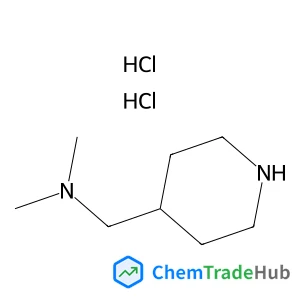
N,N-dimethyl(piperidin-4-yl)methanamine hydrochloride
CAS Number:
172281-72-0
Molecular Formula:
C8H20Cl2N2
Recommended Suppliers




Disclaimer
This page provides academic journal information for reference and research purposes only. We are not affiliated with any journal publishers and do not handle publication submissions. For publication-related inquiries, please contact the respective journal publishers directly.
If you notice any inaccuracies in the information displayed, please contact us at support@chemtradehub.com. We will promptly review and address your concerns.