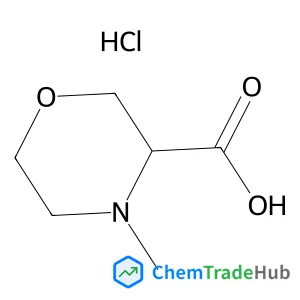
4-Methyl-3-morpholinecarboxylic acid hydrochloride (1:1)
CAS Number:
1240518-90-4
Molecular Formula:
C6H12ClNO3
Xiaowei An, Robert H. Aguirresarobe, Lourdes Irusta, Fernando Ruipérez, Jon M. Matxain, Xiangqiang Pan, Nora Aramburu, Jian Zhu
Dynamic structures containing polymers are considered a new class of polymeric materials with very attractive properties, since they can behave as thermosets at room temperature but at the same time they can be reprocessed to any shape. Recently, aromatic disulfides have been explored as dynamic bonds because of their good exchange reaction rate at low temperatures. In this work, we explore the utilization of aromatic diselenides on the basis of their lower bond energies in comparison with their disulfide counterparts. By comparing a model exchange reaction between aromatic diselenides and aromatic disulfides, the ability of aromatic diselenides to exchange faster than aromatic disulfides has been demonstrated. These results are supported by molecular quantum chemical calculations, confirming the faster exchange of aromatic diselenides in comparison with disulfides. In addition, a [2 + 1] radical-mediated reaction mechanism is proposed for aromatic diselenides to understand their faster kinetic exchange. An aromatic diselenide has been incorporated into polyurethane networks using a para-substituted amine diphenyl-diselenide. The resulting materials not only exhibit faster self-healing properties than the corresponding disulfide based materials, but also show the ability to be processed at temperatures as low as 100 °C. The fact that aromatic amines are already used as crosslinkers in a wide range of commercial products makes this system very attractive.
Muhammad Irfan, Ghulam Murtaza, Shangnan Fu, Ailiang Chen, Feng Qu, Xin Su
DOI: 10.1039/D3AN00202K
Monaj Karar, Rikitha S. Fernandes, Nilanjan Dey
DOI: 10.1039/D2AN01945K
Pei-Yu Huang, Hao-Chao Chang, Chin-Wei Kuo
DOI: 10.1039/D2AN01546C
Rasmus Öberg, Tobias Dahlberg, Dmitry Malyshev
DOI: 10.1039/D2AN02047E
Xu Chen, Yue Ma, Shuangyu Miao, Dongnan Li, Ye Zhang
DOI: 10.1039/D2AN02002E
Yupu Wei, Jinghui Shen, Jinlong Zhuo, Mingqi Xu, Yunliang Wang
DOI: 10.1039/D3AN00038A
Liting Lv
DOI: 10.1039/D2AN02004A
Subham Ray, Soumik Laha, Manik Das, Uttam Kumar Das, Arijit Bag, Indranil Choudhuri, Nandan Bhattacharya, Bidhan Chandra Samanta, Tithi Maity
DOI: 10.1039/D2AN01938H
Jiandan Chen, Hongying Liu, Chenwei Wang, Kai Fan, Lihua Li, Yuqing Zhang, Lu Fang, Zheng-Zhi Yin, Zhong Lü
DOI: 10.1039/D3AN00373F
4-Nitrophenyl phosphate disodium salt hexahydrate is primarily used as a substra...
2-(Trifluoromethyl)-1,3-oxazole-4-carboxylic Acid (CAS: 1060816-01-4) is widely ...
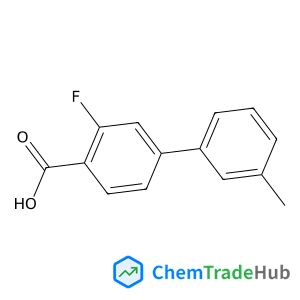
2-Fluoro-4-biphenylcarboxylic acid should be stored in a cool, dry place at room...
Prednisolone-21-Carboxylic Acid is primarily used in the pharmaceutical industry...
4-(Hydrazinomethyl)-1,2,3-benzenetriol (CAS: 3614-72-0) should be stored in a co...
4-Amino-1-methyl-1H-pyrazole-5-carboxylic acid hydrochloride (CAS: 92534-70-8) i...
Dehydropachymic acid (CAS: 77012-31-8) is regulated by various agencies. It fall...
The market and research trends for 6-[(2,2-Dimethylpropanoyl)amino]nicotinic aci...
1,10-Phenanthroline-2,9-dicarbaldehyde should be stored in a cool, dry place awa...
5-Carbamoyl-11-oxo-10,11-dihydro-5H-dibenzo[b,f]azepin-10-yl acetate can be synt...

Polymer Chemistry welcomes submissions in all areas of polymer science that have a strong focus on macromolecular chemistry. Manuscripts may cover a broad range of fields, yet no direct application focus is required.
![S-[2,3-Bis(palmitoyloxy)propyl]-N-[(9H-fluoren-9-ylmethoxy)(hydroxy)methylene]cysteine structure](https://static.chemtradehub.com/structs/210/210532-98-2-f6a7.webp "S-[2,3-Bis(palmitoyloxy)propyl]-N-[(9H-fluoren-9-ylmethoxy)(hydroxy)methylene]cysteine structure")