


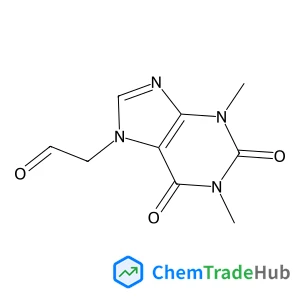
(1,3-Dimethyl-2,6-dioxo-1,2,3,6-tetrahydro-7H-purin-7-yl)acetaldehyde
CAS Number:
5614-53-9
Molecular Formula:
C9H10N4O3
Yifei Wang, Zhicheng Zheng, Zhengdong Huang, Jun Ling
We report a new synthetic route of a polymer backbone (polyCTA) containing chain transfer agent (CTA) pendent groups with a theoretical degree of polymerization (DP) up to 1200 and narrow polydispersity through reversible addition–fragmentation chain transfer (RAFT) polymerization of 4-vinylbenzyl acetate (VBA) followed by three modification steps. Well-defined cylindrical polymer brushes (CPBs) with polystyrene side chains are synthesized from the polyCTA via “CTA-shuttled” RAFT polymerization to prove the feasibility. Furthermore, various post-functionalizations on CPBs are investigated to demonstrate the potential of building complex architectures. CPBs with polystyrene-b-poly(N-isopropylacrylamide) side chains, amine-terminated polystyrene side chains and polystyrene-b-poly(ethylene glycol) side chains are synthesized successfully by the direct chain extension of N-isopropylacrylamide, one-pot aminolysis and Michael addition using acrylates containing a tert-butoxy carbonyl (Boc) protected amine group or mono-methyl poly(ethylene glycol), respectively. The strategy of “CTA-shuttled” R-group approach RAFT polymerization along with post-functionalization exhibits versatility in preparing tailor-made CPBs.

Contact Lens & Anterior Eye

Foundations of Chemistry

Current Pharmaceutical Biotechnology

Angewandte Chemie International Edition

Photochemical & Photobiological Sciences

Nature Reviews Drug Discovery

Journal of Medical Biochemistry

Molecular Diversity

Environmental Toxicology and Pharmacology

Journal of Enzyme inhibition and Medicinal Chemistry
Zhengxi Yin, Yafu Guan, Bina Fu, Dong H. Zhang
DOI: 10.1039/C9CP03592C
Yujie Zhang, Jingwei Shen, Xue Li, Zhongxue Chen, Shun-an Cao, Ting Li, Fei Xu
DOI: 10.1039/C9CP03836A
Yunlong Ma, Sen Zhang, Yunfei Xu, Xiaoyi Liu
DOI: 10.1039/C9CP06830A
Artur Nowak, Paweł Tecmer, Katharina Boguslawski
DOI: 10.1039/C9CP03678D
Jing Cui, Xueying Zhang, Lingpeng Meng, Qingzhong Li
DOI: 10.1039/C9CP03686E
Manel Naouai, Faouzi Najar, Kamel Hammami
DOI: 10.1039/C9CP04214H
DOI: 10.1039/C9CP03635K
M. P. Dvores, P. Çarçabal, P. Maître, J. P. Simons
DOI: 10.1039/C9CP06572E
When handling 2-Methyl-2-propanyl 5-amino-2-thiophenecarboxylate (CAS: 1498311-5...
5-Bromo-1,2-dichloro-3-fluorobenzene (CAS: 1000572-93-9) is a crystalline solid ...
(2R)-2-Amino-2-(4-bromophenyl)ethanol (CAS: 354153-64-3) should be stored in a c...
Methyl 4-(aminomethyl)tetrahydro-2H-pyran-4-carboxylate hydrochloride (CAS: 3627...
1,4-Dimethyl-1H-pyrazole-5-sulfonyl chloride is primarily used as an intermediat...
Dinaphtho[1,2-b:2',1'-d]furan is generally safe when handled with appropriate pe...
The market for 7-Methyl-7,9-dihydro-1H-purine-2,6,8(3H)-trione (CAS: 612-37-3) i...
2-(4-Chlorophenyl)malonaldehyde (CAS: 205676-17-1) is a colorless or light yello...
2-Methylchrysene (CAS: 3351-32-4) is typically synthesized via the reaction of c...
N-(6-aminopyrimidin-4-yl)acetamide (CAS: 89533-23-3) is generally considered saf...

Polymer Chemistry welcomes submissions in all areas of polymer science that have a strong focus on macromolecular chemistry. Manuscripts may cover a broad range of fields, yet no direct application focus is required.
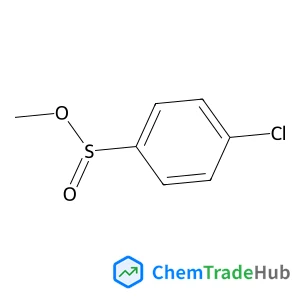
methyl]-N,2-dimethyl-2-propanesulfinamide structure](https://static.chemtradehub.com/structs/256/2565792-50-7-8a26.webp "N-[(R)-[3-(Benzyloxy)-2-(dicyclohexylphosphino)phenyl](phenyl)methyl]-N,2-dimethyl-2-propanesulfinamide structure")
![L-Lysine,N6-[2-[[(1,1-dimethylethoxy)carbonyl]amino]benzoyl]-N2-[(9H-fluoren-9-ylmethoxy)carbonyl]- structure](https://static.chemtradehub.com/structs/159/159322-59-5-c046.webp "L-Lysine,N6-[2-[[(1,1-dimethylethoxy)carbonyl]amino]benzoyl]-N2-[(9H-fluoren-9-ylmethoxy)carbonyl]- structure")
![methyl 6-amino-1H-pyrrolo[2,3-b]pyridine-4-carboxylate structure](https://static.chemtradehub.com/structs/119/1190315-60-6-9d9a.webp "methyl 6-amino-1H-pyrrolo[2,3-b]pyridine-4-carboxylate structure")




