












Back cover
Literature Information
Publication Date
DOI
10.1039/C7OB90201H
Impact Factor
3.876
Authors
View Original
Abstract
A graphical abstract is available for this content
Related Literature
Cu@C60 formation in rf-plasma and ring-current induced magnetism of C60
Houjin Huang, Masafumi Ata, Yoko Yoshimoto
2004-04-20
Communication
DOI: 10.1039/B402196G
Halide anion directed assembly of luminescent pseudorotaxanes
David Curiel, Paul D. Beer, Rowena L. Paul, Andrew Cowley, Mark R. Sambrook, Fridrich Szemes
2004-04-22
Communication
DOI: 10.1039/B401900H
Double asymmetric induction as a mechanistic probe: conjugate addition for the asymmetric synthesis of a pseudotripeptide
Stephen G. Davies, Gesine J. Hermann, Miles J. Sweet, Andrew D. Smith
2004-04-08
Communication
DOI: 10.1039/B401293C
Mechanistic and stereochemical aspects of the asymmetric cyclocarbonylation of 1,6-enynes with rhodium catalysts
Thomas M. Schmid, Giambattista Consiglio
2004-09-06
Communication
DOI: 10.1039/B407843H
Sensitivity increase in molecular recognition by decrease of the sensing particle size and by increase of the receptor binding site – a case with chemomechanical polymers
Hans-Jörg Schneider, Liu Tianjun, Nino Lomadze
2004-09-24
Communication
DOI: 10.1039/B409331C
LiSr2(NCN)I3: the first empty tetrahedral strontium(ii) entity coordinated by carbodiimide units but without strontium–strontium bonding
Wuping Liao, Jörg von Appen, Richard Dronskowski
2004-09-02
Communication
DOI: 10.1039/B408647C
Construction of building-blocks for polyether synthesis using sequential catalytic ring-closing enyne and cross metathesis
J. Stephen Clark, Frédéric Elustondo, Marc C. Kimber
2004-09-24
Communication
DOI: 10.1039/B409067E
Self-assembly of aluminium–salen coupled nanostructures from encoded modules with cleavable disulfide DNA-linkers
Raymond S. Brown, Morten Nielsen, Kurt V. Gothelf
2004-05-27
Communication
DOI: 10.1039/B403956D
Soft nanotubes from amphiphilic ABA triblock macromonomers
Julie Grumelard, Andreas Taubert, Wolfgang Meier
2004-05-25
Communication
DOI: 10.1039/B405671J
The rediscovery of Alfred Werner's second hexol
W. Gregory Jackson, Josephine A. McKeon, Margareta Zehnder, Markus Neuberger, Silvio Fallab
2004-09-06
Communication
DOI: 10.1039/B408277J
You might also like
Compound Q&A
What precautions should be taken when handling 2-Chloro-1,2-bis(4-methylphenyl)ethanone (CAS: 71193-32-3)?
When handling 2-Chloro-1,2-bis(4-methylphenyl)ethanone (CAS: 71193-32-3), it is ...
71193-32-32-Chloro-1,2-bis(4-m...
Compound Q&A
What industries use 4-Ethoxy-3-(5-methyl-4-oxo-7-propyl-1,4-dihydroimidazo[5,1-f][1,2,4]triazin-2-yl)benzenesulfonyl chloride (CAS: 224789-26-8)?
4-Ethoxy-3-(5-methyl-4-oxo-7-propyl-1,4-dihydroimidazo[5,1-f][1,2,4]triazin-2-yl...
224789-26-84-Ethoxy-3-(5-methyl...
Compound Q&A
How should Methyl 3-Oxo-4-Androsten-17-Carboxylate (CAS: 2681-55-2) be stored?
Methyl 3-Oxo-4-Androsten-17-Carboxylate (CAS: 2681-55-2) should be stored in a c...
2681-55-2Methyl 3-Oxo-4-Andro...
Compound Q&A
What are the main uses of (R)-3-Amino-4-(3-hexylphenylamino)-4-oxobutylphosphonic acid (CAS: 909725-61-7)?
(R)-3-Amino-4-(3-hexylphenylamino)-4-oxobutylphosphonic acid is primarily used i...
909725-61-7(R)-3-Amino-4-(3-hex...
Compound Q&A
What regulatory guidelines apply to 2-Methyl-2-propanyl 3-amino-3-carbamoyl-1-azetidinecarboxylate (CAS: 1254120-14-3)?
2-Methyl-2-propanyl 3-amino-3-carbamoyl-1-azetidinecarboxylate (CAS: 1254120-14-...
1254120-14-32-Methyl-2-propanyl ...
Compound Q&A
Are there alternatives to (E)-4-(tert-Butoxy)-4-oxobut-2-enoic acid (CAS: 135355-96-3) in synthesis?
There are alternative reagents that can be used in synthesis instead of (E)-4-(t...
135355-96-3(E)-4-(tert-Butoxy)-...
Compound Q&A
What are the physical and chemical properties of [2-(3-Chlorophenyl)-1,3-thiazol-4-yl]methanol (CAS: 121202-20-8)?
[2-(3-Chlorophenyl)-1,3-thiazol-4-yl]methanol (CAS: 121202-20-8) is a crystallin...
121202-20-8[2-(3-Chlorophenyl)-...
Compound Q&A
What is the market or research trend for Methyl (2S)-[(4S)-2,2-dimethyl-1,3-dioxolan-4-yl]{[(4-methylphenyl)sulfonyl]oxy}acetate (CAS: 166249-17-8)?
The market and research trends for Methyl (2S)-[(4S)-2,2-dimethyl-1,3-dioxolan-4...
166249-17-8Methyl (2S)-[(4S)-2,...
Compound Q&A
What is the market or research trend for 1-Bromo-2-isocyanatoethane (CAS: 42865-19-0)?
The market for 1-Bromo-2-isocyanatoethane (CAS: 42865-19-0) is driven by its use...
42865-19-01-Bromo-2-isocyanato...
Compound Q&A
What are the main uses of 4-Nitro-D-phenylalanine hydrochloride (CAS: 147065-06-3)?
4-Nitro-D-phenylalanine hydrochloride (CAS: 147065-06-3) is primarily used in re...
147065-06-34-Nitro-D-phenylalan...
Source Journal
Organic & Biomolecular Chemistry

CiteScore:
3.4
Self-citation Rate:
10.3%
Articles per Year:
1041
Organic & Biomolecular Chemistry (OBC) publishes original and high impact research and reviews in organic chemistry. We welcome research that shows new or significantly improved protocols or methodologies in total synthesis, synthetic methodology or physical and theoretical organic chemistry as well as research that shows a significant advance in the organic chemistry or molecular design aspects of chemical biology, catalysis, supramolecular and macromolecular chemistry, theoretical chemistry, mechanism-oriented physical organic chemistry, medicinal chemistry or natural products. Articles published in the journal should report new work which makes a highly-significant impact in the field. Routine and incremental work is generally not suitable for publication in the journal. More details about key areas of our scope are below. In all cases authors should include in their article clear rationale for why their research has been carried out.
Recommended Compounds
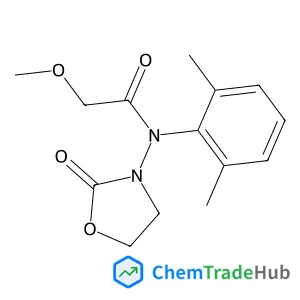
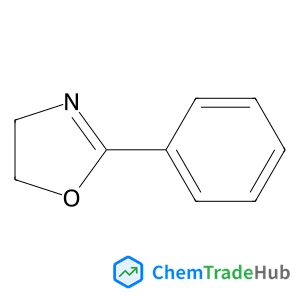
N-(2,6-Dimethylphenyl)-2-methoxy-N-(2-oxo-1,3-oxazolidin-3-yl)acetamide
CAS Number:
77732-09-3
Molecular Formula:
C14H18N2O4
Recommended Suppliers




Disclaimer
This page provides academic journal information for reference and research purposes only. We are not affiliated with any journal publishers and do not handle publication submissions. For publication-related inquiries, please contact the respective journal publishers directly.
If you notice any inaccuracies in the information displayed, please contact us at support@chemtradehub.com. We will promptly review and address your concerns.