


I2 catalyzed access of spiro[indoline-3,4′-pyridine] appended amine dyad: new ON–OFF chemosensors for Cu2+ and imaging in living cells
Literature Information
Publication Date
2017-11-30
DOI
10.1039/C7OB02651J
Impact Factor
3.876
Authors
Animesh Mondal, Barnali Naskar, Sanchita Goswami, Chandraday Prodhan, Keya Chaudhuri, Chhanda Mukhopadhyay
View Original
Abstract
An easy access to an amine-appended spiro[indoline-3,4′-pyridine] ON–OFF chemosensor by a one-pot four-component reaction using commercially available and an environmentally benign catalytic amount of molecular I2 (10 mol%) in aqueous ethanol at ambient temperature is described. The generated system could be utilized for the selective detection of Cu2+ as it demonstrated a colorimetric naked eye change along with an ON–OFF fluorescence response towards Cu2+ at physiological pH. The sensors exhibited high selectivity for Cu2+ over other common cations with detection limit in the range of 10−7 (M). Notably, this is the first report of a spiro[indoline-3,4′-pyridine] moiety acting as a sensor for Cu2+via a on–off fluorescence response. In addition, the probe system was successfully applied for imaging Cu2+ in human hepatocellular liver carcinoma cells (HepG2), demonstrating a new avenue for molecular imaging and biomedical applications.
Recommended Journals

Current Opinion in Solid State & Materials Science

Russian Journal of Bioorganic Chemistry

Journal of Natural Medicines

Journal of Saudi Chemical Society

Acta Materialia

Russian Journal of Coordination Chemistry

Russian Journal of Organic Chemistry

Nature Medicine

Drug Discovery Today

Russian Journal of General Chemistry
Related Literature
Macromolecular architectures for organic photovoltaics
Bhooshan C. Popere, Andrea M. Della Pelle, Ambata Poe, S. Thayumanavan
2012-01-11
Perspective
DOI: 10.1039/C2CP23422J
On the modeling of aggregates of an optically active regioregular polythiophene
Juan Torras, Cristina Sanchez-Navas, Oscar Bertran
2011-12-06
Paper
DOI: 10.1039/C2CP23122K
The enthalpies of vaporisation of ionic liquids: new measurements and predictions
Alexey Deyko, Stephen G. Hessey, Peter Licence, Elena A. Chernikova, Vladimir G. Krasovskiy, Leonid M. Kustov, Robert G. Jones
2012-01-06
Paper
DOI: 10.1039/C2CP23705A
On the analyses of fluorescence depolarisation data in the presence of electronic energy migration. Part II: Applying and evaluating two-photon excited fluorescence
Oleg Opanasyuk, Therese Mikaelsson, Linus Ryderfors, Emad Mukhtar, Lennart B.-Å. Johansson
2011-11-30
Paper
DOI: 10.1039/C2CP23177H
Internal energy deposition and ion fragmentation in atmospheric-pressure mid-infrared laser ablation electrospray ionization
Peter Nemes, Hehua Huang, Akos Vertes
2011-12-22
Paper
DOI: 10.1039/C2CP23411D
Hydration and interactions in protein solutions containing concentrated electrolytes studied by small-angle scattering
F. Zhang, F. Roosen-Runge, M. W. A. Skoda, R. M. J. Jacobs, M. Wolf, Ph. Callow, H. Frielinghaus, V. Pipich, S. Prévost, F. Schreiber
2011-12-14
Paper
DOI: 10.1039/C2CP23460B
Photophysics of indole-2-carboxylic acid in an aqueous environment studied by fluorescence spectroscopy in combination with ab initio calculations
Annemarie Huijser, Michał F. Rode, Alice Corani, Andrzej L. Sobolewski, Villy Sundström
2012-01-10
Paper
DOI: 10.1039/C2CP22958G
Mechanism of photocatalytic activities in Cr-doped SrTiO3 under visible-light irradiation: an insight from hybrid density-functional calculations
Pakpoom Reunchan, Shuxin Ouyang
2011-12-01
Paper
DOI: 10.1039/C2CP23348G
Design of energy band alignment at the Zn1−xMgxO/Cu(In,Ga)Se2 interface for Cd-free Cu(In,Ga)Se2 solar cells
Chang-Soo Lee, Liudmila Larina, Young-Min Shin, Essam A. Al-Ammar, Byung Tae Ahn
2012-03-01
Paper
DOI: 10.1039/C2CP40355B
Al2O3(110) surface as a template for the ordered growth of Ni and Co nanoclusters
Krithika Venkataramani, Thomas N. Jensen, Stig Helveg, Michael Reichling, Flemming Besenbacher, Jeppe V. Lauritsen
2012-01-09
Paper
DOI: 10.1039/C2CP22712F
You might also like
Compound Q&A
What are the main uses of (3.beta.)-3-Hydroxy-N,N-dimethyl-chol-5-en-24-amide (CAS: 79066-03-8)?
(3.beta.)-3-Hydroxy-N,N-dimethyl-chol-5-en-24-amide (CAS: 79066-03-8) is primari...
79066-03-8(3.beta.)-3-Hydroxy-...
Compound Q&A
What regulatory guidelines apply to 5-(aminomethyl)-2-methoxyphenol (CAS: 89702-89-6)?
5-(Aminomethyl)-2-methoxyphenol (CAS: 89702-89-6) is classified under GHS as a s...
89702-89-65-(aminomethyl)-2-me...
Compound Q&A
What is Thieno[2,3-c]pyridin-7(6H)-one (CAS: 28981-13-7)?
Thieno[2,3-c]pyridin-7(6H)-one (CAS: 28981-13-7) is a heterocyclic organic compo...
28981-13-7Thieno[2,3-c]pyridin...
Compound Q&A
Is 1-[(6-Methoxy-3-pyridinyl)methyl]-4-piperidinamine dihydrochloride (CAS: 1185311-28-7) safe?
1-[(6-Methoxy-3-pyridinyl)methyl]-4-piperidinamine dihydrochloride is generally ...
1185311-28-71-[(6-Methoxy-3-pyri...
Compound Q&A
What regulatory guidelines apply to [(2E)-3-Phenyl-2-propen-1-yl]phosphonic acid (CAS: 146404-58-2)?
[(2E)-3-Phenyl-2-propen-1-yl]phosphonic acid (CAS: 146404-58-2) is regulated und...
146404-58-2[(2E)-3-Phenyl-2-pro...
Compound Q&A
What regulatory guidelines apply to 6-Bromo-7-methoxyquinoline (CAS: 1620515-86-7)?
6-Bromo-7-methoxyquinoline (CAS: 1620515-86-7) falls under the scope of the Glob...
1620515-86-76-Bromo-7-methoxyqui...
Compound Q&A
What industries use (2R)-1-(1-Benzofuran-2-yl)-N-propyl-2-pentanamine (CAS: 260550-89-8)?
This compound is primarily used in the pharmaceutical industry for the developme...
260550-89-8(2R)-1-(1-Benzofuran...
Compound Q&A
What are the main uses of 1-Ethyl-7-[2-methyl-6-(4H-1,2,4-triazol-3-yl)-3-pyridinyl]-3,5-dihydropyrazino[2,3-b]pyrazin-2(1H)-one (CAS: 1228013-15-7)?
1-Ethyl-7-[2-methyl-6-(4H-1,2,4-triazol-3-yl)-3-pyridinyl]-3,5-dihydropyrazino[2...
1228013-15-71-Ethyl-7-[2-methyl-...
Compound Q&A
Are there alternatives to {5-(Acryloylamino)-2-[(dimethylamino)methyl]phenyl}boronic acid (CAS: 1217500-78-1) in synthesis?
Alternative reagents such as 2-[(dimethylamino)methyl]phenylboronic acid or rela...
1217500-78-1{5-(Acryloylamino)-2...
Compound Q&A
What is 3-(Piperidin-4-yloxy)pyridine (CAS: 310881-48-2)?
3-(Piperidin-4-yloxy)pyridine (CAS: 310881-48-2) is an organic compound with the...
310881-48-23-(Piperidin-4-yloxy...
Source Journal
Organic & Biomolecular Chemistry

CiteScore:
3.4
Self-citation Rate:
10.3%
Articles per Year:
1041
Organic & Biomolecular Chemistry (OBC) publishes original and high impact research and reviews in organic chemistry. We welcome research that shows new or significantly improved protocols or methodologies in total synthesis, synthetic methodology or physical and theoretical organic chemistry as well as research that shows a significant advance in the organic chemistry or molecular design aspects of chemical biology, catalysis, supramolecular and macromolecular chemistry, theoretical chemistry, mechanism-oriented physical organic chemistry, medicinal chemistry or natural products. Articles published in the journal should report new work which makes a highly-significant impact in the field. Routine and incremental work is generally not suitable for publication in the journal. More details about key areas of our scope are below. In all cases authors should include in their article clear rationale for why their research has been carried out.
Recommended Compounds
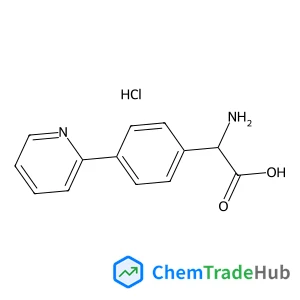
2-Amino-2-(4-(pyridin-2-YL)phenyl)acetic acid hydrochloride
CAS Number:
1135818-89-1
Molecular Formula:
C13H13ClN2O2
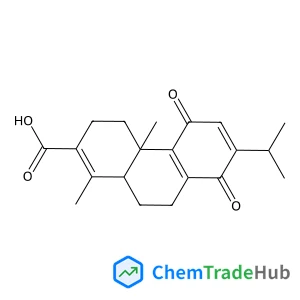
(4aS,10aS)-7-Isopropyl-1,4a-dimethyl-5,8-dioxo-3,4,4a,5,8,9,10,10a-octahydro-2-phenanthrenecarboxylic acid
CAS Number:
142950-86-5
Molecular Formula:
C20H24O4
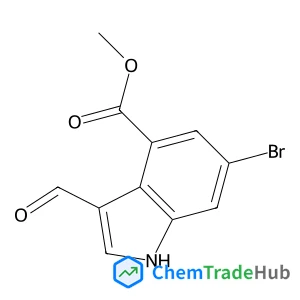
methyl 6-bromo-3-formyl-1H-indole-4-carboxylate
CAS Number:
1353636-63-1
Molecular Formula:
C11H8BrNO3
Recommended Suppliers




Disclaimer
This page provides academic journal information for reference and research purposes only. We are not affiliated with any journal publishers and do not handle publication submissions. For publication-related inquiries, please contact the respective journal publishers directly.
If you notice any inaccuracies in the information displayed, please contact us at support@chemtradehub.com. We will promptly review and address your concerns.