












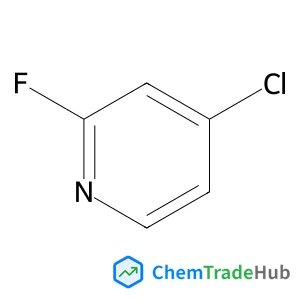
Visible-light-promoted selective C–H amination of heteroarenes with heteroaromatic amines under metal-free conditions
Literature Information
Publication Date
2017-10-27
DOI
10.1039/C7OB02504A
Impact Factor
3.876
Authors
Supravat Samanta, Chitrakar Ravi, Sadu Nageswara Rao, Abhisek Joshi, Subbarayappa Adimurthy
View Original
Abstract
The regioselective C–H amination of quinoline amides (C5) and imidazopyridines (C3) under transition-metal-free conditions at room temperature with a high degree of functional group tolerance is reported. The C–H amination promoted by visible light in the presence of a photocatalyst with a wide range of heteroamines makes the present protocol more sustainable.
Related Literature
Insertion of (E)-(1,2-dihalovinyl)lithium and (2-haloethynyl)lithium into zirconacycles
David Norton, Richard J. Whitby, Ed Griffen
2004-04-23
Communication
DOI: 10.1039/B403337J
Design, synthesis, characterization, and fluorescent studies of the first zinc-quinolate polymer
Amy Meyers, Clint South, Marcus Weck
2004-04-27
Communication
DOI: 10.1039/B402289K
Synthesis of monodisperse iron oxidenanocrystals by thermal decomposition of iron carboxylate salts
William W. Yu, Joshua C. Falkner, Cafer T. Yavuz, Vicki L. Colvin
2004-09-02
Communication
DOI: 10.1039/B409601K
Iron-catalysed propylene epoxidation by nitrous oxide: dramatic shift of allylic oxidation to epoxidation by the modification with alkali metal salts
Xiaoxing Wang, Qinghong Zhang, Qian Guo, Yinchuan Lou, Lüjuan Yang, Ye Wang
2004-05-14
Communication
DOI: 10.1039/B402839B
Stereospecific peptide folds. A rationally designed molecular bracelet
Soumendra Rana, Bijoy Kundu, Susheel Durani
2004-09-20
Communication
DOI: 10.1039/B410532J
Shuttling through reversible covalent chemistry
David A. Leigh, Emilio M. Pérez
2004-09-23
Communication
DOI: 10.1039/B412570C
A new method for the synthesis of boronate macrocycles
Nicolas Christinat, Rosario Scopelliti, Kay Severin
2004-04-21
Communication
DOI: 10.1039/B402510E
Y-shaped two-photon absorbing molecules with an imidazole–thiazole core
Ke Feng, Leonardo De Boni, Lino Misoguti, C. R. Mendonça, Michael Meador, Fu-Lian Hsu, Xiu R. Bu
2004-04-21
Communication
DOI: 10.1039/B402019G
An enantioselective imprinted receptor for Z-glutamate exhibiting a binding induced color change
Panagiotis Manesiotis, Andrew J. Hall, Marco Emgenbroich, Milena Quaglia, Ersilia De Lorenzi, Börje Sellergren
2004-09-09
Communication
DOI: 10.1039/B407870E
[2 + 2]Photocyclization in a single-crystal-to-single-crystal transformation of a TTF-amido-pyridine
Thomas Devic, Patrick Batail, Narcis Avarvari
2004-05-25
Communication
DOI: 10.1039/B404482G
You might also like
Compound Q&A
What precautions should be taken when handling 2-Chloro-1,2-bis(4-methylphenyl)ethanone (CAS: 71193-32-3)?
When handling 2-Chloro-1,2-bis(4-methylphenyl)ethanone (CAS: 71193-32-3), it is ...
71193-32-32-Chloro-1,2-bis(4-m...
Compound Q&A
What industries use 4-Ethoxy-3-(5-methyl-4-oxo-7-propyl-1,4-dihydroimidazo[5,1-f][1,2,4]triazin-2-yl)benzenesulfonyl chloride (CAS: 224789-26-8)?
4-Ethoxy-3-(5-methyl-4-oxo-7-propyl-1,4-dihydroimidazo[5,1-f][1,2,4]triazin-2-yl...
224789-26-84-Ethoxy-3-(5-methyl...
Compound Q&A
How should Methyl 3-Oxo-4-Androsten-17-Carboxylate (CAS: 2681-55-2) be stored?
Methyl 3-Oxo-4-Androsten-17-Carboxylate (CAS: 2681-55-2) should be stored in a c...
2681-55-2Methyl 3-Oxo-4-Andro...
Compound Q&A
What are the main uses of (R)-3-Amino-4-(3-hexylphenylamino)-4-oxobutylphosphonic acid (CAS: 909725-61-7)?
(R)-3-Amino-4-(3-hexylphenylamino)-4-oxobutylphosphonic acid is primarily used i...
909725-61-7(R)-3-Amino-4-(3-hex...
Compound Q&A
What regulatory guidelines apply to 2-Methyl-2-propanyl 3-amino-3-carbamoyl-1-azetidinecarboxylate (CAS: 1254120-14-3)?
2-Methyl-2-propanyl 3-amino-3-carbamoyl-1-azetidinecarboxylate (CAS: 1254120-14-...
1254120-14-32-Methyl-2-propanyl ...
Compound Q&A
Are there alternatives to (E)-4-(tert-Butoxy)-4-oxobut-2-enoic acid (CAS: 135355-96-3) in synthesis?
There are alternative reagents that can be used in synthesis instead of (E)-4-(t...
135355-96-3(E)-4-(tert-Butoxy)-...
Compound Q&A
What are the physical and chemical properties of [2-(3-Chlorophenyl)-1,3-thiazol-4-yl]methanol (CAS: 121202-20-8)?
[2-(3-Chlorophenyl)-1,3-thiazol-4-yl]methanol (CAS: 121202-20-8) is a crystallin...
121202-20-8[2-(3-Chlorophenyl)-...
Compound Q&A
What is the market or research trend for Methyl (2S)-[(4S)-2,2-dimethyl-1,3-dioxolan-4-yl]{[(4-methylphenyl)sulfonyl]oxy}acetate (CAS: 166249-17-8)?
The market and research trends for Methyl (2S)-[(4S)-2,2-dimethyl-1,3-dioxolan-4...
166249-17-8Methyl (2S)-[(4S)-2,...
Compound Q&A
What is the market or research trend for 1-Bromo-2-isocyanatoethane (CAS: 42865-19-0)?
The market for 1-Bromo-2-isocyanatoethane (CAS: 42865-19-0) is driven by its use...
42865-19-01-Bromo-2-isocyanato...
Compound Q&A
What are the main uses of 4-Nitro-D-phenylalanine hydrochloride (CAS: 147065-06-3)?
4-Nitro-D-phenylalanine hydrochloride (CAS: 147065-06-3) is primarily used in re...
147065-06-34-Nitro-D-phenylalan...
Source Journal
Organic & Biomolecular Chemistry

CiteScore:
3.4
Self-citation Rate:
10.3%
Articles per Year:
1041
Organic & Biomolecular Chemistry (OBC) publishes original and high impact research and reviews in organic chemistry. We welcome research that shows new or significantly improved protocols or methodologies in total synthesis, synthetic methodology or physical and theoretical organic chemistry as well as research that shows a significant advance in the organic chemistry or molecular design aspects of chemical biology, catalysis, supramolecular and macromolecular chemistry, theoretical chemistry, mechanism-oriented physical organic chemistry, medicinal chemistry or natural products. Articles published in the journal should report new work which makes a highly-significant impact in the field. Routine and incremental work is generally not suitable for publication in the journal. More details about key areas of our scope are below. In all cases authors should include in their article clear rationale for why their research has been carried out.
Recommended Compounds
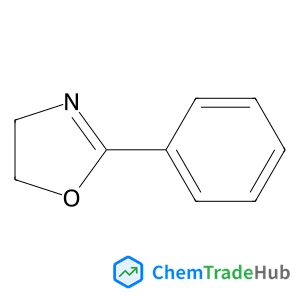
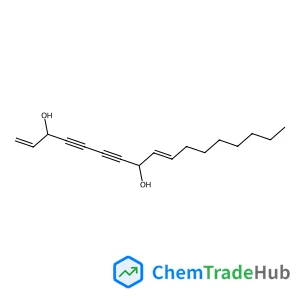
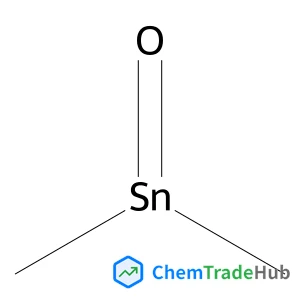
Recommended Suppliers






Disclaimer
This page provides academic journal information for reference and research purposes only. We are not affiliated with any journal publishers and do not handle publication submissions. For publication-related inquiries, please contact the respective journal publishers directly.
If you notice any inaccuracies in the information displayed, please contact us at support@chemtradehub.com. We will promptly review and address your concerns.