












A fluorescent combinatorial logic gate with Na+, H+-enabled OR and H+-driven low-medium-high ternary logic functions‡
Literature Information
Publication Date
2017-11-16
DOI
10.1039/C7OB01828B
Impact Factor
3.876
Authors
Jasmine M. A. Spiteri, Carl J. Mallia, Glenn J. Scerri, David C. Magri
View Original
Abstract
A novel fluorescent molecular logic gate with a ‘fluorophore–spacer1–receptor1–spacer2–receptor2’ format is demonstrated in 1 : 1 (v/v) methanol/water. The molecule consists of an anthracene fluorophore, and tertiary alkyl amine and N-(2-methoxyphenyl)aza-15-crown-5 ether receptors. In the presence of threshold concentrations of H+ and Na+, the molecule switches ‘on’ as an AND logic gate with a fluorescence quantum yield of 0.21 with proton and sodium binding constants of log βH+ = 9.0 and log βNa+ = 3.2, respectively. At higher proton levels, protonation also occurs at the anilinic nitrogen atom ether with a log βH+ = 4.2, which allows for Na+, H+-enabled OR (OR + AND circuit) and H+-driven ternary logic functions. The reported molecule is compared and contrasted to classic anthracene-based Na+ and H+ logic gates. We propose that such logic-based molecules could be useful tools for probing the vicinity of Na+, H+ antiporters in biological systems.
Related Literature
Continuous preparation of functionalised calcium phosphatenanoparticles with adjustable crystallinity
Thea Welzel, Wolfgang Meyer-Zaika, Matthias Epple
2004-04-20
Communication
DOI: 10.1039/B402521K
Azobenzene derivatives with a long alkyl chain and aminoxyls
Masahiro Fujino, Takamitsu Amano, Hiroki Akutsu, Jun-ichi Yamada, Shin'ichi Nakatsuji
2004-09-03
Communication
DOI: 10.1039/B408432B
Strategies toward improving the performance of fluorescence-based sensors for inorganic anions
Radek Pohl, Dmitry Aldakov, Pavel Kubát, Karolina Jursíková, Manuel Marquez, Pavel Anzenbacher, Jr.
2004-05-10
Communication
DOI: 10.1039/B315268E
Mesoporous silica anchored Ru catalysts for highly enantioselective hydrogenation of β-ketoesters
Banu Kesanli, Wenbin Lin
2004-08-25
Communication
DOI: 10.1039/B406697A
Olefincopolymerizationvia reversible addition–fragmentation chain transfer
Rajan Venkatesh, Bastiaan B P Staal, Bert Klumperman
2004-05-20
Communication
DOI: 10.1039/B403342F
Construction of building-blocks for polyether synthesis using sequential catalytic ring-closing enyne and cross metathesis
J. Stephen Clark, Frédéric Elustondo, Marc C. Kimber
2004-09-24
Communication
DOI: 10.1039/B409067E
A new series of sodium cobalt oxyhydrates
Donna C. Arnold, Chris J. Nuttall, Alexandros Lappas
2004-09-21
Communication
DOI: 10.1039/B405907G
Ferromagnetic NiII–GdIII interactions in complexes with NiGd, NiGdNi, and NiGdGdNi cores supported by tripodal ligands
Tomoka Yamaguchi, Yukinari Sunatsuki, Masaaki Kojima, Haruo Akashi, Masanobu Tsuchimoto, Nazzareno Re, Shutaro Osa, Naohide Matsumoto
2004-04-05
Communication
DOI: 10.1039/B401033G
On the stability of furanopyrimidin-2-one bases in oligonucleotides
Guan-Sheng Jiao, Kevin Burgess
2004-05-07
Communication
DOI: 10.1039/B402559H
Design, synthesis, characterization, and fluorescent studies of the first zinc-quinolate polymer
Amy Meyers, Clint South, Marcus Weck
2004-04-27
Communication
DOI: 10.1039/B402289K
You might also like
Compound Q&A
What precautions should be taken when handling 2-Chloro-1,2-bis(4-methylphenyl)ethanone (CAS: 71193-32-3)?
When handling 2-Chloro-1,2-bis(4-methylphenyl)ethanone (CAS: 71193-32-3), it is ...
71193-32-32-Chloro-1,2-bis(4-m...
Compound Q&A
What industries use 4-Ethoxy-3-(5-methyl-4-oxo-7-propyl-1,4-dihydroimidazo[5,1-f][1,2,4]triazin-2-yl)benzenesulfonyl chloride (CAS: 224789-26-8)?
4-Ethoxy-3-(5-methyl-4-oxo-7-propyl-1,4-dihydroimidazo[5,1-f][1,2,4]triazin-2-yl...
224789-26-84-Ethoxy-3-(5-methyl...
Compound Q&A
How should Methyl 3-Oxo-4-Androsten-17-Carboxylate (CAS: 2681-55-2) be stored?
Methyl 3-Oxo-4-Androsten-17-Carboxylate (CAS: 2681-55-2) should be stored in a c...
2681-55-2Methyl 3-Oxo-4-Andro...
Compound Q&A
What are the main uses of (R)-3-Amino-4-(3-hexylphenylamino)-4-oxobutylphosphonic acid (CAS: 909725-61-7)?
(R)-3-Amino-4-(3-hexylphenylamino)-4-oxobutylphosphonic acid is primarily used i...
909725-61-7(R)-3-Amino-4-(3-hex...
Compound Q&A
What regulatory guidelines apply to 2-Methyl-2-propanyl 3-amino-3-carbamoyl-1-azetidinecarboxylate (CAS: 1254120-14-3)?
2-Methyl-2-propanyl 3-amino-3-carbamoyl-1-azetidinecarboxylate (CAS: 1254120-14-...
1254120-14-32-Methyl-2-propanyl ...
Compound Q&A
Are there alternatives to (E)-4-(tert-Butoxy)-4-oxobut-2-enoic acid (CAS: 135355-96-3) in synthesis?
There are alternative reagents that can be used in synthesis instead of (E)-4-(t...
135355-96-3(E)-4-(tert-Butoxy)-...
Compound Q&A
What are the physical and chemical properties of [2-(3-Chlorophenyl)-1,3-thiazol-4-yl]methanol (CAS: 121202-20-8)?
[2-(3-Chlorophenyl)-1,3-thiazol-4-yl]methanol (CAS: 121202-20-8) is a crystallin...
121202-20-8[2-(3-Chlorophenyl)-...
Compound Q&A
What is the market or research trend for Methyl (2S)-[(4S)-2,2-dimethyl-1,3-dioxolan-4-yl]{[(4-methylphenyl)sulfonyl]oxy}acetate (CAS: 166249-17-8)?
The market and research trends for Methyl (2S)-[(4S)-2,2-dimethyl-1,3-dioxolan-4...
166249-17-8Methyl (2S)-[(4S)-2,...
Compound Q&A
What is the market or research trend for 1-Bromo-2-isocyanatoethane (CAS: 42865-19-0)?
The market for 1-Bromo-2-isocyanatoethane (CAS: 42865-19-0) is driven by its use...
42865-19-01-Bromo-2-isocyanato...
Compound Q&A
What are the main uses of 4-Nitro-D-phenylalanine hydrochloride (CAS: 147065-06-3)?
4-Nitro-D-phenylalanine hydrochloride (CAS: 147065-06-3) is primarily used in re...
147065-06-34-Nitro-D-phenylalan...
Source Journal
Organic & Biomolecular Chemistry

CiteScore:
3.4
Self-citation Rate:
10.3%
Articles per Year:
1041
Organic & Biomolecular Chemistry (OBC) publishes original and high impact research and reviews in organic chemistry. We welcome research that shows new or significantly improved protocols or methodologies in total synthesis, synthetic methodology or physical and theoretical organic chemistry as well as research that shows a significant advance in the organic chemistry or molecular design aspects of chemical biology, catalysis, supramolecular and macromolecular chemistry, theoretical chemistry, mechanism-oriented physical organic chemistry, medicinal chemistry or natural products. Articles published in the journal should report new work which makes a highly-significant impact in the field. Routine and incremental work is generally not suitable for publication in the journal. More details about key areas of our scope are below. In all cases authors should include in their article clear rationale for why their research has been carried out.
Recommended Compounds
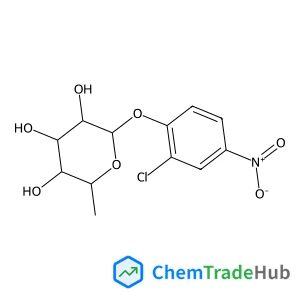
2-Chloro-4-nitrophenyl 6-deoxy-alpha-L-galactopyranoside
CAS Number:
157843-41-9
Molecular Formula:
C12H14ClNO7
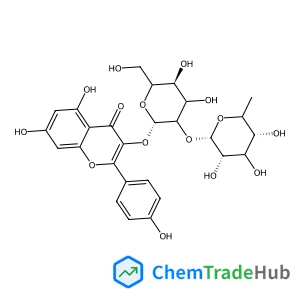
5,7-Dihydroxy-2-(4-hydroxyphenyl)-4-oxo-4H-chromen-3-yl 2-O-(6-deoxy-alpha-L-mannopyranosyl)-beta-D-glucopyranoside
CAS Number:
32602-81-6
Molecular Formula:
C27H30O15
Recommended Suppliers





Disclaimer
This page provides academic journal information for reference and research purposes only. We are not affiliated with any journal publishers and do not handle publication submissions. For publication-related inquiries, please contact the respective journal publishers directly.
If you notice any inaccuracies in the information displayed, please contact us at support@chemtradehub.com. We will promptly review and address your concerns.