












“Protrusions” or “holes” in graphene: which is the better choice for sodium ion storage?‡
Literature Information
Publication Date
2017-03-15
DOI
10.1039/C7EE00329C
Impact Factor
38.532
Authors
Yijun Yang, Dai-Ming Tang, Chao Zhang, Yihui Zhang, Qifeng Liang, Shimou Chen, Qunhong Weng, Min Zhou, Yanming Xue, Jiangwei Liu, Jinghua Wu, Qiu Hong Cui, Chao Lian, Guolin Hou, Fangli Yuan, Xi Wang
View Original
Abstract
The main challenge associated with sodium-ion battery (SIB) anodes is a search for novel candidate materials with high capacity and excellent rate capability. The most commonly used and effective route for graphene-based anode design is the introduction of in-plane “hole” defects via nitrogen-doping; this creates a spacious reservoir for storing more energy. Inspired by mountains in nature, herein, we propose another way – the introduction of blistering in graphene instead of making “holes”; this facilitates adsorbing/inserting more Na+ ions. In order to properly answer the key question: ““protrusions” or “holes” in graphene, which is better for sodium ion storage?”, two types of anode materials with a similar doping level were designed: a phosphorus-doped graphene (GP, with protrusions) and a nitrogen-doped graphene (GN, with holes). As compared with GN, the GP anode perfectly satisfies all the desired criteria: it reveals an ultrahigh capacity (374 mA h g−1 after 120 cycles at 25 mA g−1) comparable to the best graphite anodes in a standard Li-ion battery (∼372 mA h g−1), and exhibits an excellent rate capability (210 mA h g−1 at 500 mA g−1). In situ transmission electron microscopy (TEM) experiments and density functional theory (DFT) calculations were utilized to uncover the origin of the enhanced electrochemical activity of “protrusions” compared to “holes” in SIBs, down to the atomic scale. The introduction of protrusions through P-doping into graphene is envisaged to be a novel effective way to enhance the capacity and rate performance of SIBs.
Related Literature
Activation of weak IR fundamentals of two species of astrochemical interest in the Td point group – the importance of amorphous ices
R. L. Hudson, P. A. Gerakines, M. J. Loeffler
2015-04-16
Paper
DOI: 10.1039/C5CP00975H
Towards multielectron photocatalysis: a porphyrin array for lateral hole transfer and capture on a metal oxide surface
Bradley J. Brennan, Alec C. Durrell, Matthieu Koepf, Robert H. Crabtree, Gary W. Brudvig
2015-04-16
Paper
DOI: 10.1039/C5CP01683E
Volume shrinkage and rheological studies of epoxidised and unepoxidised poly(styrene-block-butadiene-block-styrene) triblock copolymer modified epoxy resin–diamino diphenyl methane nanostructured blend systems
Debora Puglia, Josè M. Kenny, Jyotishkumar Parameswaranpillai, Poornima Vijayan P, Jűrgen Pionteck
2015-03-31
Paper
DOI: 10.1039/C5CP00612K
A density functional study of silver clusters on a stepped graphite surface: formation of self-assembled nano-wires
Akansha Singh, Prasenjit Sen
2015-04-14
Paper
DOI: 10.1039/C5CP01016K
Radical anions of hypervalent silicon compounds: 1-substituted silatranes
Elena F. Belogolova, Tamara I. Vakul'skaya, Valery F. Sidorkin
2015-04-23
Paper
DOI: 10.1039/C4CP06046F
In silico prediction of MOFs with high deliverable capacity or internal surface area
Yi Bao, Richard L. Martin, Maciej Haranczyk
2015-02-19
Paper
DOI: 10.1039/C5CP00002E
Coherent resonance of quantum plasmons in the graphene–gold cluster hybrid system
Chikang Li
2015-04-15
Paper
DOI: 10.1039/C4CP05049E
Effect of cationic molecules on the oxygen reduction reaction on fuel cell grade Pt/C (20 wt%) catalyst in potassium hydroxide (aq, 1 mol dm−3)
Ai Lien Ong, Kenneth K. Inglis, Daniel K. Whelligan, Sam Murphy, John R. Varcoe
2015-03-31
Paper
DOI: 10.1039/C4CP04973J
Gas-phase reaction of two unsaturated ketones with atomic Cl and O3: kinetics and products
Weigang Wang, Maofa Ge
2015-03-30
Paper
DOI: 10.1039/C4CP05461J
You might also like
Compound Q&A
What are the main uses of (5-Sulfamoyl-3-pyridinyl)boronic acid (CAS: 951233-61-7)?
(5-Sulfamoyl-3-pyridinyl)boronic acid is primarily used in chemical synthesis, p...
951233-61-7(5-Sulfamoyl-3-pyrid...
Compound Q&A
How is Benzyl 2-methyl-2-(methylsulfonyl)-4-pentenoate (CAS: 1942858-50-5) typically synthesized?
Benzyl 2-methyl-2-(methylsulfonyl)-4-pentenoate is typically synthesized via est...
1942858-50-5Benzyl 2-methyl-2-(m...
Compound Q&A
What precautions should be taken when handling 8-Fluoroquinolin-6-ol (CAS: 209353-22-0)?
When handling 8-Fluoroquinolin-6-ol (CAS: 209353-22-0), it is important to use p...
209353-22-08-Fluoroquinolin-6-o...
Compound Q&A
What are the physical and chemical properties of 1,3-Dibromo-5-(2-methyl-2-propanyl)benzene (CAS: 129316-09-2)?
1,3-Dibromo-5-(2-methyl-2-propanyl)benzene (CAS: 129316-09-2) is a crystalline c...
129316-09-21,3-Dibromo-5-(2-met...
Compound Q&A
What industries use Ethyl 7-chloro-4-oxo-1-(1,3-thiazol-2-yl)-1,4-dihydro-1,8-naphthyridine-3-carboxylate (CAS: 174726-87-5)?
Ethyl 7-chloro-4-oxo-1-(1,3-thiazol-2-yl)-1,4-dihydro-1,8-naphthyridine-3-carbox...
174726-87-5Ethyl 7-chloro-4-oxo...
Compound Q&A
What precautions should be taken when handling Delta-7-Avenasterol (CAS: 23290-26-8)?
When handling Delta-7-Avenasterol (CAS: 23290-26-8), it is important to wear app...
23290-26-8Delta-7-Avenasterol
Compound Q&A
What precautions should be taken when handling N-({(5R)-3-[3-Fluoro-4-(4-morpholinyl)phenyl]-2-oxo-1,3-oxazolidin-5-yl}methyl)acetamide (CAS: 872992-20-6)?
Proper handling involves the use of personal protective equipment such as gloves...
872992-20-6N-({(5R)-3-[3-Fluoro...
Compound Q&A
What precautions should be taken when handling 2-Methyl-2-proanyl 4-[(2-aminophenyl)amino]-1-piperidinecarboxylate (CAS: 79099-00-6)?
When handling 2-Methyl-2-proanyl 4-[(2-aminophenyl)amino]-1-piperidinecarboxylat...
79099-00-62-Methyl-2-propanyl ...
Compound Q&A
What is N-Methyl-4-chlorobenzylamine hydrochloride (CAS: 65542-24-7)?
N-Methyl-4-chlorobenzylamine hydrochloride (CAS: 65542-24-7) is a organic compou...
65542-24-7N-Methyl-4-chloroben...
Compound Q&A
Is [2-(Dodecyloxy)ethoxy]acetic acid (CAS: 27306-90-7) safe?
[2-(Dodecyloxy)ethoxy]acetic acid (CAS: 27306-90-7) is generally considered safe...
27306-90-7[2-(Dodecyloxy)ethox...
Source Journal
Energy & Environmental Science

CiteScore:
32.34
Self-citation Rate:
3.4%
Articles per Year:
481
Energy & Environmental Science is an international journal dedicated to publishing exceptionally important and high quality, agenda-setting research tackling the key global and societal challenges of ensuring the provision of energy and protecting our environment for the future. The scope is intentionally broad and the journal recognises the complexity of issues and challenges relating to energy conversion and storage, alternative fuel technologies and environmental science. For work to be published it must be linked to the energy-environment nexus and be of significant general interest to our community-spanning readership. All scales of studies and analysis, from impactful fundamental advances, to interdisciplinary research across the (bio)chemical, (bio/geo)physical sciences and chemical engineering disciplines are welcomed. Topics include, but are not limited to, the following: Solar energy conversion and photovoltaics Solar fuels and artificial photosynthesis Fuel cells Hydrogen storage and (bio) hydrogen production Materials for energy systems Capture, storage and fate of CO2, including chemicals and fuels from CO2 Catalysis for a variety of feedstocks (for example, oil, gas, coal, biomass and synthesis gas) Biofuels and biorefineries Materials in extreme environments Environmental impacts of energy technologies Global atmospheric chemistry and climate change as related to energy systems Water-energy nexus Energy systems and networks Globally applicable principles of energy policy and techno-economics
Recommended Compounds
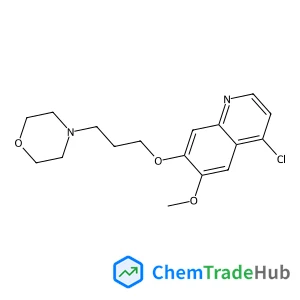
4-(3-((4-Chloro-6-methoxyquinolin-7-yl)oxy)propyl)morpholine
CAS Number:
205448-32-4
Molecular Formula:
C17H21ClN2O3
![2-Methyl-2-propanyl 4-oxo-3,9-diazabicyclo[4.2.1]nonane-9-carboxylate structure](https://static.chemtradehub.com/structs/131/1312456-05-5-9a15.webp "2-Methyl-2-propanyl 4-oxo-3,9-diazabicyclo[4.2.1]nonane-9-carboxylate structure")
2-Methyl-2-propanyl 4-oxo-3,9-diazabicyclo[4.2.1]nonane-9-carboxylate
CAS Number:
1312456-05-5
Molecular Formula:
C12H20N2O3
Recommended Suppliers






Disclaimer
This page provides academic journal information for reference and research purposes only. We are not affiliated with any journal publishers and do not handle publication submissions. For publication-related inquiries, please contact the respective journal publishers directly.
If you notice any inaccuracies in the information displayed, please contact us at support@chemtradehub.com. We will promptly review and address your concerns.