![[5-fluoro-2-(morpholine-4-carbonyl)phenyl]boronic acid structure](https://static.chemtradehub.com/structs/121/1217501-26-2-505c.webp "[5-fluoro-2-(morpholine-4-carbonyl)phenyl]boronic acid structure")
[5-fluoro-2-(morpholine-4-carbonyl)phenyl]boronic acid
CAS Number:
1217501-26-2
Molecular Formula:
C11H13BFNO4
R. L. Hudson, P. A. Gerakines, M. J. Loeffler
New measurements are reported on the weak ν1 and ν2 fundamentals of frozen CH4, a solid of considerable astrochemical interest. Infrared spectra in the ν1 and ν2 regions are presented for three CH4-ice phases at 10–30 K with new absorption coefficients and band strengths to quantify the results. In contrast to the situation with the two crystalline phases of CH4, both ν1 and ν2 were seen clearly in methane's amorphous phase. To support our CH4 work, we also present new results for NH4SH, a component of Jupiter's atmosphere, showing that the ν2 vibration of NH4+ undergoes a dramatic loss of intensity during an amorphous-to-crystalline phase transition, but is regenerated in equally-dramatic fashion by radiation-induced amorphization of the sample. Results are compared to work recently published in this journal and elsewhere.
Hanh. V. Ly, Taryn. D. Forster, Darren Maley, Masood Parvez, Roland Roesler
DOI: 10.1039/B508152A
Tim Phillips, Chatna Rajput, Lance Twyman, Ihtshamul Haq, Jim A. Thomas
DOI: 10.1039/B506946G
Md. Badruz Zaman, Dmitrii F. Perepichka
DOI: 10.1039/B506138E
John H. Thurston, Dale C. Swenson, Louis Messerle
DOI: 10.1039/B504864H
Seigo Ito, Paul Liska, Pascal Comte, Raphaël Charvet, Peter Péchy, Udo Bach, Lukas Schmidt-Mende, Shaik Mohammed Zakeeruddin, Andreas Kay, Mohammad K. Nazeeruddin, Michael Grätzel
DOI: 10.1039/B505718C
Robin B. Bedford, Duncan W. Bruce, Robert M. Frost, Michael Hird
DOI: 10.1039/B507133J
Olalla Nieto Faza, Carlos Silva López, Rosana Álvarez, Ángel R. de Lera
DOI: 10.1039/B506601H
A. J. (Ton) Dirks, Sander S. van Berkel, Nikos S. Hatzakis, Joost A. Opsteen, Floris L. van Delft, Jeroen J. L. M. Cornelissen, Alan E. Rowan, Jan C. M. van Hest, Floris P. J. T. Rutjes, Roeland J. M. Nolte
DOI: 10.1039/B508428H
Dolos Foguet-Albiol, Khalil A. Abboud, George Christou
DOI: 10.1039/B507748F
Waste containing N-Methoxy-N-methyl-1,3-thiazole-5-carboxamide (CAS: 898825-89-3...
N-(4-Biphenylyl)dibenzo[b,d]furan-4-amine should be stored in a tightly sealed c...
The market for 3-Acetamido-5-amino-2,4,6-triiodobenzoic acid (CAS: 1713-07-1) is...
Benzyl 2-O-acetyl-3,4,6-tri-O-benzyl-beta-D-galactopyranoside (CAS: 61820-03-9) ...
2-Ethylpiperazine dihydrochloride (CAS: 438050-52-3) is regulated under the Glob...
1,1'-[1,3-Phenylenebis(methylene)]bis(3-methyl-1H-pyrrole-2,5-dione) (CAS: 11946...
Several alternatives can be used in the synthesis of 5-Fluoro-2-(1-pyrrolidinyl)...
Proper personal protective equipment (PPE) must be worn when handling this compo...
When handling 6-Bromoimidazo[1,2-a]pyridin-8-amine, it is important to wear appr...
Alternatives to (2S,4R)-4-(4-Nitrobenzyl)pyrrolidine-2-carboxylic acid hydrochlo...

Physical Chemistry Chemical Physics (PCCP) is an international journal co-owned by 19 physical chemistry and physics societies from around the world. This journal publishes original, cutting-edge research in physical chemistry, chemical physics and biophysical chemistry. To be suitable for publication in PCCP, articles must include significant innovation and/or insight into physical chemistry; this is the most important criterion that reviewers and Editors will judge against when evaluating submissions. The journal has a broad scope and welcomes contributions spanning experiment, theory, computation and data science. Topical coverage includes spectroscopy, dynamics, kinetics, statistical mechanics, thermodynamics, electrochemistry, catalysis, surface science, quantum mechanics, quantum computing and machine learning. Interdisciplinary research areas such as polymers and soft matter, materials, nanoscience, energy, surfaces/interfaces, and biophysical chemistry are welcomed if they demonstrate significant innovation and/or insight into physical chemistry. Joined experimental/theoretical studies are particularly appreciated when complementary and based on up-to-date approaches.
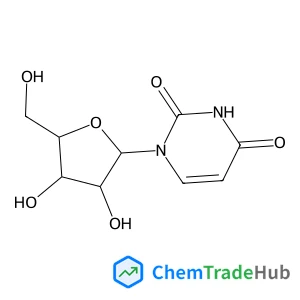
![2-Methylbenzo[h]quinoline structure](https://static.chemtradehub.com/structs/605/605-88-9-ac43.webp "2-Methylbenzo[h]quinoline structure")