












High-resolution synchrotron terahertz investigation of the large-amplitude hydrogen bond librational band of (HCN)2
Literature Information
Publication Date
2018-03-12
DOI
10.1039/C7CP08412A
Impact Factor
3.676
Authors
D. Mihrin, P. W. Jakobsen, A. Voute, R. Wugt Larsen
View Original
Abstract
The high-resolution terahertz absorption spectrum of the large-amplitude intermolecular donor librational band ν18 of the homodimer (HCN)2 has been recorded by means of long-path static gas-phase Fourier transform spectroscopy at 207 K employing a highly brilliant electron storage ring source. The rovibrational structure of the ν18 band has the typical appearance of a perpendicular type band of a Σ–Π transition for a linear polyatomic molecule. The generated terahertz spectrum is analyzed employing a standard semi-rigid linear molecule Hamiltonian, yielding a band origin ν0 of 119.11526(60) cm−1 together with values for the excited state rotational constant B′, the excited state quartic centrifugal distortion constant DJ′ and the l-type doubling constant q for the degenerate state associated with the ν18 mode. The until now missing donor librational band origin enables the determination of an accurate experimental value for the vibrational zero-point energy of 2.50 ± 0.05 kJ mol−1 arising from the entire class of large-amplitude intermolecular modes. The spectroscopic findings are complemented by CCSD(T)-F12b/aug-cc-pV5Z (electronic energies) and CCSD(T)-F12b/aug-cc-pVQZ (force fields) electronic structure calculations, providing a (semi)-experimental value of 17.20 ± 0.20 kJ mol−1 for the dissociation energy D0 of this strictly linear weak intermolecular CH⋯N hydrogen bond.
Recommended Journals
Related Literature
Alkynyl trifluoromethyl selenide synthesis via oxidative trifluoromethylselenolation of terminal alkynes
Yuguang Wang, Yi You, Zhiqiang Weng
2015-03-30
Research Article
DOI: 10.1039/C5QO00045A
Photoinduced synthesis of (E)-vinyl sulfones through the insertion of sulfur dioxide‡
Yechun Ding, Xiaona Fan
2018-09-28
Research Article
DOI: 10.1039/C8QO00965A
Thermal-mediated catalyst-free heterolytic cleavage of 3-halooxindoles: rapid access to 3-functionalized-2-oxindoles
Jing Yue, Shuang Chen, Huan-Huan Liu, Kai-Mo Yang, Ting-Ting Feng, Ying Zhou
2018-12-05
Research Article
DOI: 10.1039/C8QO01222A
Synthesis of monolateral and bilateral sulfur-heterocycle fused naphthalene diimides (NDIs) from monobromo and dibromo NDIs
Bing Leng, Xueshun Jia, Xiaodi Yang, Xike Gao
2015-02-11
Research Article
DOI: 10.1039/C4QO00252K
Aromaticity control via modifications of a macrocyclic frame: 5,6-dimethoxyphenanthriporphyrin and 5,6-dioxophenanthriporphyrin
Kamil Kupietz, Michał J. Białek, Agata Białońska, Bartosz Szyszko, Lechosław Latos-Grażyński
2018-08-20
Research Article
DOI: 10.1039/C8QO00751A
Asymmetric ring-opening reactions of azabenzonorbornadienes through transfer hydrogenation using secondary amines as hydrogen sources: tuning of absolute configuration by acids
Dongdong Pu, Yongyun Zhou, Fan Yang, Guoli Shen, Yang Gao, Weiqing Sun, Ruhima Khan
2018-05-02
Research Article
DOI: 10.1039/C7QO01163F
Frontiers in the electrophilic nitration of meso-tetraphenylporphyrin derivatives
Agnieszka Mikus, Monika Zając, Stanisław Ostrowski
2018-08-06
Research Article
DOI: 10.1039/C8QO00571K
Gold-catalyzed ring enlargement and cycloisomerization of alkynylamide tethered alkylidenecyclopropanes
Jia-hao Zhang, Yin Wei
2018-09-17
Research Article
DOI: 10.1039/C8QO00907D
Concise asymmetric total synthesis of bruceolline J
Dattatraya H. Dethe, Vijay Kumar B
2015-03-03
Research Article
DOI: 10.1039/C5QO00030K
Copper-catalyzed direct trifluoromethylthiolation of indoles by tert-butyl 2-((trifluoromethyl)sulfonyl)hydrazine-1-carboxylate
Kui Lu, Quan Li, Xiaolan Xi, Yuna Huang, Zhi Gong, Peng Yu, Xia Zhao
2018-09-15
Research Article
DOI: 10.1039/C8QO00779A
You might also like
Compound Q&A
Is 2-(2-chloroacetamido)-3-phenylpropanoic acid (CAS: 7765-11-9) safe?
2-(2-Chloroacetamido)-3-phenylpropanoic acid (CAS: 7765-11-9) is generally consi...
7765-11-92-(2-chloroacetamido...
Compound Q&A
Is 2-(Benzyloxy)-5-bromobenzoic acid (CAS: 62176-31-2) safe?
2-(Benzyloxy)-5-bromobenzoic acid can be handled safely if appropriate precautio...
62176-31-22-(Benzyloxy)-5-brom...
Compound Q&A
What is (4-Methyl-1,2,5-oxadiazol-3-yl)methanamine hydrochloride (CAS: 1159825-48-5)?
(4-Methyl-1,2,5-oxadiazol-3-yl)methanamine hydrochloride is a chemical compound ...
1159825-48-5(4-Methyl-1,2,5-oxad...
Compound Q&A
What is 2-(5-Hexylthiophen-2-yl)-4,4,5,5-tetramethyl-1,3,2-dioxaborolane (CAS: 917985-54-7)?
2-(5-Hexylthiophen-2-yl)-4,4,5,5-tetramethyl-1,3,2-dioxaborolane (CAS: 917985-54...
917985-54-72-(5-Hexylthiophen-2...
Compound Q&A
Are there alternatives to 4-(8-Methyl-9H-1,3-dioxolo[4,5-h][2,3]benzodiazepin-5-yl)benzenamine (CAS: 102771-26-6) in synthesis?
While 4-(8-Methyl-9H-1,3-dioxolo[4,5-h][2,3]benzodiazepin-5-yl)benzenamine (CAS:...
102771-26-64-(8-Methyl-9H-1,3-d...
Compound Q&A
What is the market or research trend for tert-butyl 3-hydroxy-4,5,7,8-tetrahydro-2H-pyrazolo[3,4-d]azepine-6-carboxylate (CAS: 851376-80-2)?
The market for tert-butyl 3-hydroxy-4,5,7,8-tetrahydro-2H-pyrazolo[3,4-d]azepine...
851376-80-2tert-butyl 3-hydroxy...
Compound Q&A
How should waste containing 3,5-Diamino-1H-pyrazole-4-carbonitrile (CAS: 6844-58-2) be handled?
Waste containing 3,5-Diamino-1H-pyrazole-4-carbonitrile (CAS: 6844-58-2) should ...
6844-58-23,5-Diamino-1H-pyraz...
Compound Q&A
How is (6-Fluoro-3-pyridinyl)boronic acid (CAS: 351019-18-6) typically synthesized?
(6-Fluoro-3-pyridinyl)boronic acid can be synthesized through the reaction of 6-...
351019-18-6(6-Fluoro-3-pyridiny...
Compound Q&A
What industries use Dibenzyl carbonimidoylbiscarbamate (CAS: 10065-79-9)?
Dibenzyl carbonimidoylbiscarbamate (CAS: 10065-79-9) finds applications in vario...
10065-79-9Dibenzyl carbonimido...
Compound Q&A
What is the market or research trend for (beta,beta,2,3,4,5,6-~2~H_7_)Phenylalanine (CAS: 74228-83-4)?
The market for (beta,beta,2,3,4,5,6-~2~H_7_)Phenylalanine (CAS: 74228-83-4) is g...
74228-83-4(beta,beta,2,3,4,5,6...
Source Journal
Physical Chemistry Chemical Physics

CiteScore:
5.5
Self-citation Rate:
10.3%
Articles per Year:
3036
Physical Chemistry Chemical Physics (PCCP) is an international journal co-owned by 19 physical chemistry and physics societies from around the world. This journal publishes original, cutting-edge research in physical chemistry, chemical physics and biophysical chemistry. To be suitable for publication in PCCP, articles must include significant innovation and/or insight into physical chemistry; this is the most important criterion that reviewers and Editors will judge against when evaluating submissions. The journal has a broad scope and welcomes contributions spanning experiment, theory, computation and data science. Topical coverage includes spectroscopy, dynamics, kinetics, statistical mechanics, thermodynamics, electrochemistry, catalysis, surface science, quantum mechanics, quantum computing and machine learning. Interdisciplinary research areas such as polymers and soft matter, materials, nanoscience, energy, surfaces/interfaces, and biophysical chemistry are welcomed if they demonstrate significant innovation and/or insight into physical chemistry. Joined experimental/theoretical studies are particularly appreciated when complementary and based on up-to-date approaches.
Recommended Compounds
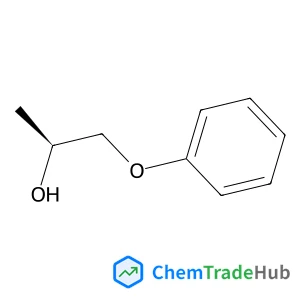
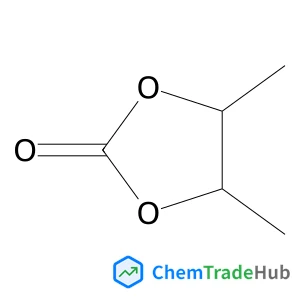
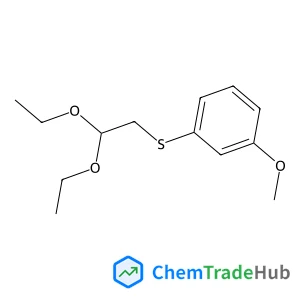
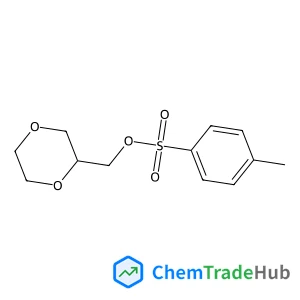
(S)-(1,4-Dioxan-2-yl)methyl 4-methylbenzenesulfonate
CAS Number:
917882-64-5
Molecular Formula:
C12H16O5S
Recommended Suppliers






Disclaimer
This page provides academic journal information for reference and research purposes only. We are not affiliated with any journal publishers and do not handle publication submissions. For publication-related inquiries, please contact the respective journal publishers directly.
If you notice any inaccuracies in the information displayed, please contact us at support@chemtradehub.com. We will promptly review and address your concerns.