


Antimicrobial and surface activity of 1-alkyl-3-methylimidazolium derivatives
Literature Information
Publication Date
2010-03-22
DOI
10.1039/B921805J
Impact Factor
10.182
Authors
Justyna Łuczak, Christian Jungnickel, Izabela Łącka, Stefan Stolte, Jan Hupka
View Original
Abstract
Knowledge of the structure–activity relationship (SAR) allows for the possibility to design and synthesize new cationic amphiphiles with optimized antimicrobial activities for future development of new disinfectants, sanitizers or preservatives. The need to design and identify new compounds, possessing antimicrobial properties, results from the emergence of more resistant micro-organisms in our globalized society. Hitherto, most studies which analyse the biological activity of ionic liquids (ILs) investigate the effect of the cation, whereas the knowledge of the effect of the anion is limited. The present study confirms the existence of a strong relationship among structure, surface activity and biological action of imidazolium ionic liquids on bacteria and fungi. The dependence of the antimicrobial activity on chemical structure–chain length and anion type of 30 compounds was determined. The anion is an important structural element which partakes in the definition of the phyiscochemical properties of the IL, and in consequence the technological applications and mode of action of the compound. The introduction of a longer substituent on the imidazolium cation results in a lower minimal inhibitory concentration (MIC). Thus, antifungal and antibacterial activities were found to increase with chain length, very often up to a point exhibiting a cut-off effect at chain lengths of 16 or 18 for the imidazolium cation and the [Cl] anion. The efficiency of surface tension reduction circumscribed by the pC20 and the relationship between antimicrobial activity and pC20 is described herein. The relationship indicates an antimicrobial mode of action dependant on the surface activity of the molecule, inferring that surface activity may contribute to the cut-off effect in the biological activity of ILs.
Recommended Journals

Science

European Journal of Wood and Wood Products

Proceedings of the National Academy of Sciences of the United States of America

Organic Preparations and Procedures International

Planta Medica

Journal of Medicinal Chemistry

Helvetica Chimica Acta

Science Progress

Molecular Pharmacology

Journal of Catalysis
Related Literature
Onset of ionic coherence and ultrafast charge dynamics in attosecond molecular ionisation
2019-07-30
Paper
DOI: 10.1039/C9CP03074C
Redox-mediated transformation of a Tb2O3(111) thin film from the cubic fluorite to bixbyite structure
Christopher J. Lee, Ameen Sayal, Saumye Vashishtha, Jason F. Weaver
2019-12-02
Paper
DOI: 10.1039/C9CP05083C
Enhanced VOC of two-dimensional Ruddlesden–Popper perovskite solar cells using binary synergetic organic spacer cations
Di Huang, Haina Zhu
2019-10-17
Paper
DOI: 10.1039/C9CP04018H
A combined experimental and theoretical study on the structures, interactions and volumetric properties of guanidinium-based ionic liquid mixtures
Hujun Xie, Qunfang Lei, Wenjun Fang
2019-07-23
Paper
DOI: 10.1039/C9CP02999K
Strain-engineering the in-plane electrical anisotropy of GeSe monolayers
Zongbao Li, Xinsheng Liu, Xia Wang, Yusi Yang, Wei Shi, Yong Li, Xiaobo Xing
2019-12-10
Paper
DOI: 10.1039/C9CP05058B
Quantitative determination of the phosphorus environment in lithium aluminosilicate glasses using solid-state NMR techniques
Monique Comte, Lionel Montagne, Bertrand Doumert, Laurent Cormier
2019-07-31
Paper
DOI: 10.1039/C9CP03181B
Investigation of the electrostatic potential of a grain boundary in Y-substituted BaZrO3 using inline electron holography
Christoph T. Koch
2019-07-25
Paper
DOI: 10.1039/C9CP02676B
Atomic arrangement in CuZr-based metallic glass composites under tensile deformation
Huali Hao, Wenzhao Zhou
2019-11-22
Paper
DOI: 10.1039/C9CP04914B
Boron based layered electrode materials for metal-ion batteries
Qing-Bo Yan
2019-12-02
Paper
DOI: 10.1039/C9CP05318B
You might also like
Compound Q&A
What precautions should be taken when handling 4-Methyl-6-(trifluoromethyl)quinoline (CAS: 40716-16-3)?
When handling 4-Methyl-6-(trifluoromethyl)quinoline (CAS: 40716-16-3), safety go...
40716-16-34-Methyl-6-(trifluor...
Compound Q&A
What is 4-(3,5-Difluorophenyl)aniline (CAS: 405058-00-6)?
4-(3,5-Difluorophenyl)aniline is an aromatic organic compound with the CAS numbe...
405058-00-64-(3,5-Difluoropheny...
Compound Q&A
How is 5-{[4-(Trifluoromethyl)phenyl]sulfanyl}-1,2,3-thiadiazole-4-carboxylic acid (CAS: 338982-07-3) typically synthesized?
5-{[4-(Trifluoromethyl)phenyl]sulfanyl}-1,2,3-thiadiazole-4-carboxylic acid can ...
338982-07-35-{[4-(Trifluorometh...
Compound Q&A
What is the market or research trend for 4-Benzylaniline hydrochloride (CAS: 6317-57-3)?
The market for 4-Benzylaniline hydrochloride (CAS: 6317-57-3) is steadily growin...
6317-57-34-Benzylaniline hydr...
Compound Q&A
Is [3-(Diethylsulfamoyl)phenyl]boronic acid (CAS: 871329-58-7) safe?
[3-(Diethylsulfamoyl)phenyl]boronic acid is generally considered safe when handl...
871329-58-7[3-(Diethylsulfamoyl...
Compound Q&A
What are the main uses of 3-Bromo-2,5-dimethoxyaniline (CAS: 115929-62-9)?
3-Bromo-2,5-dimethoxyaniline is mainly used in the pharmaceutical and chemical i...
115929-62-93-Bromo-2,5-dimethox...
Compound Q&A
What regulatory guidelines apply to N-Methyl-1-(5-methyl-1H-indol-3-yl)methanamine (CAS: 915922-67-7)?
N-Methyl-1-(5-methyl-1H-indol-3-yl)methanamine (CAS: 915922-67-7) is subject to ...
915922-67-7N-Methyl-1-(5-methyl...
Compound Q&A
What industries use Carbamic acid, N-[(5S)-5,6-diamino-6-oxohexyl]-, 1,1-dimethylethyl ester (CAS: 24828-96-4)?
This compound is primarily used in the pharmaceutical industry for the synthesis...
24828-96-4Carbamic acid, N-[(5...
Compound Q&A
How should 2-Methyl-2-propanyl [(1S,3R)-3-aminocyclohexyl]carbamate (CAS: 1298101-47-9) be stored?
2-Methyl-2-propanyl [(1S,3R)-3-aminocyclohexyl]carbamate (CAS: 1298101-47-9) sho...
1298101-47-92-Methyl-2-propanyl ...
Compound Q&A
What industries use Ethyl 2-bromo-4,4,4-trifluorobutanoate (CAS: 367-33-9)?
Ethyl 2-bromo-4,4,4-trifluorobutanoate (CAS: 367-33-9) is utilized in the pharma...
367-33-9Ethyl 2-bromo-4,4,4-...
Source Journal
Green Chemistry

CiteScore:
16.1
Self-citation Rate:
7.5%
Articles per Year:
944
Green Chemistry provides a unique forum for the publication of innovative research on the development of alternative green and sustainable technologies. The scope of Green Chemistry is based on, but not limited to, the definition proposed by Anastas and Warner (Green Chemistry: Theory and Practice, P T Anastas and J C Warner, Oxford University Press, Oxford, 1998). Green chemistry is the utilisation of a set of principles that reduces or eliminates the use or generation of hazardous substances in the design, manufacture and application of chemical products. Green Chemistry is at the frontiers of this continuously-evolving interdisciplinary science and publishes research that attempts to reduce the environmental impact of the chemical enterprise by developing a technology base that is inherently non-toxic to living things and the environment. Submissions on all aspects of research relating to the endeavour are welcome. The journal publishes original and significant cutting-edge research that is likely to be of wide general appeal. To be published, work must present a significant advance in green chemistry. Papers must contain a comparison with existing methods and demonstrate advantages over those methods before publication can be considered. For more information please see this Editorial. Coverage includes the following, but is not limited to: Design (e.g. biomimicry, design for degradation/recycling/reduced toxicity…) Reagents & Feedstocks (e.g. renewables, CO2, solvents, auxiliary agents, waste utilization…) Synthesis (e.g. organic, inorganic, synthetic biology…) Catalysis (e.g. homogeneous, heterogeneous, enzyme, whole cell…) Process (e.g. process design, intensification, separations, recycling, efficiency…) Energy (e.g. renewable energy, fuels, photovoltaics, fuel cells, energy storage, energy carriers…) Applications (e.g. electronics, dyes, consumer products, coatings, pharmaceuticals, preservatives, building materials, chemicals for industry/agriculture/mining…) Impact (e.g. safety, metrics, LCA, sustainability, (eco)toxicology…) Green chemistry is, by definition, a continuously-evolving frontier. Therefore, the inclusion of a particular material or technology does not, of itself, guarantee that a paper is suitable for the journal. To be suitable, the novel advance should have the potential for reduced environmental impact relative to the state of the art. Green Chemistry does not normally deal with research associated with 'end-of-pipe' or remediation issues.
Recommended Compounds
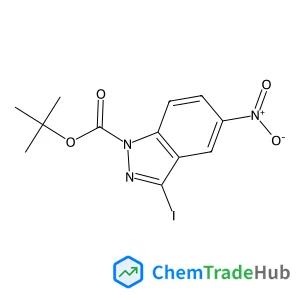
Tert-butyl 3-iodo-5-nitro-1H-indazole-1-carboxylate
CAS Number:
459133-69-8
Molecular Formula:
C12H12IN3O4
Recommended Suppliers





Disclaimer
This page provides academic journal information for reference and research purposes only. We are not affiliated with any journal publishers and do not handle publication submissions. For publication-related inquiries, please contact the respective journal publishers directly.
If you notice any inaccuracies in the information displayed, please contact us at support@chemtradehub.com. We will promptly review and address your concerns.