












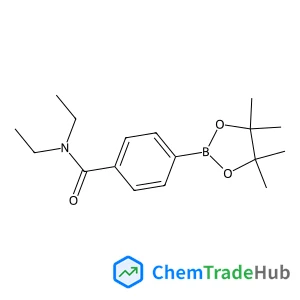
N,N-Diethyl-4-(4,4,5,5-tetramethyl-1,3,2-dioxaborolan-2-yl)benzamide
CAS Number:
325142-99-2
Molecular Formula:
C17H26BNO3
Tiantian Wu, Guibin Chen, Heine Anton Hansen, Tejs Vegge
The CO oxidation reaction on single 3d-transition metal catalytic sites in experimentally realized tetracyanoquinodimethane (TM-TCNQ) monolayers (TM = Sc–Zn) is systematically investigated by means of first-principles calculations. Considering the stabilities, adsorption characteristics and thermodynamics of all the ten candidates (Sc–Zn), Sc-TCNQ is found to display the lowest activation energies and yield the highest catalytic activity for room temperature CO oxidation. Exploring the Langmuir–Hinshelwood (LH) and Eley–Rideal (ER) mechanisms, we find that the rate-limiting step of CO oxidation catalyzed by Sc-TCNQ (CO + O2* → OOCO*) can follow the LH mechanism with free energy barriers as low as 0.73 eV at 300 K. The second step of CO + O* → CO2 can occur with rather small energy barriers via either LH or ER mechanisms. The high activity of Sc-TCNQ can be attributed to its unique structural and electronic features by possessing high stability, optimum adsorption energies with adsorbates, and fast reaction kinetics. These results have significant implications for the synthesis of two-dimensional single atom catalysis for CO oxidation with low-cost and high activity at low temperature.
Abu Md Asaduzzaman, Georg Schreckenbach
DOI: 10.1039/C1CP21168D
Xiao Zheng, ChiYung Yam, Fan Wang, GuanHua Chen
DOI: 10.1039/C1CP20777F
Yufang Liu, Kai Jiang, Deheng Shi, Jinfeng Sun
DOI: 10.1039/C1CP20729F
Yoshinobu Akinaga, Jaewoon Jung, Seiichiro Ten-no
DOI: 10.1039/C1CP21001G
Troels Markussen, Robert Stadler, Kristian S. Thygesen
DOI: 10.1039/C1CP20924H
Dongsheng Fu, Yufeng Liu, Guoming Liu, Yunlan Su, Dujin Wang
DOI: 10.1039/C1CP21281H
Maria Rosa Antognazza, Francesco Scotognella, Karol Miszta, Dirk Dorfs, Marco Zanella, Margherita Zavelani-Rossi, Liberato Manna, Francesco Tassone
DOI: 10.1039/C1CP21402K
Hary Razafindralambo, Aurore Richel, Bernard Wathelet, Christophe Blecker, Jean-Paul Wathelet, Robert Brasseur, Laurence Lins, Jose Miñones, Jr., Michel Paquot
DOI: 10.1039/C1CP21365B
Qiuming Wang, Nilam Shah, Jun Zhao, Chengshan Wang, Chao Zhao, Lingyun Liu, Lingyan Li, Feimeng Zhou, Jie Zheng
DOI: 10.1039/C1CP21156K
This compound is mainly used as an intermediate in the synthesis of antipsychoti...
Waste containing 1-(D-Ribofuranosyl)-1,4-dihydro-3-pyridinecarboxamide (CAS: 191...
2-Methyl-2-propanyl 3-bromo-3-(hydroxymethyl)-1-azetidinecarboxylate (CAS: 20079...
N-(4-Chloro-2-pyridinyl)acetamide (CAS: 245056-66-0) is a chemical compound with...
5-Chloro-2-hydroxybenzoic acid, also known as 5-chlorosalicylic acid, is an arom...
When handling 1,1-Dichloro-1-fluoroethane (CAS: 1717-00-6), it is important to u...
Fmoc-(2S,3R)-3-phenylpyrrolidine-2-carboxylic acid is a white crystalline solid ...
4-Amino-5-bromo-2-pyridinecarboxylic acid is primarily used as a precursor in th...
Handling this compound should be done with personal protective equipment (PPE) i...
When handling 8-bromo-2,2-dimethyl-3,4-dihydro-2H-1,4-benzoxazin-3-one, use prop...

Physical Chemistry Chemical Physics (PCCP) is an international journal co-owned by 19 physical chemistry and physics societies from around the world. This journal publishes original, cutting-edge research in physical chemistry, chemical physics and biophysical chemistry. To be suitable for publication in PCCP, articles must include significant innovation and/or insight into physical chemistry; this is the most important criterion that reviewers and Editors will judge against when evaluating submissions. The journal has a broad scope and welcomes contributions spanning experiment, theory, computation and data science. Topical coverage includes spectroscopy, dynamics, kinetics, statistical mechanics, thermodynamics, electrochemistry, catalysis, surface science, quantum mechanics, quantum computing and machine learning. Interdisciplinary research areas such as polymers and soft matter, materials, nanoscience, energy, surfaces/interfaces, and biophysical chemistry are welcomed if they demonstrate significant innovation and/or insight into physical chemistry. Joined experimental/theoretical studies are particularly appreciated when complementary and based on up-to-date approaches.
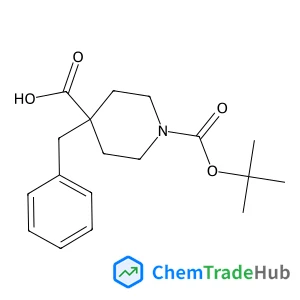
![4-Chloro-3-(trifluoromethyl)-1H-pyrrolo[2,3-b]pyridine structure](https://static.chemtradehub.com/structs/869/869335-75-1-a9d0.webp "4-Chloro-3-(trifluoromethyl)-1H-pyrrolo[2,3-b]pyridine structure")
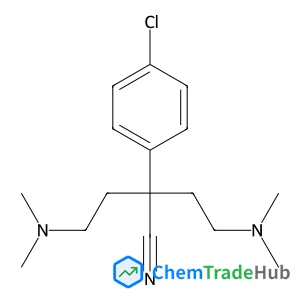
![1-[3-(4-Morpholinylsulfonyl)phenyl]methanamine structure](https://static.chemtradehub.com/structs/933/933989-32-3-51af.webp "1-[3-(4-Morpholinylsulfonyl)phenyl]methanamine structure")




