












Intramolecular singlet fission in a face-to-face stacked tetracene trimer
Literature Information
Publication Date
2018-02-02
DOI
10.1039/C7CP07841B
Impact Factor
3.676
Authors
Xuemin Wang, Rui Wang, Li Shen, Zhaofeng Tang, Congying Wen, Bin Dong, Heyuan Liu, Chunfeng Zhang, Xiyou Li
View Original
Abstract
A covalently linked tetracene trimer with a “face-to-face” stacked structure was prepared and its molecular structure is characterized by 1H NMR, MALDI-TOF mass spectroscopy, and elemental analysis. The minimized molecular structure reveals that three tetracene subunits within this trimer adopt a partially “face-to-face” stacked configuration. Its absorption spectrum differs significantly from that of the monomeric and dimeric counterparts in solution due to the strong ground state interactions between the neighboring tetracene subunits. Its fluorescence is almost quenched completely. An ultrafast fluorescence decay component is observed in its fluorescence dynamics, indicating the presence of an ultrafast nonradiative decay channel in the trimer. The nonradiative channel is proved to be intramolecular singlet fission (iSF) by femto-second transient absorption studies. Different from the strongly coupled triplet state observed in the corresponding dimer, weakly coupled triplet states can be formed in this trimer. The triplet quantum yield of trimer 4 can reach up to 126% in solution.
Related Literature
Molecular structure matters: PEG-b-PLA nanoparticles with hydrophilicity and deformability demonstrate their advantages for high-performance delivery of anti-cancer drugs
Qinzheng Yang, Hua Yue, Bin Wang, Zhiguo Su, Wei Wei, Guanghui Ma
2013-04-30
Paper
DOI: 10.1039/C3TB20406E
Organolead halide perovskites beyond solar cells: self-powered devices and the associated progress and challenges
Avi Mathur, Hua Fan, Vivek Maheshwari
2021-06-30
Review Article
DOI: 10.1039/D1MA00377A
Novel 3D-networked melamine–naphthalene–polyamic acid nanofillers doped in vinyl ester resin for higher flame retardancy
Ravi Kumar Cheedarala, M. N. Prabhakar, Beom Gon Cho, Young Bin Park, Jung Il Song
2021-05-11
Paper
DOI: 10.1039/D1MA00048A
Non-matrix matched calibration of major and minor concentrations of Zn and Cu in brass, aluminium and silicate glass using NIR femtosecond laser ablation inductively coupled plasma mass spectrometry
Qunzhou Bian, Carmen C. Garcia, Joachim Koch, Kay Niemax
2005-12-20
Paper
DOI: 10.1039/B513690C
Malleable and recyclable imide–imine hybrid thermosets: influence of imide structure on material property
Xiran Shen, Yunlong Ma, Shichang Luo, Rao Tao, Dan An, Xinlei Wei, Yinghua Jin, Li Qiu, Wei Zhang
2021-05-24
Paper
DOI: 10.1039/D1MA00311A
Switching and tuning organic solid-state luminescence via a supramolecular approach
Savarimuthu Philip Anthony, Sunil Varughese, Sylvia M. Draper
2009-11-04
Communication
DOI: 10.1039/B914027A
Antimicrobial and surface activity of 1-alkyl-3-methylimidazolium derivatives
Justyna Łuczak, Christian Jungnickel, Izabela Łącka, Stefan Stolte, Jan Hupka
2010-03-22
Paper
DOI: 10.1039/B921805J
The effect of the ionic liquid anion in the pretreatment of pine wood chips
Jason P. Hallett, Tom Welton
2010-02-03
Paper
DOI: 10.1039/B918787A
Azobenzene isomerization in condensed matter: lessons for the design of efficient light-responsive soft-matter systems
Luke W. Giles, Charl F. J. Faul, Rico F. Tabor
2021-06-03
Review Article
DOI: 10.1039/D1MA00340B
You might also like
Compound Q&A
What precautions should be taken when handling 4-Methyl-6-(trifluoromethyl)quinoline (CAS: 40716-16-3)?
When handling 4-Methyl-6-(trifluoromethyl)quinoline (CAS: 40716-16-3), safety go...
40716-16-34-Methyl-6-(trifluor...
Compound Q&A
What is 4-(3,5-Difluorophenyl)aniline (CAS: 405058-00-6)?
4-(3,5-Difluorophenyl)aniline is an aromatic organic compound with the CAS numbe...
405058-00-64-(3,5-Difluoropheny...
Compound Q&A
How is 5-{[4-(Trifluoromethyl)phenyl]sulfanyl}-1,2,3-thiadiazole-4-carboxylic acid (CAS: 338982-07-3) typically synthesized?
5-{[4-(Trifluoromethyl)phenyl]sulfanyl}-1,2,3-thiadiazole-4-carboxylic acid can ...
338982-07-35-{[4-(Trifluorometh...
Compound Q&A
What is the market or research trend for 4-Benzylaniline hydrochloride (CAS: 6317-57-3)?
The market for 4-Benzylaniline hydrochloride (CAS: 6317-57-3) is steadily growin...
6317-57-34-Benzylaniline hydr...
Compound Q&A
Is [3-(Diethylsulfamoyl)phenyl]boronic acid (CAS: 871329-58-7) safe?
[3-(Diethylsulfamoyl)phenyl]boronic acid is generally considered safe when handl...
871329-58-7[3-(Diethylsulfamoyl...
Compound Q&A
What are the main uses of 3-Bromo-2,5-dimethoxyaniline (CAS: 115929-62-9)?
3-Bromo-2,5-dimethoxyaniline is mainly used in the pharmaceutical and chemical i...
115929-62-93-Bromo-2,5-dimethox...
Compound Q&A
What regulatory guidelines apply to N-Methyl-1-(5-methyl-1H-indol-3-yl)methanamine (CAS: 915922-67-7)?
N-Methyl-1-(5-methyl-1H-indol-3-yl)methanamine (CAS: 915922-67-7) is subject to ...
915922-67-7N-Methyl-1-(5-methyl...
Compound Q&A
What industries use Carbamic acid, N-[(5S)-5,6-diamino-6-oxohexyl]-, 1,1-dimethylethyl ester (CAS: 24828-96-4)?
This compound is primarily used in the pharmaceutical industry for the synthesis...
24828-96-4Carbamic acid, N-[(5...
Compound Q&A
How should 2-Methyl-2-propanyl [(1S,3R)-3-aminocyclohexyl]carbamate (CAS: 1298101-47-9) be stored?
2-Methyl-2-propanyl [(1S,3R)-3-aminocyclohexyl]carbamate (CAS: 1298101-47-9) sho...
1298101-47-92-Methyl-2-propanyl ...
Compound Q&A
What industries use Ethyl 2-bromo-4,4,4-trifluorobutanoate (CAS: 367-33-9)?
Ethyl 2-bromo-4,4,4-trifluorobutanoate (CAS: 367-33-9) is utilized in the pharma...
367-33-9Ethyl 2-bromo-4,4,4-...
Source Journal
Physical Chemistry Chemical Physics

CiteScore:
5.5
Self-citation Rate:
10.3%
Articles per Year:
3036
Physical Chemistry Chemical Physics (PCCP) is an international journal co-owned by 19 physical chemistry and physics societies from around the world. This journal publishes original, cutting-edge research in physical chemistry, chemical physics and biophysical chemistry. To be suitable for publication in PCCP, articles must include significant innovation and/or insight into physical chemistry; this is the most important criterion that reviewers and Editors will judge against when evaluating submissions. The journal has a broad scope and welcomes contributions spanning experiment, theory, computation and data science. Topical coverage includes spectroscopy, dynamics, kinetics, statistical mechanics, thermodynamics, electrochemistry, catalysis, surface science, quantum mechanics, quantum computing and machine learning. Interdisciplinary research areas such as polymers and soft matter, materials, nanoscience, energy, surfaces/interfaces, and biophysical chemistry are welcomed if they demonstrate significant innovation and/or insight into physical chemistry. Joined experimental/theoretical studies are particularly appreciated when complementary and based on up-to-date approaches.
Recommended Compounds
![N-{3-[Benzyl(methyl)amino]propyl}-9-chloro-5,6,7,8-tetrahydro-2-acridinecarboxamide structure](https://static.chemtradehub.com/structs/142/1426944-49-1-1e4c.webp "N-{3-[Benzyl(methyl)amino]propyl}-9-chloro-5,6,7,8-tetrahydro-2-acridinecarboxamide structure")
N-{3-[Benzyl(methyl)amino]propyl}-9-chloro-5,6,7,8-tetrahydro-2-acridinecarboxamide
CAS Number:
1426944-49-1
Molecular Formula:
C25H28ClN3O
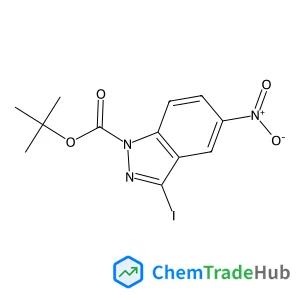
Tert-butyl 3-iodo-5-nitro-1H-indazole-1-carboxylate
CAS Number:
459133-69-8
Molecular Formula:
C12H12IN3O4
Recommended Suppliers






Disclaimer
This page provides academic journal information for reference and research purposes only. We are not affiliated with any journal publishers and do not handle publication submissions. For publication-related inquiries, please contact the respective journal publishers directly.
If you notice any inaccuracies in the information displayed, please contact us at support@chemtradehub.com. We will promptly review and address your concerns.