













Power of protein/tRNA functional assembly against aberrant aggregation
Literature Information
Publication Date
2017-09-26
DOI
10.1039/C7CP05599D
Impact Factor
3.676
Authors
Charles Bou-Nader, Ludovic Pecqueur, David Cornu, Murielle Lombard, Manuela Dezi, Magali Nicaise, Christophe Velours, Marc Fontecave, Djemel Hamdane
View Original
Abstract
Understanding the mechanisms of protein oligomerization and aggregation is a major concern for biotechnology and medical purposes. However, significant challenges remain in determining the mechanism of formation of these superstructures and the environmental factors that can precisely modulate them. Notably the role that a functional ligand plays in the process of protein aggregation is largely unexplored. We herein address these issues with an original flavin-dependent RNA methyltransferase (TrmFO) used as a protein model since this protein employs a complex set of cofactors and ligands for catalysis. Here, we show that TrmFO carries an unstable protein structure that can partially mis-unfold leading to either formation of irregular and nonfunctional soluble oligomers endowed with hyper-thermal stability or large amorphous aggregates in the presence of salts. Mutagenesis confirmed that this peculiarity is an intrinsic property of a polypeptide and it is independent of the flavin coenzyme. Structural characterization and kinetic studies identified several regions of the protein that enjoy conformational changes and more particularly pinpointed the N-terminal subdomain as being a key element in the mechanisms of oligomerization and aggregation. Only stabilization of this region via tRNA suppresses these aberrant protein states. Although protein chaperones emerged as major actors against aggregation, our study emphasizes that other powerful mechanisms exist such as the stabilizing effect of functional assemblies that provide an additional layer of protection against the instability of the proteome.
Related Literature
Correction: Achieving highly efficient CO2 to CO electroreduction exceeding 300 mA cm−2 with single-atom nickel electrocatalysts
Hui-Yun Jeong, Mani Balamurugan, Eun-suk Jeong, Uk Sim
2023-12-06
Correction
DOI: 10.1039/D3TA90261G
Graphene oxide offers precise molecular sieving, structural integrity, microplastic removal, and closed-loop circularity in water-remediating membranes through a covalent adaptable network
Ria Sen Gupta, Samir Mandal, Amit Malakar, Siddhesh Rege, Sk. Safikul Islam, Ketaki Samanta, Ashok Misra, Suryasarathi Bose
2023-11-20
Paper
DOI: 10.1039/D3TA04539K
Perovskite manganese oxides with tunable metal–oxygen covalency for efficient bisphenol A degradation
Yilan Jiang, Peifang Wang, Yiran Xiong, Tingyue Chen, Chi Zhang, Keyi Gao, Xiaoguang Duan, Dawei Wang
2023-11-16
Paper
DOI: 10.1039/D3TA06135C
Solvation structure regulation of an organic small molecule additive for dendrite-free aqueous zinc-ion batteries
Xiaomin Li, Jinwei Miao, Fulong Hu, Kang Yan, Lin Song, Huiqing Fan, Longtao Ma, Weijia Wang
2023-11-27
Paper
DOI: 10.1039/D3TA05814J
Regulating the kinetic behaviours of polysulfides by designing an Au–COF interface in lithium–sulfur batteries
Chan Li, Ke Yang, Zelin Ma, Fei Zhao, Juan Li, Xinwu Xu, Xiaoyu Hao, Haoyuan Qi, Yibo He
2023-11-21
Paper
DOI: 10.1039/D3TA05859J
Unveiling the magnetic ordering effect in La-doped Ti3C2O2 MXenes on electrocatalytic CO2 reduction
Peng Zhang
2023-12-04
Paper
DOI: 10.1039/D3TA06457C
Lignin beyond the status quo: recent and emerging composite applications
Mahyar Fazeli, Hossein Baniasadi, Roozbeh Abidnejad, Muhammad Mujtaba, Juha Lipponen, Jukka Seppälä
2023-12-01
Critical Review
DOI: 10.1039/D3GC03154C
Aromatic polyaroxydiazole pseudocapacitive anode materials with tunable electrochemical performance through side group engineering
2023-11-27
Paper
DOI: 10.1039/D3TA06374G
Temperature and pressure induced structural transitions of lead iodide perovskites
Pratap Vishnoi, C. N. R. Rao
2023-11-03
Perspective
DOI: 10.1039/D3TA05315F
Oxysalt based synergistic dual interfacial engineering for high performance p–i–n structured perovskite solar cells
Pramila Patil, Sung-Nam Kwon, Sushil S. Sangale, Dilpreet Singh Mann, Seok-In Na
2023-11-28
Paper
DOI: 10.1039/D3TA05876J
You might also like
Compound Q&A
How should waste containing 2-Ethyl-4-Methyl-1H-Imidazole-5-Carbaldehyde (CAS: 88634-80-4) be handled?
Waste containing 2-Ethyl-4-Methyl-1H-Imidazole-5-Carbaldehyde (CAS: 88634-80-4) ...
88634-80-42-Ethyl-4-Methyl-1H-...
Compound Q&A
What industries use Triethoxy(octyl)silane (CAS: 1385031-14-0)?
Triethoxy(octyl)silane (CAS: 1385031-14-0) is widely used in the pharmaceuticals...
1385031-14-0Triethoxy(octyl)sila...
Compound Q&A
Are there alternatives to 3-iodo-7-nitro-1H-indazole (CAS: 864724-64-1) in synthesis?
Several alternatives to 3-iodo-7-nitro-1H-indazole (CAS: 864724-64-1) exist in t...
864724-64-13-iodo-7-nitro-1H-in...
Compound Q&A
Are there alternatives to Benzene, bis[(trimethoxysilyl)ethyl] (CAS: 266317-71-9) in synthesis?
Yes, there are alternatives to Benzene, bis[(trimethoxysilyl)ethyl] (CAS: 266317...
266317-71-9Benzene, bis[(trimet...
Compound Q&A
Is Isothiazole-3-carbonitrile (CAS: 1452-17-1) safe?
Isothiazole-3-carbonitrile (CAS: 1452-17-1) is generally considered safe when us...
1452-17-1Isothiazole-3-carbon...
Compound Q&A
Is (3-Chlorophenyl)methanol (CAS: 873-63-2) safe?
(3-Chlorophenyl)methanol (CAS: 873-63-2) is considered low to moderately toxic. ...
873-63-2(3-Chlorophenyl)meth...
Compound Q&A
How is (2S,3S)-2-Hydroxy-3-({[(2-methyl-2-propanyl)oxy]carbonyl}amino)-3-(2-naphthyl)propanoic acid (CAS: 959583-98-3) typically synthesized?
(2S,3S)-2-Hydroxy-3-({[(2-methyl-2-propanyl)oxy]carbonyl}amino)-3-(2-naphthyl)pr...
959583-98-3(2S,3S)-2-Hydroxy-3-...
Compound Q&A
What precautions should be taken when handling Methyl 2-(bromomethyl)-5-methoxybenzoate (CAS: 788081-99-2)?
Proper handling of methyl 2-(bromomethyl)-5-methoxybenzoate requires the use of ...
788081-99-2Methyl 2-(bromomethy...
Compound Q&A
What is 6,8-Dibromoimidazo[1,2-a]pyridine-2-carboxylic acid (CAS: 904805-36-3)?
6,8-Dibromoimidazo[1,2-a]pyridine-2-carboxylic acid (CAS: 904805-36-3) is an aro...
904805-36-36,8-Dibromoimidazo[1...
Compound Q&A
Is 3-Amino-5-bromo-2-pyridinecarbonitrile (CAS: 573675-27-1) safe?
3-Amino-5-bromo-2-pyridinecarbonitrile is considered safe when handled under pro...
573675-27-13-Amino-5-bromo-2-py...
Source Journal
Physical Chemistry Chemical Physics

CiteScore:
5.5
Self-citation Rate:
10.3%
Articles per Year:
3036
Physical Chemistry Chemical Physics (PCCP) is an international journal co-owned by 19 physical chemistry and physics societies from around the world. This journal publishes original, cutting-edge research in physical chemistry, chemical physics and biophysical chemistry. To be suitable for publication in PCCP, articles must include significant innovation and/or insight into physical chemistry; this is the most important criterion that reviewers and Editors will judge against when evaluating submissions. The journal has a broad scope and welcomes contributions spanning experiment, theory, computation and data science. Topical coverage includes spectroscopy, dynamics, kinetics, statistical mechanics, thermodynamics, electrochemistry, catalysis, surface science, quantum mechanics, quantum computing and machine learning. Interdisciplinary research areas such as polymers and soft matter, materials, nanoscience, energy, surfaces/interfaces, and biophysical chemistry are welcomed if they demonstrate significant innovation and/or insight into physical chemistry. Joined experimental/theoretical studies are particularly appreciated when complementary and based on up-to-date approaches.
Recommended Compounds

![4-chloro-N-[5-methyl-2-(7H-pyrrolo[2,3-d]pyrimidine-4-carbonyl)-3-pyridyl]-3-(trifluoromethyl)benzenesulfonamide structure](https://static.chemtradehub.com/structs/110/1100318-47-5-127d.webp "4-chloro-N-[5-methyl-2-(7H-pyrrolo[2,3-d]pyrimidine-4-carbonyl)-3-pyridyl]-3-(trifluoromethyl)benzenesulfonamide structure")
4-chloro-N-[5-methyl-2-(7H-pyrrolo[2,3-d]pyrimidine-4-carbonyl)-3-pyridyl]-3-(trifluoromethyl)benzenesulfonamide
CAS Number:
1100318-47-5
Molecular Formula:
C20H13ClF3N5O3S
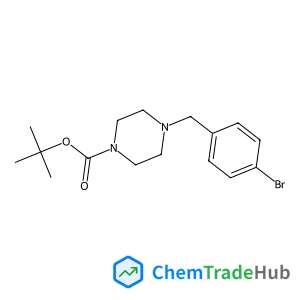
2-Methyl-2-propanyl 4-(4-bromobenzyl)-1-piperazinecarboxylate
CAS Number:
844891-10-7
Molecular Formula:
C16H23BrN2O2
Recommended Suppliers



Disclaimer
This page provides academic journal information for reference and research purposes only. We are not affiliated with any journal publishers and do not handle publication submissions. For publication-related inquiries, please contact the respective journal publishers directly.
If you notice any inaccuracies in the information displayed, please contact us at support@chemtradehub.com. We will promptly review and address your concerns.