


Ultrafast dynamics of hemin aggregates
Literature Information
Publication Date
2017-09-07
DOI
10.1039/C7CP04858K
Impact Factor
3.676
Authors
J. A. Dharmadhikari, A. K. Dharmadhikari, S. Mazumdar
View Original
Abstract
The effects of solvents on the conformation of hemin and their implications on the dynamics of the complex have been studied using the time-resolved optical Kerr effect (OKE) with 35 fs laser pulses (at a central wavelength of 800 nm). The OKE enabled estimation to be made of the third-order nonlinear electronic susceptibility (χ(3)) of hemin solutions: it was found to be significantly smaller than that in hemin thin films. The real and imaginary components of χ(3) were negative in both the solvents, suggesting that one-photon as well as two-photon absorption processes contribute to the nonlinear electronic susceptibility of hemin. Our study of the ultrafast heme dynamics not only unveils the instantaneous electronic response related to electronic susceptibility but also brings to the fore a novel libration process that has hitherto remained undetected. The hindered rotation in the femtosecond domain that may be responsible for this libration process possibly stems from π–π hemin oligomers formed in aqueous solution. The present results provide new insights into the conformational dynamics in the self-assembly of heme oligomers that may also be significant in certain pathogenic conditions where free heme is formed in biological systems.
Recommended Journals

Russian Journal of Organic Chemistry

Russian Journal of Bioorganic Chemistry

New Journal of Chemistry

Journal of Peptide Science

Russian Chemical Bulletin

Chemical Communications

Chemistry Education Research and Practice

Current Opinion in Colloid & Interface Science

Organic Process Research & Development

Current Opinion in Solid State & Materials Science
Related Literature
Electrostatic interactions in concentrated colloidal dispersions
2017-07-03
Paper
DOI: 10.1039/C7CP02594G
Surface cleaning of artworks: structure and dynamics of nanostructured fluids confined in polymeric hydrogel networks
Rosangela Mastrangelo, Costanza Montis, Nicole Bonelli, Paolo Tempesti, Piero Baglioni
2017-06-05
Paper
DOI: 10.1039/C7CP02662E
Beta transmutations in apatites with ferric iron as an electron acceptor – implication for nuclear waste form development
Ge Yao, Zelong Zhang, Jianwei Wang
2017-08-25
Paper
DOI: 10.1039/C7CP02846F
Increasing the lifetimes of charge separated states in porphyrin–fullerene polyads
Di Gao, Shawkat M. Aly, Paul-Ludovic Karsenti, Gessie Brisard, Pierre D. Harvey
2017-07-31
Paper
DOI: 10.1039/C7CP04193D
Two coexisting liquid phases in switchable ionic liquids
Juan Yao, David B. Lao, Xiao Sui, Yufan Zhou, Satish K. Nune, Xiang Ma, Tyler P. Troy, Musa Ahmed, Zihua Zhu, David J. Heldebrant, Xiao-Ying Yu
2017-06-23
Communication
DOI: 10.1039/C7CP03754F
Melting kinetics of superheated crystals of glucose and fructose
Tatsiana Liavitskaya, Lily Birx, Sergey Vyazovkin
2017-09-19
Paper
DOI: 10.1039/C7CP05486F
Dewetting acrylic polymer films with water/propylene carbonate/surfactant mixtures – implications for cultural heritage conservation
M. Baglioni, C. Montis, F. Brandi, T. Guaragnone, I. Meazzini, P. Baglioni, D. Berti
2017-05-18
Paper
DOI: 10.1039/C7CP02608K
Combined use of EPR and 23Na MAS NMR spectroscopy for assessing the properties of the mixed cobalt–nickel–manganese layers of P3-NayCo1−2xNixMnxO2
M. Kalapsazova, S. Ivanova, R. Kukeva, S. Simova, S. Wegner, E. Zhecheva, R. Stoyanova
2017-09-08
Paper
DOI: 10.1039/C7CP04849A
You might also like
Compound Q&A
What is 3-Fluoro-2-methylbenzylamine (CAS: 771573-36-5)?
3-Fluoro-2-methylbenzylamine is an organic compound with the CAS number 771573-3...
771573-36-53-Fluoro-2-methylben...
Compound Q&A
Is Tert-butyl 2-(oxetan-3-ylidene)acetate (CAS: 1207175-03-8) safe?
Tert-butyl 2-(oxetan-3-ylidene)acetate is considered safe for its intended uses ...
1207175-03-8Tert-butyl 2-(oxetan...
Compound Q&A
What precautions should be taken when handling 4-Acetyl-2-fluorobenzonitrile (CAS: 214760-18-6)?
Proper personal protective equipment (PPE) such as gloves, goggles, and a lab co...
214760-18-64-Acetyl-2-fluoroben...
Compound Q&A
How is 2-Ethyl-4-methyl-1,3-thiazole (CAS: 15679-12-6) typically synthesized?
2-Ethyl-4-methyl-1,3-thiazole is commonly synthesized via the reaction of thiour...
15679-12-62-Ethyl-4-methyl-1,3...
Compound Q&A
How should 5',5''-([2,2'-Bithiophene]-5,5'-diyl)bis(([1,1':3',1''-terphenyl]-4,4''-dicarboxylic acid)) (CAS: 1227780-71-3) be stored?
This compound should be stored in a cool, dry place away from direct sunlight an...
1227780-71-35',5''''-([2,2'-Bith...
Compound Q&A
What regulatory guidelines apply to L-Lysine Acetate Salt (CAS: 52315-92-1)?
L-Lysine Acetate Salt (CAS: 52315-92-1) is subject to various regulatory guideli...
52315-92-1L-LYSINE ACETATE SAL...
Compound Q&A
Is 6-Fluoro-3-hydroxy-2-pyrazinecarboxamide (CAS: 259793-96-9) safe?
6-Fluoro-3-hydroxy-2-pyrazinecarboxamide (CAS: 259793-96-9) is generally conside...
259793-96-96-Fluoro-3-hydroxy-2...
Compound Q&A
What are the physical and chemical properties of 1,1'-Sulfonylbis(1H-imidazole) (CAS: 7189-69-7)?
1,1'-Sulfonylbis(1H-imidazole) is a crystalline solid with a molecular weight of...
7189-69-71,1'-Sulfonylbis(1H-...
Compound Q&A
What industries use 4-methyl-7-nitro-1H-indole-3-carbonitrile (CAS: 289483-82-5)?
4-Methyl-7-nitro-1H-indole-3-carbonitrile (CAS: 289483-82-5) is primarily used i...
289483-82-54-methyl-7-nitro-1H-...
Compound Q&A
How should waste containing 5-Bromo-3-indolyl-beta-galactoside (CAS: 97753-82-7) be handled?
Waste containing 5-Bromo-3-indolyl-beta-galactoside (CAS: 97753-82-7) should be ...
97753-82-75-Bromo-3-indolyl-be...
Source Journal
Physical Chemistry Chemical Physics

CiteScore:
5.5
Self-citation Rate:
10.3%
Articles per Year:
3036
Physical Chemistry Chemical Physics (PCCP) is an international journal co-owned by 19 physical chemistry and physics societies from around the world. This journal publishes original, cutting-edge research in physical chemistry, chemical physics and biophysical chemistry. To be suitable for publication in PCCP, articles must include significant innovation and/or insight into physical chemistry; this is the most important criterion that reviewers and Editors will judge against when evaluating submissions. The journal has a broad scope and welcomes contributions spanning experiment, theory, computation and data science. Topical coverage includes spectroscopy, dynamics, kinetics, statistical mechanics, thermodynamics, electrochemistry, catalysis, surface science, quantum mechanics, quantum computing and machine learning. Interdisciplinary research areas such as polymers and soft matter, materials, nanoscience, energy, surfaces/interfaces, and biophysical chemistry are welcomed if they demonstrate significant innovation and/or insight into physical chemistry. Joined experimental/theoretical studies are particularly appreciated when complementary and based on up-to-date approaches.
Recommended Compounds
![(3R)-3-(3-Fluorophenyl)-3-({[(2-methyl-2-propanyl)oxy]carbonyl}amino)propanoic acid structure](https://static.chemtradehub.com/structs/500/500789-04-8-20dd.webp "(3R)-3-(3-Fluorophenyl)-3-({[(2-methyl-2-propanyl)oxy]carbonyl}amino)propanoic acid structure")
(3R)-3-(3-Fluorophenyl)-3-({[(2-methyl-2-propanyl)oxy]carbonyl}amino)propanoic acid
CAS Number:
500789-04-8
Molecular Formula:
C14H18FNO4
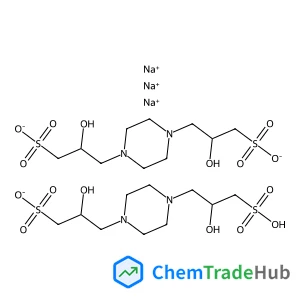
3,3'-(Piperazine-1,4-diyl)bis(2-hydroxypropane-1-sulfonic acid) Sodium Salt
CAS Number:
108321-08-0
Molecular Formula:
C20H41N4Na3O16S4

![5-(2-Phenylpyrazolo[1,5-a]pyridin-3-yl)-2H-pyrazolo[3,4-c]pyridazin-3-amine structure](https://static.chemtradehub.com/structs/865/865362-74-9-0091.webp "5-(2-Phenylpyrazolo[1,5-a]pyridin-3-yl)-2H-pyrazolo[3,4-c]pyridazin-3-amine structure")
5-(2-Phenylpyrazolo[1,5-a]pyridin-3-yl)-2H-pyrazolo[3,4-c]pyridazin-3-amine
CAS Number:
865362-74-9
Molecular Formula:
C18H13N7
Recommended Suppliers






Disclaimer
This page provides academic journal information for reference and research purposes only. We are not affiliated with any journal publishers and do not handle publication submissions. For publication-related inquiries, please contact the respective journal publishers directly.
If you notice any inaccuracies in the information displayed, please contact us at support@chemtradehub.com. We will promptly review and address your concerns.