













Electrochemically mediated atom transfer radical polymerization of n-butyl acrylate on non-platinum cathodes
Literature Information
Publication Date
2016-07-15
DOI
10.1039/C6PY01032F
Impact Factor
5.582
Authors
Francesca Lorandi, Abdirisak A. Isse, Armando Gennaro
View Original
Abstract
Traditionally, electrochemically mediated atom transfer radical polymerization (eATRP) is performed with Pt electrodes, but extensive use of such an expensive, rare, and non-functionalizable metal may pose some limitations to the method, owing mainly to the high cost of the experimental setup and the limited natural resources of platinum. As a further development of eATRP, polymerization of n-butyl acrylate in dimethylformamide was investigated employing different cathodic materials: glassy carbon, gold, iron, nickel–chromium, and stainless steel. With all these electrodes, eATRP was fast (conversion >85% in 2 h) and well-controlled (dispersity <1.2) under a wide range of experimental setups. To show the robustness of eATRP with inexpensive non-noble electrodes (i) the catalyst loading was reduced to less than 75 ppm, (ii) the same cathode was reused several times without reactivation, and (iii) undivided cells with all non-platinum electrodes were used. Lastly, all electrodes were stable and did not significantly release metal ions in solution, merely acting as an electron sink for the reduction of the catalyst.
Related Literature
Early detection of the initial stages of LED light-triggered non-alcoholic fatty liver disease by wax physisorption kinetics-Fourier transform infrared imaging
Pei-Yu Huang, Hao-Chao Chang, Chin-Wei Kuo
2022-12-22
Paper
DOI: 10.1039/D2AN01546C
Single-cell infrared vibrational analysis by optical trapping mid-infrared photothermal microscopy
2023-02-17
Paper
DOI: 10.1039/D2AN01917E
A DNA walker triggered isothermal amplification method based on freezing construction of AuNP probes and its application in ricin detection
Xuan Sun, Weiya Wang, Yanyan Chai, Zhou Zheng, Yu Wang, Jing Bi, Qian Wang, Yonggang Hu, Zhixian Gao
2022-12-29
Paper
DOI: 10.1039/D2AN01793H
“Lighting up” fluoride: cellular imaging and zebrafish model interrogations using a simple ESIPT-based mycophenolic acid precursor-based probe
Neha Jain, Prasad M. Sonawane, Haoyan Liu, Arkaprava Roychaudhury, Youngseob Lee, Jongkeol An, Donghyeon Kim, Dongwook Kim, Yunsu Kim, Yeu-Chun Kim, Kyung-Bin Cho, Hee-Sung Park, Cheol-Hee Kim
2023-05-15
Paper
DOI: 10.1039/D3AN00646H
An all-graphdiyne electrochemiluminescence biosensor for the ultrasensitive detection of microRNA-21 based on target recycling with DNA cascade reaction for signal amplification
Jiawen Wu, Yeyu Wu, Rongxian Ma, Yuyi Zhou, Jinyue Shi, Mingxiang Li, Xuecai Tan, Kejing Huang
2023-02-17
Paper
DOI: 10.1039/D3AN00146F
Comparison between one and two-dimensional liquid chromatographic approaches for the determination of plasmatic stroke biomarkers by isotope dilution and tandem mass spectrometry
Pablo Rodríguez-González, Adriana González Gago, Eva Cernuda Morollón, Elena Lopez-Cancio, Belén Prieto García, J. Ignacio García Alonso
2022-12-16
Paper
DOI: 10.1039/D2AN01750D
A ratiometric nanoprobe for the in vivo bioimaging of hypochlorous acid to detect drug-damaged liver and kidneys
Xiaoli Qian, Zhuoyang Wu, Tingting Han, Wanlu Sun, Li Liu, Yi Liu
2023-01-17
Paper
DOI: 10.1039/D2AN01977A
An aptamer triple helix molecular switch for sensitive electrochemical assay of lipocalin 1 biomarker via dual signal amplifications
Jianglong Yao, Yujie Liu, Bingying Jiang, Ruo Yuan, Yun Xiang
2023-05-17
Paper
DOI: 10.1039/D3AN00524K
An enhanced fluorescent sensor system based on molecularly imprinted polymer chips with silver nanoparticles for highly-sensitive zearalenone analysis
Daria Yarynka, Volodymyr Chegel, Elena Piletska, Sergey Piletsky, Larysa Dubey, Igor Dubey, Roman Nikolaiev, Oleksandr Brovko, Tetyana Sergeyeva
2023-05-11
Paper
DOI: 10.1039/D2AN01991D
A non-metallic SERS-based immunoassay founded by light-harvesting effect and strengthened chemical enhancement
Jiali Ma, Wenxin Dong, Tao Xu, Guodong Wei, Chenjie Gu, Tao Jiang
2023-03-23
Paper
DOI: 10.1039/D3AN00171G
You might also like
Compound Q&A
What are the main uses of 4-Nitrophenyl phosphate disodium salt hexahydrate (CAS: 333338-18-4)?
4-Nitrophenyl phosphate disodium salt hexahydrate is primarily used as a substra...
333338-18-44-Nitrophenyl phosph...
Compound Q&A
What are the main uses of 2-(Trifluoromethyl)-1,3-oxazole-4-carboxylic Acid (CAS: 1060816-01-4)?
2-(Trifluoromethyl)-1,3-oxazole-4-carboxylic Acid (CAS: 1060816-01-4) is widely ...
1060816-01-42-(Trifluoromethyl)-...
Compound Q&A
How should 2-Fluoro-4-biphenylcarboxylic acid (CAS: 137045-30-8) be stored?
2-Fluoro-4-biphenylcarboxylic acid should be stored in a cool, dry place at room...
137045-30-82-Fluoro-4-biphenylc...
Compound Q&A
What industries use Prednisolone-21-Carboxylic Acid (CAS: 61549-70-0)?
Prednisolone-21-Carboxylic Acid is primarily used in the pharmaceutical industry...
61549-70-0Prednisolone-21-Carb...
Compound Q&A
How should 4-(Hydrazinomethyl)-1,2,3-benzenetriol (CAS: 3614-72-0) be stored?
4-(Hydrazinomethyl)-1,2,3-benzenetriol (CAS: 3614-72-0) should be stored in a co...
3614-72-04-(Hydrazinomethyl)-...
Compound Q&A
What industries use 4-Amino-1-methyl-1H-pyrazole-5-carboxylic acid hydrochloride (CAS: 92534-70-8)?
4-Amino-1-methyl-1H-pyrazole-5-carboxylic acid hydrochloride (CAS: 92534-70-8) i...
92534-70-84-Amino-1-methyl-1H-...
Compound Q&A
What regulatory guidelines apply to dehydropachymic acid (CAS: 77012-31-8)?
Dehydropachymic acid (CAS: 77012-31-8) is regulated by various agencies. It fall...
77012-31-8Dehydropachymic acid
Compound Q&A
What is the market or research trend for 6-[(2,2-Dimethylpropanoyl)amino]nicotinic acid (CAS: 898561-66-5)?
The market and research trends for 6-[(2,2-Dimethylpropanoyl)amino]nicotinic aci...
898561-66-56-[(2,2-Dimethylprop...
Compound Q&A
How should 1,10-Phenanthroline-2,9-dicarbaldehyde (CAS: 57709-62-3) be stored?
1,10-Phenanthroline-2,9-dicarbaldehyde should be stored in a cool, dry place awa...
57709-62-31,10-Phenanthroline-...
Compound Q&A
How is 5-Carbamoyl-11-oxo-10,11-dihydro-5H-dibenzo[b,f]azepin-10-yl acetate (CAS: 113952-21-9) typically synthesized?
5-Carbamoyl-11-oxo-10,11-dihydro-5H-dibenzo[b,f]azepin-10-yl acetate can be synt...
113952-21-95-Carbamoyl-11-oxo-1...
Source Journal
Polymer Chemistry

CiteScore:
8.6
Self-citation Rate:
7.3%
Articles per Year:
457
Polymer Chemistry welcomes submissions in all areas of polymer science that have a strong focus on macromolecular chemistry. Manuscripts may cover a broad range of fields, yet no direct application focus is required.
Recommended Compounds
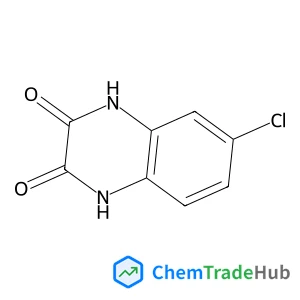
6-CHLORO-2,3-DIOXO-1,2,3,4-TETRAHYDROQUINOXALINE, 97
CAS Number:
169-14-2
Molecular Formula:
C8H5ClN2O2
![[(1S,2S,3R,4S,7R,9S,10S,12R,15S)-4,12-Diacetyloxy-15-[(2R,3S)-3-benzamido-3-phenyl-2-(2,2,2-trichloroethoxycarbonyloxy)propanoyl]oxy-1,9-dihydroxy-10,14,17,17-tetramethyl-11-oxo-6-oxatetracyclo[11.3.1.03,10.04,7]heptadec-13-en-2-yl] benzoate structure](https://static.chemtradehub.com/structs/100/100431-55-8-7104.webp "[(1S,2S,3R,4S,7R,9S,10S,12R,15S)-4,12-Diacetyloxy-15-[(2R,3S)-3-benzamido-3-phenyl-2-(2,2,2-trichloroethoxycarbonyloxy)propanoyl]oxy-1,9-dihydroxy-10,14,17,17-tetramethyl-11-oxo-6-oxatetracyclo[11.3.1.03,10.04,7]heptadec-13-en-2-yl] benzoate structure")

Recommended Suppliers





Disclaimer
This page provides academic journal information for reference and research purposes only. We are not affiliated with any journal publishers and do not handle publication submissions. For publication-related inquiries, please contact the respective journal publishers directly.
If you notice any inaccuracies in the information displayed, please contact us at support@chemtradehub.com. We will promptly review and address your concerns.