












Attractive PH⋯HP interactions revealed by state-of-the-art ab initio calculations
Literature Information
Publication Date
2017-09-29
DOI
10.1039/C7CP04412G
Impact Factor
3.676
Authors
Sirous Yourdkhani, Mirosław Jabłoński, Jorge Echeverría
View Original
Abstract
We report in this work a combined structural and state-of-the-art computational study of homopolar P–H⋯H–P intermolecular contacts. Database surveys have shown the abundance of such surprisingly unexplored contacts, which are usually accompanied by other weak interactions in the solid state. By means of a detailed theoretical study utilizing SAPT(DFT), MP2, SCS-MP2, MP2C and CCSD(T) methods and both aug-cc-pVXZ and aug-cc-pCVXZ (X = D, T, Q, 5) basis sets as well as extrapolation to the CBS limit, we have shown that P–H⋯H–P contacts are indeed attractive and considerably strong. SAPT(DFT) calculations have revealed the dispersive nature of the P–H⋯H–P interaction with only minor contribution of the inductive term, whereas the first-order electrostatic term is clearly overbalanced by the first-order exchange energy. In general the computed interaction energies follow the trend: EMP2Cint ≈ ESCS-MP2int < ESAPT(DFT)int < EMP2int. Our results have also shown that the aug-cc-pVDZ (or aug-cc-pCVDZ) basis set is not yet well balanced and that the second-order dispersion energy term is the slowest converging among all SAPT(DFT) energy components. Compared to aug-cc-pVXZ basis sets, their core-correlation counterparts have a modest influence on all supermolecular interaction energies and a negligible influence on both the SAPT(DFT) interaction energy and its components.
Related Literature
Pristine coconut husk biowaste and 2-ethylhexyl acrylate/methyl acrylate-based novel oleophilic gels for oil spill cleanup
Kavita Devi, Ghanshyam S. Chauhan, Sunita Ranote, Sandeep Chauhan, Kiran Kumar
2023-10-13
Paper
DOI: 10.1039/D3LP00118K
A comprehensive review of food waste valorization for the sustainable management of global food waste
Aniruddha Sarker, Raju Ahmmed, S. M. Ahsan, Juwel Rana, Mithun Kumar Ghosh, Rakhi Nandi
2023-12-04
Review Article
DOI: 10.1039/D3FB00156C
Understanding the electrocatalytic oxidation of propionic acid for the sustainable production of ethylene
Andrea Angulo, Carolina Elizarraras, Ju Hee Shin, Alexandra van Riel, Toshihiro Akashige, Miguel Modestino
2023-10-20
Paper
DOI: 10.1039/D3SU00347G
Alkali and alkaline earth metals in liquid salts for supercapatteries
Peiying Fan, Yuhan Zhang, Li Guan, Han Wang, George Zheng Chen
2023-11-29
Tutorial Review
DOI: 10.1039/D3SU00197K
Assessing weight loss control strategies in pomegranate (Punica granatum L.) fruit: plastic packaging and surface waxing
Alemayehu Ambaw
2023-09-30
Paper
DOI: 10.1039/D3FB00089C
Waste mediated synthesis of iron nanoparticles using Aegle marmelos peel extract for catalytic degradation of toxic dye contaminants
Anju Srivastava, Sriparna Dutta, Reena Jain
2023-09-14
Paper
DOI: 10.1039/D3SU00246B
Insects as a sustainable source of emerging proteins and their processing to obtain bioactive compounds: an updated review
Francielle Miranda de Matos, Gabriela Boscariol Rasera, Ruann Janser Soares de Castro
2023-11-07
Review Article
DOI: 10.1039/D3FB00097D
You might also like
Compound Q&A
What industries use (1R,3S)-1,3-Cyclopentanediol (CAS: 16326-97-9)?
(1R,3S)-1,3-Cyclopentanediol finds applications in various industries. In the ph...
16326-97-9(1R,3S)-1,3-Cyclopen...
Compound Q&A
What precautions should be taken when handling N'-[4-(Dimethylamino)phenyl]-N,N-dimethyl-1,4-benzenediamine (CAS: 637-31-0)?
When handling N'-[4-(Dimethylamino)phenyl]-N,N-dimethyl-1,4-benzenediamine, it i...
637-31-0N'-[4-(Dimethylamino...
Compound Q&A
Are there alternatives to 5-(2,4-Difluorophenyl)-2-methoxypyrimidine (CAS: 1352318-16-1) in synthesis?
There are several alternatives to 5-(2,4-Difluorophenyl)-2-methoxypyrimidine in ...
1352318-16-15-(2,4-Difluoropheny...
Compound Q&A
What regulatory guidelines apply to 1-(3-Methoxyphenoxy)propan-2-ol (CAS: 382141-68-6)?
1-(3-Methoxyphenoxy)propan-2-ol (CAS: 382141-68-6) must comply with the Globally...
382141-68-61-(3-Methoxyphenoxy)...
Compound Q&A
Is Tetrodotoxin Citrate (CAS: 18660-81-6) safe?
Tetrodotoxin Citrate is extremely dangerous and should be handled with extreme c...
18660-81-6Tetrodotoxin Citrate
Compound Q&A
What are the main uses of 2-Methyl-2-propanyl [(1R,3S)-3-hydroxycyclopentyl]carbamate (CAS: 225641-84-9)?
2-Methyl-2-propanyl [(1R,3S)-3-hydroxycyclopentyl]carbamate (CAS: 225641-84-9) i...
225641-84-92-Methyl-2-propanyl ...
Compound Q&A
How should waste containing 4-(2-Hydroxyhexafluoroisopropyl)Benzoic Acid (CAS: 16261-80-6) be handled?
Waste containing 4-(2-Hydroxyhexafluoroisopropyl)Benzoic Acid (CAS: 16261-80-6) ...
16261-80-64-(2-Hydroxyhexafluo...
Compound Q&A
How is 2-Methyl-2-proanyl {(2S)-1-[(benzyloxy)amino]-3-hydroxy-3-methyl-1-oxo-2-butanyl}carbamate (CAS: 102507-19-7) typically synthesized?
2-Methyl-2-proanyl {(2S)-1-[(benzyloxy)amino]-3-hydroxy-3-methyl-1-oxo-2-butanyl...
102507-19-72-Methyl-2-propanyl ...
Compound Q&A
What is Benzeneethanamine, α-ethyl-, hydrochloride (1:1) (CAS: 20735-15-3)?
Benzeneethanamine, α-ethyl-, hydrochloride (1:1) is an organic compound with the...
20735-15-3Benzeneethanamine, α...
Compound Q&A
Are there alternatives to 3-{(E)-[4-(Dimethylamino)phenyl]diazenyl}benzoic acid (CAS: 20691-84-3) in synthesis?
In the synthesis of compounds similar to 3-{(E)-[4-(Dimethylamino)phenyl]diazeny...
20691-84-33-{(E)-[4-(Dimethyla...
Source Journal
Physical Chemistry Chemical Physics

CiteScore:
5.5
Self-citation Rate:
10.3%
Articles per Year:
3036
Physical Chemistry Chemical Physics (PCCP) is an international journal co-owned by 19 physical chemistry and physics societies from around the world. This journal publishes original, cutting-edge research in physical chemistry, chemical physics and biophysical chemistry. To be suitable for publication in PCCP, articles must include significant innovation and/or insight into physical chemistry; this is the most important criterion that reviewers and Editors will judge against when evaluating submissions. The journal has a broad scope and welcomes contributions spanning experiment, theory, computation and data science. Topical coverage includes spectroscopy, dynamics, kinetics, statistical mechanics, thermodynamics, electrochemistry, catalysis, surface science, quantum mechanics, quantum computing and machine learning. Interdisciplinary research areas such as polymers and soft matter, materials, nanoscience, energy, surfaces/interfaces, and biophysical chemistry are welcomed if they demonstrate significant innovation and/or insight into physical chemistry. Joined experimental/theoretical studies are particularly appreciated when complementary and based on up-to-date approaches.
Recommended Compounds
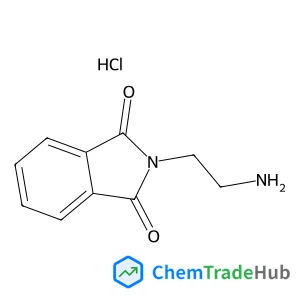
2-(2-Aminoethyl)-1H-isoindole-1,3(2H)-dione hydrochloride (1:1)
CAS Number:
30250-67-0
Molecular Formula:
C10H11ClN2O2

Recommended Suppliers





Disclaimer
This page provides academic journal information for reference and research purposes only. We are not affiliated with any journal publishers and do not handle publication submissions. For publication-related inquiries, please contact the respective journal publishers directly.
If you notice any inaccuracies in the information displayed, please contact us at support@chemtradehub.com. We will promptly review and address your concerns.