












Effects of counterion size and backbone rigidity on the dynamics of ionic polymer melts and glasses‡
Literature Information
Publication Date
2017-09-12
DOI
10.1039/C7CP04249C
Impact Factor
3.676
Authors
Vera Bocharova, Mengze Ma
View Original
Abstract
It is well-known that the nature and size of the counterions affect the ionic conductivity and glass transition temperature of ionic polymers in a significant manner. However, the microscopic origin of the underlying changes in the dynamics of chains and counterions is far from completely understood. Using coarse-grained molecular dynamics simulations of flexible and semi-flexible ionic polymers, we demonstrate that the glass transition temperature of ionic polymeric melts depends on the size of monovalent counterions in a non-monotonic manner. The glass transition temperature is found to be the highest for the smallest counterions and decreases with an increase in the counterion radii up to a point, after which the glass transition temperature increases with a further increase in the radii. This behavior is because the counterions have significant effects on the coupled dynamics of the charges on the chains and counterions. In particular, increase in the radii of the counterions leads to strongly coupled dynamics between the charges on the chains and the counterions. The static dielectric constant of the polymer melts also has a significant effect on the coupling and the glass transition temperature. The glass transition temperature is predicted to decrease with an increase in the dielectric constant. This, in turn, leads to an increase in the diffusion constant of the counterions at a given temperature. Backbone rigidity is shown to increase the glass transition temperature and decrease the coupling. Furthermore, faster counterion dynamics is predicted for the melts of semi-flexible chains in comparison with flexible chains at the same segmental relaxation time. As the semi-flexible chains tend to have a longer segmental relaxation time, semi-flexible polymers with high dielectric constants are predicted to have diffusion constants of counterions comparable with flexible polymers.
Related Literature
The mechanism and regularity of quenching the effect of bases on fluorophores: the base-quenched probe method
Huihui Mao, Guanghua Luo, Yuxia Zhan, Jun Zhang, Shuang Yao, Yang Yu
2018-04-09
Paper
DOI: 10.1039/C8AN00116B
A highly sensitive SPRi biosensing strategy for simultaneous detection of multiplex miRNAs based on strand displacement amplification and AuNP signal enhancement
Xiaotong Wei, Xiaoyan Zhou, Jiangling Wu, Hongbing Xu, Xun Min, Shijia Ding
2018-05-16
Paper
DOI: 10.1039/C8AN00549D
Investigating the autophagy pathway in silver@gold core–shell nanoparticles-treated cells using surface-enhanced Raman scattering
Yuqing Hou, Wen Zhang, Shengtao Li, Zhen Wang, Huiqing Zhong, Zhiming Liu, Zhouyi Guo
2018-06-15
Paper
DOI: 10.1039/C8AN00405F
You might also like
Compound Q&A
What industries use (1R,3S)-1,3-Cyclopentanediol (CAS: 16326-97-9)?
(1R,3S)-1,3-Cyclopentanediol finds applications in various industries. In the ph...
16326-97-9(1R,3S)-1,3-Cyclopen...
Compound Q&A
What precautions should be taken when handling N'-[4-(Dimethylamino)phenyl]-N,N-dimethyl-1,4-benzenediamine (CAS: 637-31-0)?
When handling N'-[4-(Dimethylamino)phenyl]-N,N-dimethyl-1,4-benzenediamine, it i...
637-31-0N'-[4-(Dimethylamino...
Compound Q&A
Are there alternatives to 5-(2,4-Difluorophenyl)-2-methoxypyrimidine (CAS: 1352318-16-1) in synthesis?
There are several alternatives to 5-(2,4-Difluorophenyl)-2-methoxypyrimidine in ...
1352318-16-15-(2,4-Difluoropheny...
Compound Q&A
What regulatory guidelines apply to 1-(3-Methoxyphenoxy)propan-2-ol (CAS: 382141-68-6)?
1-(3-Methoxyphenoxy)propan-2-ol (CAS: 382141-68-6) must comply with the Globally...
382141-68-61-(3-Methoxyphenoxy)...
Compound Q&A
Is Tetrodotoxin Citrate (CAS: 18660-81-6) safe?
Tetrodotoxin Citrate is extremely dangerous and should be handled with extreme c...
18660-81-6Tetrodotoxin Citrate
Compound Q&A
What are the main uses of 2-Methyl-2-propanyl [(1R,3S)-3-hydroxycyclopentyl]carbamate (CAS: 225641-84-9)?
2-Methyl-2-propanyl [(1R,3S)-3-hydroxycyclopentyl]carbamate (CAS: 225641-84-9) i...
225641-84-92-Methyl-2-propanyl ...
Compound Q&A
How should waste containing 4-(2-Hydroxyhexafluoroisopropyl)Benzoic Acid (CAS: 16261-80-6) be handled?
Waste containing 4-(2-Hydroxyhexafluoroisopropyl)Benzoic Acid (CAS: 16261-80-6) ...
16261-80-64-(2-Hydroxyhexafluo...
Compound Q&A
How is 2-Methyl-2-proanyl {(2S)-1-[(benzyloxy)amino]-3-hydroxy-3-methyl-1-oxo-2-butanyl}carbamate (CAS: 102507-19-7) typically synthesized?
2-Methyl-2-proanyl {(2S)-1-[(benzyloxy)amino]-3-hydroxy-3-methyl-1-oxo-2-butanyl...
102507-19-72-Methyl-2-propanyl ...
Compound Q&A
What is Benzeneethanamine, α-ethyl-, hydrochloride (1:1) (CAS: 20735-15-3)?
Benzeneethanamine, α-ethyl-, hydrochloride (1:1) is an organic compound with the...
20735-15-3Benzeneethanamine, α...
Compound Q&A
Are there alternatives to 3-{(E)-[4-(Dimethylamino)phenyl]diazenyl}benzoic acid (CAS: 20691-84-3) in synthesis?
In the synthesis of compounds similar to 3-{(E)-[4-(Dimethylamino)phenyl]diazeny...
20691-84-33-{(E)-[4-(Dimethyla...
Source Journal
Physical Chemistry Chemical Physics

CiteScore:
5.5
Self-citation Rate:
10.3%
Articles per Year:
3036
Physical Chemistry Chemical Physics (PCCP) is an international journal co-owned by 19 physical chemistry and physics societies from around the world. This journal publishes original, cutting-edge research in physical chemistry, chemical physics and biophysical chemistry. To be suitable for publication in PCCP, articles must include significant innovation and/or insight into physical chemistry; this is the most important criterion that reviewers and Editors will judge against when evaluating submissions. The journal has a broad scope and welcomes contributions spanning experiment, theory, computation and data science. Topical coverage includes spectroscopy, dynamics, kinetics, statistical mechanics, thermodynamics, electrochemistry, catalysis, surface science, quantum mechanics, quantum computing and machine learning. Interdisciplinary research areas such as polymers and soft matter, materials, nanoscience, energy, surfaces/interfaces, and biophysical chemistry are welcomed if they demonstrate significant innovation and/or insight into physical chemistry. Joined experimental/theoretical studies are particularly appreciated when complementary and based on up-to-date approaches.
Recommended Compounds
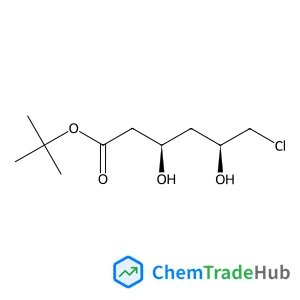
2-Methyl-2-propanyl (3R,5S)-6-chloro-3,5-dihydroxyhexanoate
CAS Number:
154026-93-4
Molecular Formula:
C10H19ClO4
![N-[(1S,2R,4S)-2-Amino-4-(dimethylcarbamoyl)cyclohexyl]-N'-(5-chloro-2-pyridinyl)ethanediamide structure](https://static.chemtradehub.com/structs/480/480452-37-7-0898.webp "N-[(1S,2R,4S)-2-Amino-4-(dimethylcarbamoyl)cyclohexyl]-N'-(5-chloro-2-pyridinyl)ethanediamide structure")
N-[(1S,2R,4S)-2-Amino-4-(dimethylcarbamoyl)cyclohexyl]-N'-(5-chloro-2-pyridinyl)ethanediamide
CAS Number:
480452-37-7
Molecular Formula:
C16H22ClN5O3
Recommended Suppliers




Disclaimer
This page provides academic journal information for reference and research purposes only. We are not affiliated with any journal publishers and do not handle publication submissions. For publication-related inquiries, please contact the respective journal publishers directly.
If you notice any inaccuracies in the information displayed, please contact us at support@chemtradehub.com. We will promptly review and address your concerns.