













Evolution of the linear band dispersion of monolayer and bilayer germanene on Cu(111)
Literature Information
Publication Date
2017-07-31
DOI
10.1039/C7CP03597G
Impact Factor
3.676
Authors
Fengping Li, Wei Wei, Xingshuai Lv, Baibiao Huang, Ying Dai
View Original
Abstract
The structural and electronic properties of germanene are always strongly modulated by the hybridization effects with metal substrates. In order to see what will happen when a buffer layer is introduced in-between germanene and metal substrates, we study the structural and electronic properties of the recently synthesized monolayer and bilayer germanene on Cu(111) though first-principles calculations. Our results show that the monolayer germanene on Cu(111) displays a nearly flat configuration and interface states form between the Ge pz and Cu sp-like states, with the Ge π states maintaining the Dirac character. For bilayer germanene on Cu(111), interactions with Cu(111) are reduced due to germanene inter-layer interactions, which is beneficial for the transfer of germanene. In comparison with the bottom germanene layer, the Ge pz character of the upper germanene layer can be maintained near the Fermi level. Since the linear band dispersion is at the heart of the novel quantum phenomenon, our results will facilitate research into the synthesis, extraordinary quantum properties, and applications based on the two-dimensional (2D) germanium system.
Related Literature
A microfluidic microparticle-labeled impedance sensor array for enhancing immunoassay sensitivity
Drago Sticker, Mario Rothbauer, Peter Ertl
2021-03-10
Paper
DOI: 10.1039/D0AN02081H
Application of hitherto unexplored macrocyclization strategies in the epothilone series: novel epothilone analogs by total synthesis
Jon T. Njardarson, Kaustav Biswas
2002-10-30
Communication
DOI: 10.1039/B209941A
Characterization of mixed-ligand shells on gold nanoparticles by transition metal and supramolecular surface probes
Mohamed Nilam, Mohammad A. Alnajjar, Andreas Hennig
2018-10-22
Paper
DOI: 10.1039/C8AN01181H
Reversible zinc phthalocyanine fullerene ensembles
Dirk M. Guldi, Jeff Ramey, M. Victoria Martínez-Díaz, Andrés de la Escosura, Tomás Torres, Tatiana Da Ros, Maurizio Prato
2002-10-24
Communication
DOI: 10.1039/B208516J
A modular microscopic smartphone attachment for imaging and quantification of multiple fluorescent probes using machine learning
Muhammad A. Sami, Muhammad Tayyab, Priya Parikh, Harshitha Govindaraju
2021-03-26
Paper
DOI: 10.1039/D0AN02451A
Triarylation of η6-dihydronaphthalene-Cr(CO)3 complexes
Krishna Gopal Dongol, Kouki Matsubara, Shuntaro Mataka, Thies Thiemann
2002-11-20
Communication
DOI: 10.1039/B209494K
Nucleophilic substitution of alkylchlorodihydro[60]fullerenes: thermodynamic stabilities of alkylated C60cation intermediates
Toshikazu Kitagawa, Yangsoo Lee, Masaaki Hanamura, Harumi Sakamoto, Hirofumi Konno, Ken’ichi Takeuchi, Koichi Komatsu
2002-11-20
Communication
DOI: 10.1039/B210126B
Optimizing locked nucleic acid modification in double-stranded biosensors for live single cell analysis
Samuel A. Vilchez Mercedes, Ian Eder, Mona Ahmed, Ninghao Zhu
2022-01-27
Paper
DOI: 10.1039/D1AN01802G
Supramolecular fixation of NO2 with calix[4]arenes
Grigory V. Zyryanov, Yanlong Kang, Stephen P. Stampp, Dmitry M. Rudkevich
2002-10-25
Communication
DOI: 10.1039/B207901A
You might also like
Compound Q&A
How should 2-Methylbenzene-1,4-diamine dihydrochloride (CAS: 615-45-2) be stored?
2-Methylbenzene-1,4-diamine dihydrochloride (CAS: 615-45-2) should be stored in ...
615-45-22-Methylbenzene-1,4-...
Compound Q&A
Is (1S,4S)-2,5-Diazabicyclo[2.2.1]heptane dihydrobromide (CAS: 132747-20-7) safe?
(1S,4S)-2,5-Diazabicyclo[2.2.1]heptane dihydrobromide is generally considered sa...
132747-20-7(1S,4S)-2,5-Diazabic...
Compound Q&A
What industries use (6-Chloropyridazin-3-YL)methanamine (CAS: 871826-15-2)?
(6-Chloropyridazin-3-YL)methanamine finds applications in the pharmaceutical ind...
871826-15-2(6-Chloropyridazin-3...
Compound Q&A
What are the main uses of 2-Fluoro-3-methylphenol (CAS: 77772-72-6)?
2-Fluoro-3-methylphenol is primarily used in the synthesis of pharmaceuticals, p...
77772-72-62-Fluoro-3-methylphe...
Compound Q&A
What precautions should be taken when handling 3-Methoxy-4-nitrobenzonitrile (CAS: 177476-75-4)?
When handling 3-Methoxy-4-nitrobenzonitrile, it is important to wear appropriate...
177476-75-43-Methoxy-4-nitroben...
Compound Q&A
What precautions should be taken when handling 1,3-Oxazolo[4,5-b]pyridine-2(3H)-thione (CAS: 211949-57-4)?
When handling 1,3-Oxazolo[4,5-b]pyridine-2(3H)-thione (CAS: 211949-57-4), it is ...
211949-57-4[1,3]Oxazolo[4,5-b]p...
Compound Q&A
What regulatory guidelines apply to 4-Ethynylbenzamide (CAS: 90347-86-7)?
4-Ethynylbenzamide (CAS: 90347-86-7) falls under various regulatory guidelines i...
90347-86-74-Ethynylbenzamide
Compound Q&A
What are the main uses of 3-(2-Ethylphenyl)-2-thioxo-4-imidazolidinone (CAS: 186822-57-1)?
3-(2-Ethylphenyl)-2-thioxo-4-imidazolidinone is primarily used as an intermediat...
186822-57-13-(2-Ethylphenyl)-2-...
Compound Q&A
What is (2-Fluoro-6-methoxyphenyl)acetic acid (CAS: 500912-19-6)?
(2-Fluoro-6-methoxyphenyl)acetic acid, also known as 4-fluoro-3-methoxybenzoic a...
500912-19-6(2-Fluoro-6-methoxyp...
Compound Q&A
What is the market or research trend for 2-[4-(Hydroxymethyl)phenoxy]ethanol (CAS: 102196-18-9)?
Market trends for 2-[4-(Hydroxymethyl)phenoxy]ethanol (CAS: 102196-18-9) indicat...
102196-18-92-[4-(Hydroxymethyl)...
Source Journal
Physical Chemistry Chemical Physics

CiteScore:
5.5
Self-citation Rate:
10.3%
Articles per Year:
3036
Physical Chemistry Chemical Physics (PCCP) is an international journal co-owned by 19 physical chemistry and physics societies from around the world. This journal publishes original, cutting-edge research in physical chemistry, chemical physics and biophysical chemistry. To be suitable for publication in PCCP, articles must include significant innovation and/or insight into physical chemistry; this is the most important criterion that reviewers and Editors will judge against when evaluating submissions. The journal has a broad scope and welcomes contributions spanning experiment, theory, computation and data science. Topical coverage includes spectroscopy, dynamics, kinetics, statistical mechanics, thermodynamics, electrochemistry, catalysis, surface science, quantum mechanics, quantum computing and machine learning. Interdisciplinary research areas such as polymers and soft matter, materials, nanoscience, energy, surfaces/interfaces, and biophysical chemistry are welcomed if they demonstrate significant innovation and/or insight into physical chemistry. Joined experimental/theoretical studies are particularly appreciated when complementary and based on up-to-date approaches.
Recommended Compounds


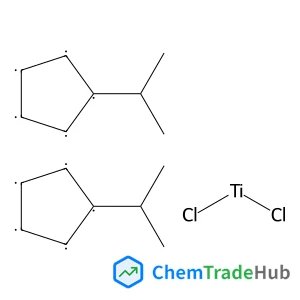
BIS(I-PROPYLCYCLOPENTADIENYL)TITANIUM DICHLORIDE
CAS Number:
12130-65-3
Molecular Formula:
C16H22Cl2Ti
Recommended Suppliers





Disclaimer
This page provides academic journal information for reference and research purposes only. We are not affiliated with any journal publishers and do not handle publication submissions. For publication-related inquiries, please contact the respective journal publishers directly.
If you notice any inaccuracies in the information displayed, please contact us at support@chemtradehub.com. We will promptly review and address your concerns.