












An investigation of the in-plane chemically ordered atomic laminates (Mo2/3Sc1/3)2AlC and (Mo2/3Y1/3)2AlC from first principles
Literature Information
Publication Date
2017-08-02
DOI
10.1039/C7CP03228E
Impact Factor
3.676
Authors
A. Thore, J. Rosen
View Original
Abstract
We have calculated electronic, vibrational, and elastic properties of (Mo2/3Sc1/3)2AlC and (Mo2/3Y1/3)2AlC, two recently discovered nanolaminated materials in the family of so-called i-MAX phases. A comparison is made to the properties of the related hypothetical MAX phases Sc2AlC, Y2AlC, and Mo2AlC. From an analysis of the electronic band structures and projected crystal orbital Hamilton populations (pCOHP), we show that the i-MAX phases have more isotropic band structures than the MAX phases, but that their bonding characteristics are very similar, despite belonging to different space groups. However, the similar bonding notwithstanding, qualitative as well as significant quantitative differences are seen in the phonon density of states (PDOS). We also compare the Voigt–Reuss–Hill (VRH) bulk, shear, and Young's moduli. For (Mo2/3Sc1/3)2AlC, BVRH = 132 GPa, GVRH = 89 GPa, and EVRH = 218 GPa, all of which are higher values than for Sc2AlC, but lower than for Mo2AlC. For (Mo2/3Y1/3)2AlC, BVRH = 117 GPa, GVRH = 85 GPa, and EVRH = 205 GPa, which are higher than for Y2AlC, but lower than for Mo2AlC.
Recommended Journals
Related Literature
RAFT-mediated, visible light-initiated single unit monomer insertion and its application in the synthesis of sequence-defined polymers
Changkui Fu, Zixuan Huang, Craig J. Hawker, Graeme Moad, Jiangtao Xu, Cyrille Boyer
2017-06-26
Communication
DOI: 10.1039/C7PY00713B
Ring-expansion cationic polymerization of vinyl ethers
Makoto Ouchi, Hajime Kammiyada, Mitsuo Sawamoto
2017-06-06
Minireview
DOI: 10.1039/C7PY00638A
Triazolinedione-“clicked” poly(phosphoester)s: systematic adjustment of thermal properties
Laetitia Vlaminck, Maria M. Velencoso, Filip E. Du Prez, Frederik R. Wurm
2017-06-21
Communication
DOI: 10.1039/C7PY00813A
Surface-initiated polymerization-induced self-assembly of bimodal polymer-grafted silica nanoparticles towards hybrid assemblies in one step
Yang Zheng, Yucheng Huang, Zaid M. Abbas, Brian C. Benicewicz
2016-08-15
Communication
DOI: 10.1039/C6PY01319H
AIE conjugated polyelectrolytes based on tetraphenylethene for efficient fluorescence imaging and lifetime imaging of living cells
Mengxia Gao, Bin Chen, Yinan Wang, Wenjun Zhou, Wallace W. H. Wong, Trevor A. Smith, Zujin Zhao
2017-06-05
Communication
DOI: 10.1039/C7PY00564D
Quinoxaline-based conjugated polymers for polymer solar cells
Yueyue Gao, Yong Zhang, Zhitian Liu, Liancheng Zhao
2017-07-10
Review Article
DOI: 10.1039/C7PY00850C
Metallo-supramolecular hydrogels based on amphiphilic polymers bearing a hydrophobic Schiff base ligand with rapid self-healing and multi-stimuli responsive properties
Liuyan Tang, Xiuli Chen, Lei Wang, Jinqing Qu
2017-07-07
Paper
DOI: 10.1039/C7PY00739F
Amphiphilic/fluorous random copolymers as a new class of non-cytotoxic polymeric materials for protein conjugation
Takaya Terashima, Mitsuo Sawamoto, Heather D. Maynard
2014-10-23
Paper
DOI: 10.1039/C4PY01346H
You might also like
Compound Q&A
What are the main uses of 4-Nitrophenyl phosphate disodium salt hexahydrate (CAS: 333338-18-4)?
4-Nitrophenyl phosphate disodium salt hexahydrate is primarily used as a substra...
333338-18-44-Nitrophenyl phosph...
Compound Q&A
What are the main uses of 2-(Trifluoromethyl)-1,3-oxazole-4-carboxylic Acid (CAS: 1060816-01-4)?
2-(Trifluoromethyl)-1,3-oxazole-4-carboxylic Acid (CAS: 1060816-01-4) is widely ...
1060816-01-42-(Trifluoromethyl)-...
Compound Q&A
How should 2-Fluoro-4-biphenylcarboxylic acid (CAS: 137045-30-8) be stored?
2-Fluoro-4-biphenylcarboxylic acid should be stored in a cool, dry place at room...
137045-30-82-Fluoro-4-biphenylc...
Compound Q&A
What industries use Prednisolone-21-Carboxylic Acid (CAS: 61549-70-0)?
Prednisolone-21-Carboxylic Acid is primarily used in the pharmaceutical industry...
61549-70-0Prednisolone-21-Carb...
Compound Q&A
How should 4-(Hydrazinomethyl)-1,2,3-benzenetriol (CAS: 3614-72-0) be stored?
4-(Hydrazinomethyl)-1,2,3-benzenetriol (CAS: 3614-72-0) should be stored in a co...
3614-72-04-(Hydrazinomethyl)-...
Compound Q&A
What industries use 4-Amino-1-methyl-1H-pyrazole-5-carboxylic acid hydrochloride (CAS: 92534-70-8)?
4-Amino-1-methyl-1H-pyrazole-5-carboxylic acid hydrochloride (CAS: 92534-70-8) i...
92534-70-84-Amino-1-methyl-1H-...
Compound Q&A
What regulatory guidelines apply to dehydropachymic acid (CAS: 77012-31-8)?
Dehydropachymic acid (CAS: 77012-31-8) is regulated by various agencies. It fall...
77012-31-8Dehydropachymic acid
Compound Q&A
What is the market or research trend for 6-[(2,2-Dimethylpropanoyl)amino]nicotinic acid (CAS: 898561-66-5)?
The market and research trends for 6-[(2,2-Dimethylpropanoyl)amino]nicotinic aci...
898561-66-56-[(2,2-Dimethylprop...
Compound Q&A
How should 1,10-Phenanthroline-2,9-dicarbaldehyde (CAS: 57709-62-3) be stored?
1,10-Phenanthroline-2,9-dicarbaldehyde should be stored in a cool, dry place awa...
57709-62-31,10-Phenanthroline-...
Compound Q&A
How is 5-Carbamoyl-11-oxo-10,11-dihydro-5H-dibenzo[b,f]azepin-10-yl acetate (CAS: 113952-21-9) typically synthesized?
5-Carbamoyl-11-oxo-10,11-dihydro-5H-dibenzo[b,f]azepin-10-yl acetate can be synt...
113952-21-95-Carbamoyl-11-oxo-1...
Source Journal
Physical Chemistry Chemical Physics

CiteScore:
5.5
Self-citation Rate:
10.3%
Articles per Year:
3036
Physical Chemistry Chemical Physics (PCCP) is an international journal co-owned by 19 physical chemistry and physics societies from around the world. This journal publishes original, cutting-edge research in physical chemistry, chemical physics and biophysical chemistry. To be suitable for publication in PCCP, articles must include significant innovation and/or insight into physical chemistry; this is the most important criterion that reviewers and Editors will judge against when evaluating submissions. The journal has a broad scope and welcomes contributions spanning experiment, theory, computation and data science. Topical coverage includes spectroscopy, dynamics, kinetics, statistical mechanics, thermodynamics, electrochemistry, catalysis, surface science, quantum mechanics, quantum computing and machine learning. Interdisciplinary research areas such as polymers and soft matter, materials, nanoscience, energy, surfaces/interfaces, and biophysical chemistry are welcomed if they demonstrate significant innovation and/or insight into physical chemistry. Joined experimental/theoretical studies are particularly appreciated when complementary and based on up-to-date approaches.
Recommended Compounds
phosphoryl}methyl 4-methylbenzenesulfonate structure](https://static.chemtradehub.com/structs/864/864068-45-1-ba7c.webp "{[3-(Hexadecyloxy)propoxy](hydroxy)phosphoryl}methyl 4-methylbenzenesulfonate structure")
{[3-(Hexadecyloxy)propoxy](hydroxy)phosphoryl}methyl 4-methylbenzenesulfonate
CAS Number:
864068-45-1
Molecular Formula:
C27H49O7PS
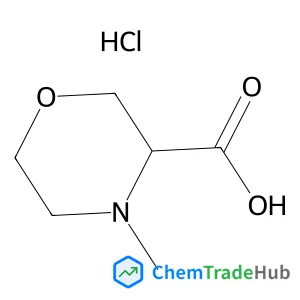
4-Methyl-3-morpholinecarboxylic acid hydrochloride (1:1)
CAS Number:
1240518-90-4
Molecular Formula:
C6H12ClNO3

Recommended Suppliers






Disclaimer
This page provides academic journal information for reference and research purposes only. We are not affiliated with any journal publishers and do not handle publication submissions. For publication-related inquiries, please contact the respective journal publishers directly.
If you notice any inaccuracies in the information displayed, please contact us at support@chemtradehub.com. We will promptly review and address your concerns.