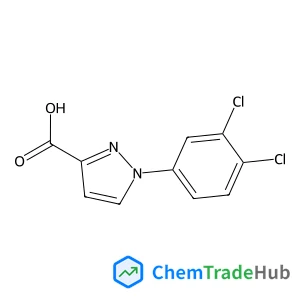
N-(5-Fluoro-2-oxo-2,3-dihydro-4-pyrimidinyl)benzamide
CAS Number:
10357-07-0
Molecular Formula:
C11H8FN3O2
Stephanie Tassler, Christian Wölk, Christopher Janich, Bodo Dobner, Gerald Brezesinski
Cationic lipids are considered as non-viral carriers for genetic material used in gene therapy. They have no carcinogenic potential and cause low immune response compared to existing viral systems. The protonation degree of these cationic lipids is a crucial parameter for the binding behavior of polynucleotides (e.g., DNA). Newly synthesized peptide-mimic lysine-based amino-functionalized lipids have been investigated in 2D models as monolayers at the air–liquid interface. Standard surface pressure – area isotherms have been measured to prove the layer stability. Total reflection X-ray fluorescence (TRXF) has been used as a surface sensitive analytical method to estimate the amount of counterions at the head groups. Using a standard sample as a reference, the protonation degree of these cationic lipids can be quantified on buffers with different pH values. It is found that the protonation degree depends linearly on the packing density of the lipid monolayer.

Journal of Chemical Sciences

Bioorganic & Medicinal Chemistry

Heteroatom Chemistry

Acta Metallurgica Sinica-English Letters

Herald of the Russian Academy of Sciences

Biocatalysis and Biotransformation

Bioorganic & Medicinal Chemistry Letters

Atomization and Sprays

Journal of the Indian Institute of Science

Colloid Journal
Johannes Postler, Athanasios Zavras, Paul Scheier, Stephan Denifl, Richard A. J. O'Hair
DOI: 10.1039/C5CP01014D
Florence Haudin, V. Brasiliense, Julyan H. E. Cartwright, Fabian Brau, A. De Wit
DOI: 10.1039/C5CP00068H
Mohamed Mohamed Rashad, Abd El-Hakim Taha Kandil, Mikhael Bechelany
DOI: 10.1039/C5CP00319A
Run-wu Zhang, Chang-wen Zhang, Wei-xiao Ji, Feng Li, Miao-juan Ren, Ping Li, Min Yuan, Pei-ji Wang
DOI: 10.1039/C5CP00875A
Diego Cortés-Arriagada, Alejandro Toro-Labbé
DOI: 10.1039/C5CP01313E
Jinfeng Zhao, Junsheng Chen, Jianyong Liu, Mark R. Hoffmann
DOI: 10.1039/C4CP05651E
Jin Zhang, S. A. Meguid
DOI: 10.1039/C5CP00914F
Changzeng Fan, Jian Li
DOI: 10.1039/C5CP00001G
T. Bazaru Rujoiu, A. Petris, V. I. Vlad, I. Rau, A.-M. Manea, F. Kajzar
DOI: 10.1039/C5CP01727K
Yu-Hsiu Wang
DOI: 10.1039/C5CP00862J
Waste containing N-Methoxy-N-methyl-1,3-thiazole-5-carboxamide (CAS: 898825-89-3...
N-(4-Biphenylyl)dibenzo[b,d]furan-4-amine should be stored in a tightly sealed c...
The market for 3-Acetamido-5-amino-2,4,6-triiodobenzoic acid (CAS: 1713-07-1) is...
Benzyl 2-O-acetyl-3,4,6-tri-O-benzyl-beta-D-galactopyranoside (CAS: 61820-03-9) ...
2-Ethylpiperazine dihydrochloride (CAS: 438050-52-3) is regulated under the Glob...
1,1'-[1,3-Phenylenebis(methylene)]bis(3-methyl-1H-pyrrole-2,5-dione) (CAS: 11946...
Several alternatives can be used in the synthesis of 5-Fluoro-2-(1-pyrrolidinyl)...
Proper personal protective equipment (PPE) must be worn when handling this compo...
When handling 6-Bromoimidazo[1,2-a]pyridin-8-amine, it is important to wear appr...
Alternatives to (2S,4R)-4-(4-Nitrobenzyl)pyrrolidine-2-carboxylic acid hydrochlo...

Physical Chemistry Chemical Physics (PCCP) is an international journal co-owned by 19 physical chemistry and physics societies from around the world. This journal publishes original, cutting-edge research in physical chemistry, chemical physics and biophysical chemistry. To be suitable for publication in PCCP, articles must include significant innovation and/or insight into physical chemistry; this is the most important criterion that reviewers and Editors will judge against when evaluating submissions. The journal has a broad scope and welcomes contributions spanning experiment, theory, computation and data science. Topical coverage includes spectroscopy, dynamics, kinetics, statistical mechanics, thermodynamics, electrochemistry, catalysis, surface science, quantum mechanics, quantum computing and machine learning. Interdisciplinary research areas such as polymers and soft matter, materials, nanoscience, energy, surfaces/interfaces, and biophysical chemistry are welcomed if they demonstrate significant innovation and/or insight into physical chemistry. Joined experimental/theoretical studies are particularly appreciated when complementary and based on up-to-date approaches.

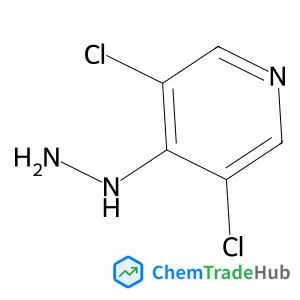
![4-[(2-{2-[2-(2-Aminoethoxy)ethoxy]ethoxy}ethyl)amino]-2-(2,6-dioxo-3-piperidinyl)-1H-isoindole-1,3(2H)-dione structure](https://static.chemtradehub.com/structs/209/2093416-31-8-3162.webp "4-[(2-{2-[2-(2-Aminoethoxy)ethoxy]ethoxy}ethyl)amino]-2-(2,6-dioxo-3-piperidinyl)-1H-isoindole-1,3(2H)-dione structure")