












Chiroptical inversion for isolated vibronic transitions of supersonic beam-cooled molecules
Literature Information
Publication Date
2017-06-19
DOI
10.1039/C7CP02596C
Impact Factor
3.676
Authors
Jörn Lepelmeier, José Lorenzo Alonso-Gómez, Farinaz Mortaheb, Ulrich Boesl, Ulrich Heiz, Aras Kartouzian
View Original
Abstract
Circular dichroism-resonance-enhanced multiphoton ionization (CD-REMPI) was used for CD measurements on several single vibronic transitions of supersonic beam-cooled (R)-(+)-1-phenylethanol. Due to the low molecular densities within a supersonic beam and the expected small anisotropy factor of 1-phenylethanol in the permille region, the precision of the experimental method had to be significantly improved. Therefore, a single laser pulse evaluation combined with a twin-peak technique enabled within the used supersonic beam setup is presented. For the electronic transition S0 → S1 of (R)-(+)-1-phenylethanol (π → π* transition of the phenyl ring at 266 nm) ten different vibrational modes as well as the 000-transition were investigated with one-color (1 + 1) CD-REMPI. The results deliver new experimental insights on the influence of molecular vibrations on the anisotropy factor. TD-DFT theoretical predictions show how the angle between the electronic and magnetic transition dipole moments of the electronic transition can be modified by different vibrational modes, making even a flip of the sign of the anisotropy factor possible.
Related Literature
Thermosensitive spontaneous gradient copolymers with block- and gradient-like features
Ihor Kulai, Jens Ulbrich, Ramiro Guerrero-Santos, Mathias Destarac, Simon Harrisson
2017-04-19
Paper
DOI: 10.1039/C7PY00495H
Ring-expansion cationic polymerization of vinyl ethers
Makoto Ouchi, Hajime Kammiyada, Mitsuo Sawamoto
2017-06-06
Minireview
DOI: 10.1039/C7PY00638A
Synergetic enhancement of antitumor efficacy with charge-reversal and reduction-sensitive polymer micelles
Shi-Xi Li, Lei Liu, Liu-Jie Zhang, Bo Wu, Cai-Xia Wang, Wei Zhou, Ren-Xi Zhuo, Shi-Wen Huang
2016-07-14
Paper
DOI: 10.1039/C6PY00874G
Dispersion RAFT polymerization: comparison between the monofunctional and bifunctional macromolecular RAFT agents
Chengqiang Gao, Shentong Li, Quanlong Li, Pengfei Shi, Sayyar Ali Shah, Wangqing Zhang
2014-08-22
Paper
DOI: 10.1039/C4PY01069H
A facile strategy for manipulating micellar size and morphology through intramolecular cross-linking of amphiphilic block copolymers
Ryoto Tanaka, Kodai Watanabe, Takuya Yamamoto, Kenji Tajima, Takuya Isono, Toshifumi Satoh
2017-05-23
Paper
DOI: 10.1039/C7PY00646B
Facile synthesis of histidine functional poly(N-isopropylacrylamide): zwitterionic and temperature responsive materials
Emma R. L. Brisson, Zeyun Xiao, Lucas Levin, George V. Franks, Luke A. Connal
2016-02-11
Paper
DOI: 10.1039/C5PY01915J
Multifunctional porous Tröger's base polymers with tetraphenylethene units: CO2 adsorption, luminescence and sensing properties
Yuanzheng Cui, Yuchuan Liu, Jiancong Liu, Jianfeng Du, Yue Yu, Shun Wang, Zhiqiang Liang, Jihong Yu
2017-07-25
Paper
DOI: 10.1039/C7PY00856B
Effect of trehalose polymer regioisomers on protein stabilization
M. Jane Strouse
2017-07-03
Paper
DOI: 10.1039/C7PY00700K
A facile route to well-defined imidazolium-based poly(ionic liquid)s of enhanced conductivity via RAFT
Karol Erfurt, Anna Chrobok, Andrzej Zięba
2017-08-02
Paper
DOI: 10.1039/C7PY01046J
You might also like
Compound Q&A
What are the main uses of 4-Nitrophenyl phosphate disodium salt hexahydrate (CAS: 333338-18-4)?
4-Nitrophenyl phosphate disodium salt hexahydrate is primarily used as a substra...
333338-18-44-Nitrophenyl phosph...
Compound Q&A
What are the main uses of 2-(Trifluoromethyl)-1,3-oxazole-4-carboxylic Acid (CAS: 1060816-01-4)?
2-(Trifluoromethyl)-1,3-oxazole-4-carboxylic Acid (CAS: 1060816-01-4) is widely ...
1060816-01-42-(Trifluoromethyl)-...
Compound Q&A
How should 2-Fluoro-4-biphenylcarboxylic acid (CAS: 137045-30-8) be stored?
2-Fluoro-4-biphenylcarboxylic acid should be stored in a cool, dry place at room...
137045-30-82-Fluoro-4-biphenylc...
Compound Q&A
What industries use Prednisolone-21-Carboxylic Acid (CAS: 61549-70-0)?
Prednisolone-21-Carboxylic Acid is primarily used in the pharmaceutical industry...
61549-70-0Prednisolone-21-Carb...
Compound Q&A
How should 4-(Hydrazinomethyl)-1,2,3-benzenetriol (CAS: 3614-72-0) be stored?
4-(Hydrazinomethyl)-1,2,3-benzenetriol (CAS: 3614-72-0) should be stored in a co...
3614-72-04-(Hydrazinomethyl)-...
Compound Q&A
What industries use 4-Amino-1-methyl-1H-pyrazole-5-carboxylic acid hydrochloride (CAS: 92534-70-8)?
4-Amino-1-methyl-1H-pyrazole-5-carboxylic acid hydrochloride (CAS: 92534-70-8) i...
92534-70-84-Amino-1-methyl-1H-...
Compound Q&A
What regulatory guidelines apply to dehydropachymic acid (CAS: 77012-31-8)?
Dehydropachymic acid (CAS: 77012-31-8) is regulated by various agencies. It fall...
77012-31-8Dehydropachymic acid
Compound Q&A
What is the market or research trend for 6-[(2,2-Dimethylpropanoyl)amino]nicotinic acid (CAS: 898561-66-5)?
The market and research trends for 6-[(2,2-Dimethylpropanoyl)amino]nicotinic aci...
898561-66-56-[(2,2-Dimethylprop...
Compound Q&A
How should 1,10-Phenanthroline-2,9-dicarbaldehyde (CAS: 57709-62-3) be stored?
1,10-Phenanthroline-2,9-dicarbaldehyde should be stored in a cool, dry place awa...
57709-62-31,10-Phenanthroline-...
Compound Q&A
How is 5-Carbamoyl-11-oxo-10,11-dihydro-5H-dibenzo[b,f]azepin-10-yl acetate (CAS: 113952-21-9) typically synthesized?
5-Carbamoyl-11-oxo-10,11-dihydro-5H-dibenzo[b,f]azepin-10-yl acetate can be synt...
113952-21-95-Carbamoyl-11-oxo-1...
Source Journal
Physical Chemistry Chemical Physics

CiteScore:
5.5
Self-citation Rate:
10.3%
Articles per Year:
3036
Physical Chemistry Chemical Physics (PCCP) is an international journal co-owned by 19 physical chemistry and physics societies from around the world. This journal publishes original, cutting-edge research in physical chemistry, chemical physics and biophysical chemistry. To be suitable for publication in PCCP, articles must include significant innovation and/or insight into physical chemistry; this is the most important criterion that reviewers and Editors will judge against when evaluating submissions. The journal has a broad scope and welcomes contributions spanning experiment, theory, computation and data science. Topical coverage includes spectroscopy, dynamics, kinetics, statistical mechanics, thermodynamics, electrochemistry, catalysis, surface science, quantum mechanics, quantum computing and machine learning. Interdisciplinary research areas such as polymers and soft matter, materials, nanoscience, energy, surfaces/interfaces, and biophysical chemistry are welcomed if they demonstrate significant innovation and/or insight into physical chemistry. Joined experimental/theoretical studies are particularly appreciated when complementary and based on up-to-date approaches.
Recommended Compounds
![(3R,5R)-1-[(Benzyloxy)carbonyl]-5-methyl-3-piperidinecarboxylic acid structure](https://static.chemtradehub.com/structs/126/1269757-29-0-c552.webp "(3R,5R)-1-[(Benzyloxy)carbonyl]-5-methyl-3-piperidinecarboxylic acid structure")
(3R,5R)-1-[(Benzyloxy)carbonyl]-5-methyl-3-piperidinecarboxylic acid
CAS Number:
1269757-29-0
Molecular Formula:
C15H19NO4
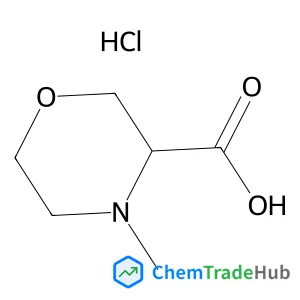
4-Methyl-3-morpholinecarboxylic acid hydrochloride (1:1)
CAS Number:
1240518-90-4
Molecular Formula:
C6H12ClNO3

2,2-dideuterio-2-(3,4,5,6-tetradeuterio-2-pyridyl)acetic acid;hydrochloride
CAS Number:
1329799-67-8
Molecular Formula:
C7H2ClD6NO2
![S-[2,3-Bis(palmitoyloxy)propyl]-N-[(9H-fluoren-9-ylmethoxy)(hydroxy)methylene]cysteine structure](https://static.chemtradehub.com/structs/210/210532-98-2-f6a7.webp "S-[2,3-Bis(palmitoyloxy)propyl]-N-[(9H-fluoren-9-ylmethoxy)(hydroxy)methylene]cysteine structure")
S-[2,3-Bis(palmitoyloxy)propyl]-N-[(9H-fluoren-9-ylmethoxy)(hydroxy)methylene]cysteine
CAS Number:
210532-98-2
Molecular Formula:
C53H83NO8S
Recommended Suppliers




Disclaimer
This page provides academic journal information for reference and research purposes only. We are not affiliated with any journal publishers and do not handle publication submissions. For publication-related inquiries, please contact the respective journal publishers directly.
If you notice any inaccuracies in the information displayed, please contact us at support@chemtradehub.com. We will promptly review and address your concerns.